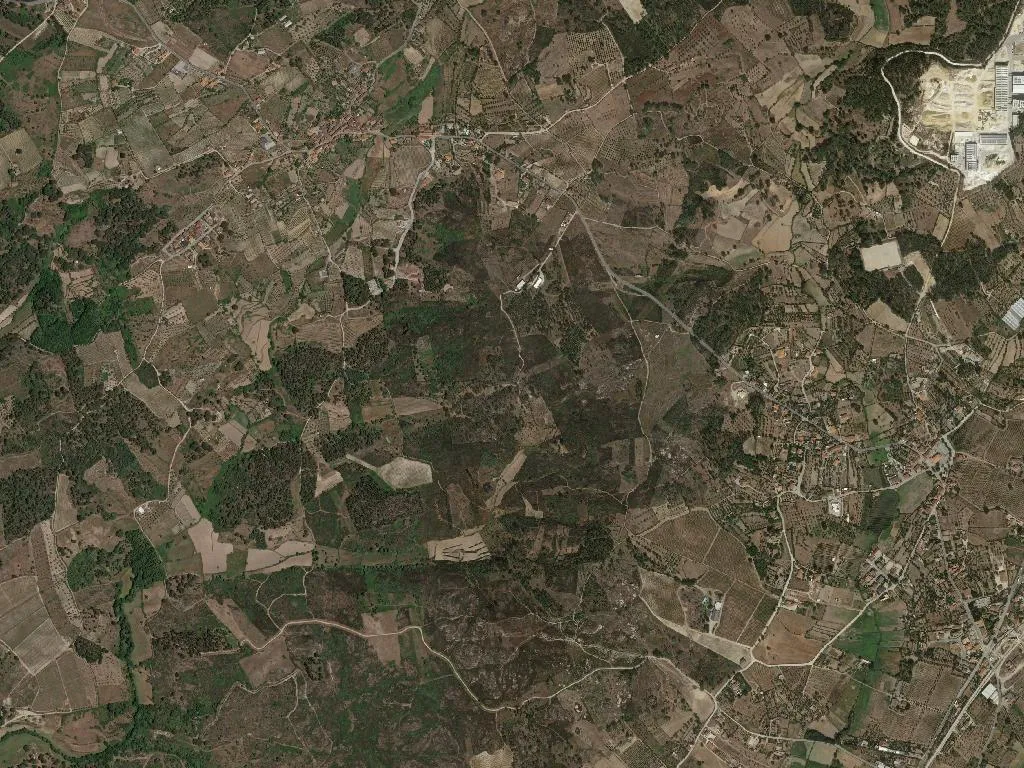
Full article about Morning mist lifts over Moimenta & Lobelhe vines
Terraced vines, wolf-scrub and granite benches shape life in Mangualde’s quiet union
Hide article Read full article
The morning fog lifts like a slow curtain, exposing schist terraces stitched with leafless vines. At 440 m the air is still wine-cool, laced with the smell of wet slate and wood-smoke that drifts from a chimney you can’t yet see. A gate creaks, a dog barks once, then the valley falls back into its own hush.
Two parishes, one horizon
In 2013 the civil parishes of Moimenta de Maceira Dão and Lobelhe do Mato were stitched together by administrative fiat, yet they still behave like siblings who never quite agreed on the family story. Moimenta looks south-west toward the river Dão, its name hinting at a high place; Maceira remembers apple orchards long since grafted into vines. Lobelhe, meanwhile, confesses wilder ancestry—“lobo” (wolf) and “mato” (brush)—before the plough and the pruning hook drew their lines.
Between vine and scrub
Only 727 people occupy seven square kilometres here, a density that sounds crowded until you realise most houses are solitary, wedged between small oak woods, vegetable plots walled in loose stone and rows of Touriga Nacional that march up to 500 m. The landscape itself sorts the population: Moimenta obeys the geometry of the Dão wine demarcation, while Lobelhe keeps its back to the vines, preferring granite outcrops and chestnut coppices where wild broom still sparks yellow in March.
Demography tilts elderly—210 pensioners to 65 under-25s—and the rhythm follows suit. Conversations happen on a granite bench outside the only café open in winter, timed to the slow tick of a wood-fired coffee machine. Afternoon ends when the smoke from curing sheds grows thin and the oak logs under the chouriços turn to ember.
Pantry of the immediate
Dona Alda’s grocery smells of wet sheep’s-wool and hearth. The queijo da Serra arrives by bicycle from Pega while still warm, wrapped in a tea-towel; the maker’s name, Zé Manel, is scribbled on the cloth in felt-tip. Requeijão is eaten with a hand-carved spoon straight from the copper pan, drained above the stove. Spring lamb is not a menu adjective—it is last year’s twin from Sequeira’s shed, roasted with backyard garlic and coarse salt trucked in from Fundão.
Wine is made in garages whose roller-doors rattle like distant thunder. Adega da Vila keeps the old lagar for one morning each harvest, when an accordionist earns his keep and purple juice splashes up to the knees, but stainless steel rules the rest of the week. Ask for Zé Sapateiro’s unlabelled red: it tastes of schist run-off and dried fig, and you will carry the scent on your coat for hours.
Landscape as timetable
There are no listed monuments, no way-marked trails. The experience is the slow dissolve of daylight on a vineyard wall, the sudden smell of turned earth when the tilling tractor passes, the hush of irrigation water slipping down a stone channel built in 1937. Walk the 2 km lane between Moimenta and Lobelhe and you can feel the frontier: cultivated rows surrender to gorse and heather, and the only footprints are from a shepherd’s crocs.
Evening arrives horizontally. Low sun gilds the vines, shadows pour down the slope like Tinto into a glass. Sometimes the church bell strikes seven; more often it is the clatter of Zé Carlos’s Massey-Ferguson announcing dinner-time. Time is measured in days of sun on the threshing floor, in clouds that decide the harvest, in firewood stacked to shoulder height before the first frost.