Full article about União das freguesias de Santiago de Cassurrães e Póvoa de Cervães
Dry-stone rye fields, cobalt azulejos, pepper-scented Dão: the hidden Portugal above Mangualde
Hide article Read full article
Granite in the rye rows
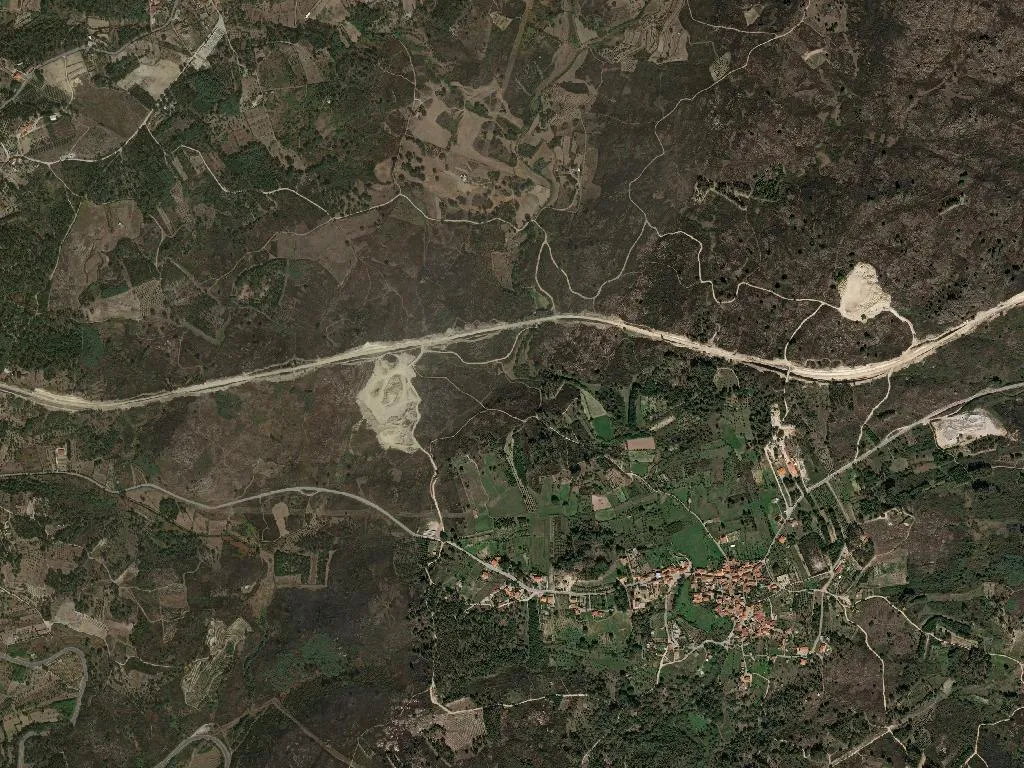
At 406 m the air thins just enough for morning mist to linger over the rye. Between Santiago de Cassurrães and Póvoa de Cervães, the Dão valley wind carries resin from distant pine and the faint chill of Serra da Estrela, 40 km east. Granite outcrops shoulder their way through the topsoil, forcing farmers to stitch fields around silver-grey boulders. The result is a 3,000-hectare patchwork held in place by dry-stone walls, each slab prised from the same ground it now contains.
Stone that outlasts sermons
Two of the five village churches are Listed Buildings; their portals, scooped smooth by 300 years of palms, still face due west as if expecting the Atlantic. No tour coaches idle outside, only the occasional tractor pulling a trailer of canes. Inside, 17th-century azulejo panels depict the life of St James in manganese violet – colours that owe their permanence to local cobalt. The bell in Póvoa’s tower rings only for funerals and harvest; the cadence is learnt by every child before they can read.
Flavours that remember frost
Altitude dictates the plate. Serra da Estrela DOP ewes produce milk so high in butterfat that the cheese needs no rennet beyond the cardoon thistle that grows on the basaltic margins. The same pastures feed the Bordaleira lambs that roast in wood-fired bread ovens every Sunday, the fat dripping onto rounds of rye dough prepared the night before. In the vineyards that stripe the lower terraces, Jaen and Alfrocheiro ripen two weeks later than in the valley floor, giving the local cooperative’s house red a scent of crushed pepper and rose-hip that city sommeliers now chase.
Ratios that tilt towards twilight
1218 residents, 426 over the age of 70. The primary school closed in 2019; the library opens twice a week inside the former court room. Two rural tourism houses offer breakfast with honey from chestnut-flowers and a weather forecast accurate to the hour – the owner still keeps a 1952 barograph on the landing. Walkers following the Rota do Dão find waymarks painted by hand on gateposts; if the paint is fresh, someone will be waiting at the next crossroads with a glass of aguardiente and directions to the river beach where the water runs granite-cold even in August.