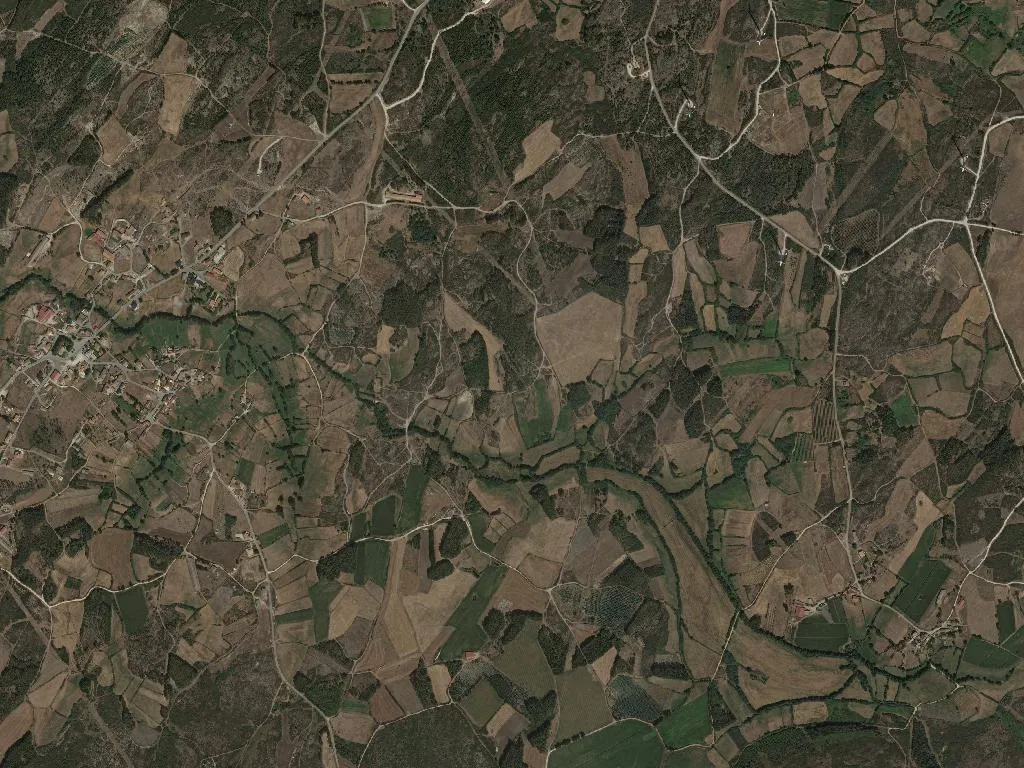
Full article about Alvite: Dawn Bell above Granite Terraces
At 934 m, Alvite swaps Douro heat for mist-laden vines, clay-talha reds and echoing church bells.
Hide article Read full article
The granite thresholds still hold the night’s chill when June sunlight begins to warm the lanes. At 934 m, Alvite wakes to a silence so complete you can almost hear your own pulse—until the bell of São João Baptista fractures it: three slow peals, a breath, three again. Streams whisper downhill towards the Varosa, and light skitters across stone terraces, catching the silvery mica in grey granite walls. The scent of last night’s hearth smoke braids itself with damp earth, a reminder that the fields are never far away. On Mondays the baker’s van idles by the fountain; within minutes the aroma of crusty pão mistura rises through the chimney haze and lingers until noon.
Altitude & Vine: an unlikely pairing
Officially inside the Douro DOC, Alvite ignores the textbook blueprint of riverside quintas. Family holdings—half a hectare for António, another for Dona Amélia—are stitched between olive groves and apple trees on ledges clawed from the mountain. The continental climate and height gift the reds a spine-tingling acidity and a scent of crushed redcurrants that arrives before the first sip. In windowless lofts the wine rests in clay talhas bought from Tarouca potters; fermented must seeps into schist walls like a ghost that refuses to leave. Locals admit the result is “azedo como a terra”—sharp as the soil that bred it—yet every bottle is spoken for before Easter.
Stone & Faith
The parish church squats at the geometrical centre, Manueline knots framing a Baroque portal darkened by 400 years of handling. Inside, Dona Lúcia lights the first candle at six, releasing gilded reflections from 18th-century carved cedar. Beyond the cluster of houses, stone calvaries mark micro-pilgrimage routes that never made the guidebooks—paths that once linked Alvite to the cathedrals of Lamego and Viseu, knees and boots polishing the granite footholds. The cruzeiro da Cotovia still bears the date 1743; its base is worn glassy from centuries of devotion.
A twenty-minute climb north-west brings you to the lone chapel of Nossa Senhora da Saúde, focus of the May romaria. Dry-stone walls built by Zé Mário’s grandfather line the route; derelict espigueiros (granite corn stores) stand empty, their phallic roofs pointing at chestnut branches. Townswomen carry garden roses and marguerites—wild narcissi and lilies vanished years ago—while the Serra da Nave etches a paper-cut skyline against indigo dusk.
São João’s Bonfire
On 24 June the village doubles in population. The procession inches through the lanes: priest in white cope, children barefoot on the cobbles, petals swept aside by velvet skirts. By dusk the square crackles with pyramids of gum-cedar and pine; smoke coils around trestle tables where clay cossets chanfana—kid braised overnight in red wine until the meat submits and the sauce turns to velvet. Cláudio’s pot, seasoned only once a year, is revered like a relic. Beside it, sarrabulho rice must be stirred clockwise “to keep the devil out”; Helena’s chimney-smoked chouriço is sliced so thin you can read the festival poster through it. Cavacas—crisp meringue shells—use Alda’s hen eggs; no one dares bake the accompanying sponge without the village’s single stone hand-whisk. At midnight the bell strikes; boys leap the bonfire three times—trip on the final jump and local lore condemns you to another year of bachelorhood.
Tracks between Valleys
Marked only by Jorge’s yellow ribbons, the Varosa trail drops from the ridge to the river and the ruined monastery where Cistercians once farmed the same terraces. Two hours down, thirty minutes back up to the natural swimming hole where teenagers dive from flat-topped boulders on Sunday afternoons. Silence here is physical: no engines, just wind combing through holm oak and maritime pine, water fizzing over schist. In October the palette recalibrates daily—ochre chestnut leaves one day, blood-red vine tendrils the next—what Zé António calls “the only free show left”.
As light drains, granite walls glow copper, then ash. Wood smoke ascends in perfect verticals; the air sharpens. Even in midsummer nights demand blankets. Neighbours drag chairs onto the doorstep to argue about the harvest, conversation tapering into starlight, the bell tower a black ruler against the Milky Way.