Full article about Cabaços: vines, echoes and chanfana at 639 m
Visit Cabaços, Moimenta da Beira: hand-tended 35° vineyards, São João goat chanfana and a bell echoing across the Varosa valley.
Hide article Read full article
High-noon light on schist terraces
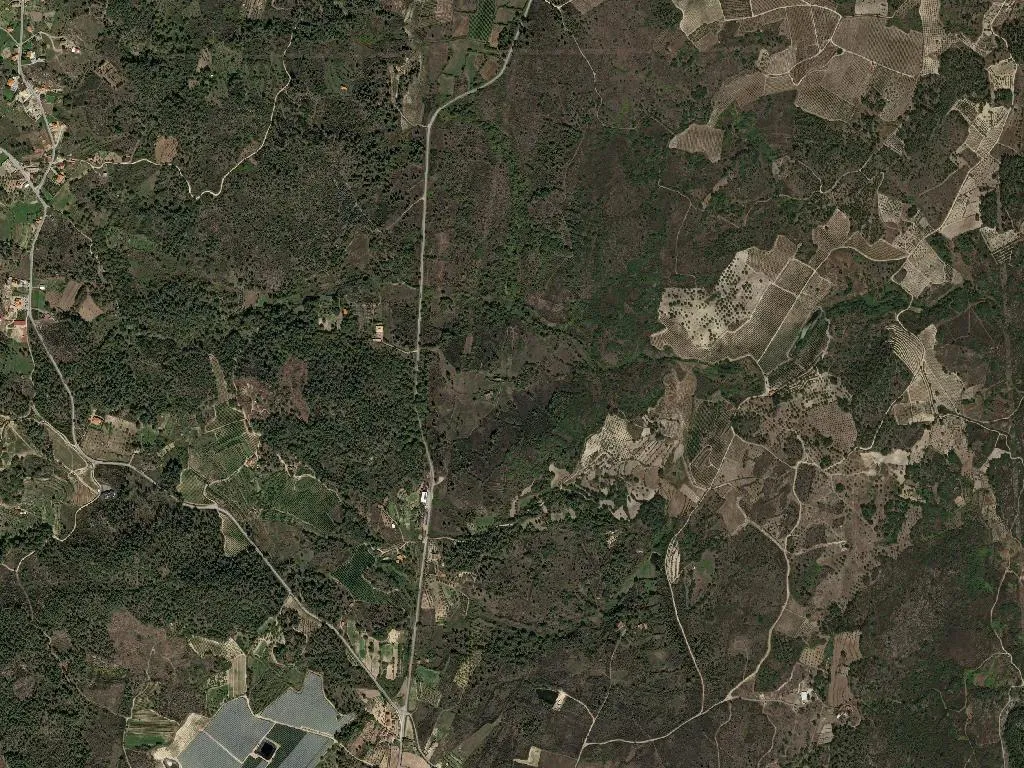
Midday light strikes the schist terraces that ribbon the hillsides above the Varosa valley, trimming each vine row with a blade of shadow. Cabaços perches at 639 m, its 220 souls suspended between the river gorge to the east and the oak-dark ridge of Leirancos. From here the view is a ledger of granite outcrops and red clay that recalls the upper Douro rather than the softer Minho – yet the village is only an hour east of Porto’s airport.
Territory and tempo
Vines claim 42 % of the parish’s 11 km², many planted at gradients that would make an Alpine farmer blink. The steepest, Quinta do Repilado, tilts to 35 % and is still hand-tended by two brothers in their seventies who can name every one of the 1,800 stone posts propping the terraces. At 19 inhabitants per km², distance is measured by how long it takes the church bell to reach you: Casa do Carvalho, the furthest hamlet, lies 2.3 km from the parish church of Santo André, but the echo carries in eight seconds on a still evening.
Demography is audible. Thirteen children live here; the youngest, Matilde, arrived in January 2023 when her parents returned from Lyon to the house on Rua da Igreira. Since the primary school closed in 2009, the day begins at 07:15 when a white minibus hauls the under-tens down the switchbacks to Moimenta da Beira.
São João and collective memory
On 24 June the village choir – seven voices, alto line supplied by a 58-year-old former textile worker – opens the feast at 09:30 sharp in the granite forecourt. The procession slips down Rua de Santo António, past Zé Mário’s grocery (sardine tins and fence wire since 1976), and climbs to the 1892 wayside cross where the priest blesses the vines with water from the medieval cistern.
By 13:00 the municipal garden is thick with the scent of roasted goat chanfana. Guida Ferreira, 82, guards the recipe: white Varosa wine, sweet-paprika from Casa Branca, and thyme she still picks behind the tanque. Night brings the Moimenta folk-dance troupe whirling through “Virgem da Serra”, joined by Paris-returned cousins who once caught the Metro at Porte de Clignancourt.
When the last rocket fades at 01:30, only the watch-repair shop on Rua Direita shows a light. António Monteiro, 91, keeps the door ajar so the ticking spills onto the cobbles. Beyond the village the schist wall his father rebuilt after the 1934 phylloxera outbreak still separates the Carvalho brothers’ plots; in August its stones hold the day’s heat long enough to warm a bottle of Quinta do Crasto’s 8,000-bottle annual white. On winter mornings the same wall vanishes first into fog rolling off Leirancos, erasing the terraces until the bell of Santo André tolls seven and the vines re-emerge, pewter-bright and ready for pruning.