Full article about Dawn mist over Pêra Velha’s slate roofs and Roman echoes
Explore Pêra Velha, Aldeia de Nacomba & Ariz in Moimenta da Beira—castro hill-forts, chestnut-scented trails, a single-day festival that triples the popula
Hide article Read full article
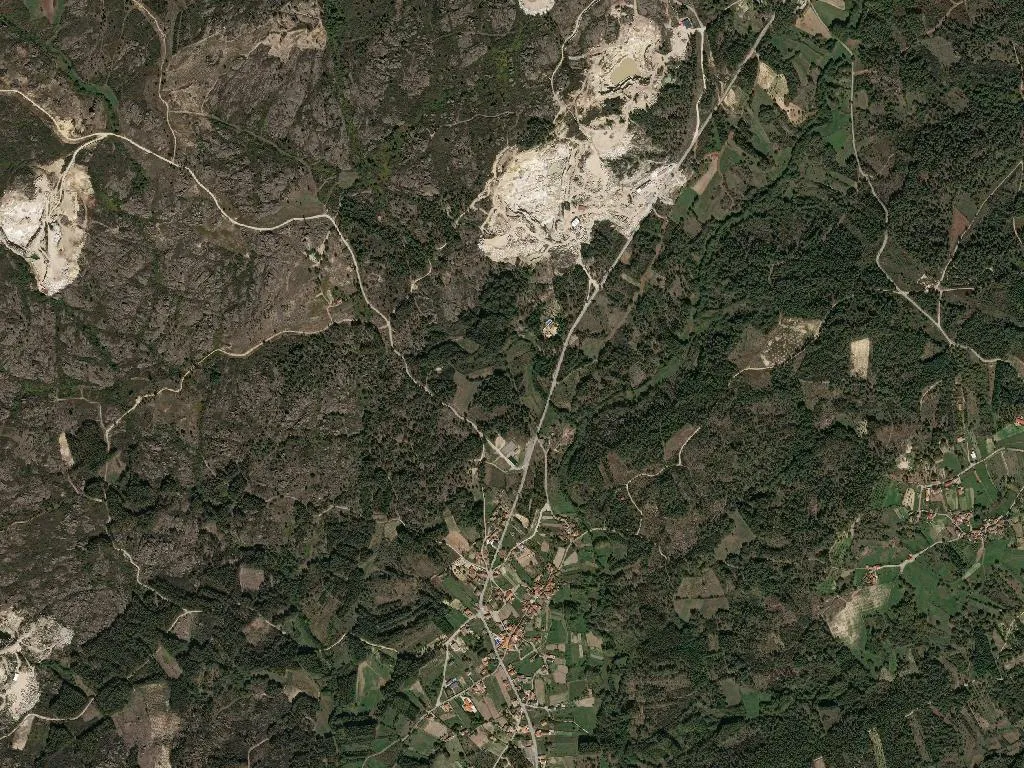
The slate roofs are still dew-beaded when the sun finally clears the ridge of the Serra de Leomil. At 820 m the air is thin enough to carry the scent of oak and chestnut a kilometre down-wind, and every footstep on the quartz-strewn track sounds disproportionately loud. This is the civil parish union of Pêra Velha, Aldeia de Nacomba and Ariz—three hamlets stitched together by the 2013 administrative shake-up, yet each still behaving like a self-contained Portuguese micro-kingdom.
Three names, one granite backbone
Place-names here are shorthand for vanished landscapes. Pêra Velha—“Old Pear Tree”—hints at orchards long swallowed by secondary forest; Nacomba and Ariz echo medieval family holdings recorded in 12th-century Leomil charters. Human time runs deeper still: castro hill-forts crown the western escarpment, and fragments of Roman roof tile turn up whenever a field is ploughed for rye. For centuries these settlements answered only to the couto de Leomil, a semi-autonomous “sanctuary” where Portuguese law arrived on mule-back once a year, if at all.
Life calibrated to altitude
Spread across 30 km² of granite and schist, the population now stands at 389—roughly one resident per football pitch. Census 2021 shows the pyramid inverted: 167 pensioners, 26 children. Locals still speak of altitude as a domestic chore rather than a view-point: wood stacked before the first frost, potatoes in by Saint Joseph’s Day, the June mist that can postpone cherry ripening by a fortnight. Houses grow out of bedrock; dry-stone walls divide meadows just large enough for a cow and a sense of humour.
São João’s one-day reprieve
On 24 June the calendar snaps open. Emigrants who drive cranes in Lyon or clean houses in Zurich park rented Clios beside the churchyard. The São João procession sets off at five, brass band included, and for twelve hours the population triples. Grills sardines, vinho verdo flows, someone’s London-born toddler chases grandparents through stone arches older than the Reformation. By dawn the village is itself again—quiet enough to hear a pine cone drop.
Tracks that remember you
No way-marked trails, no interpretive boards—just a lattice of cobbled paths that remember medieval mule traffic. Follow the wall line east and you climb to a heather ridge where the Douro and Vouga basins divide; follow the scent of woodsmoke west and you’re back before nightfall. In winter the Atlantic cloud can park for days, erasing sound as well as skyline. At dusk the only proof of habitation is chimney breath rising perfectly vertical in the still air, a thin declaration that someone, somewhere, is keeping the mountain’s slow pulse alive.