Full article about Vila da Rua: granite hush above the Douro
Where rye terraces outlast vineyards and June’s São João feast rewinds the population clock
Hide article Read full article
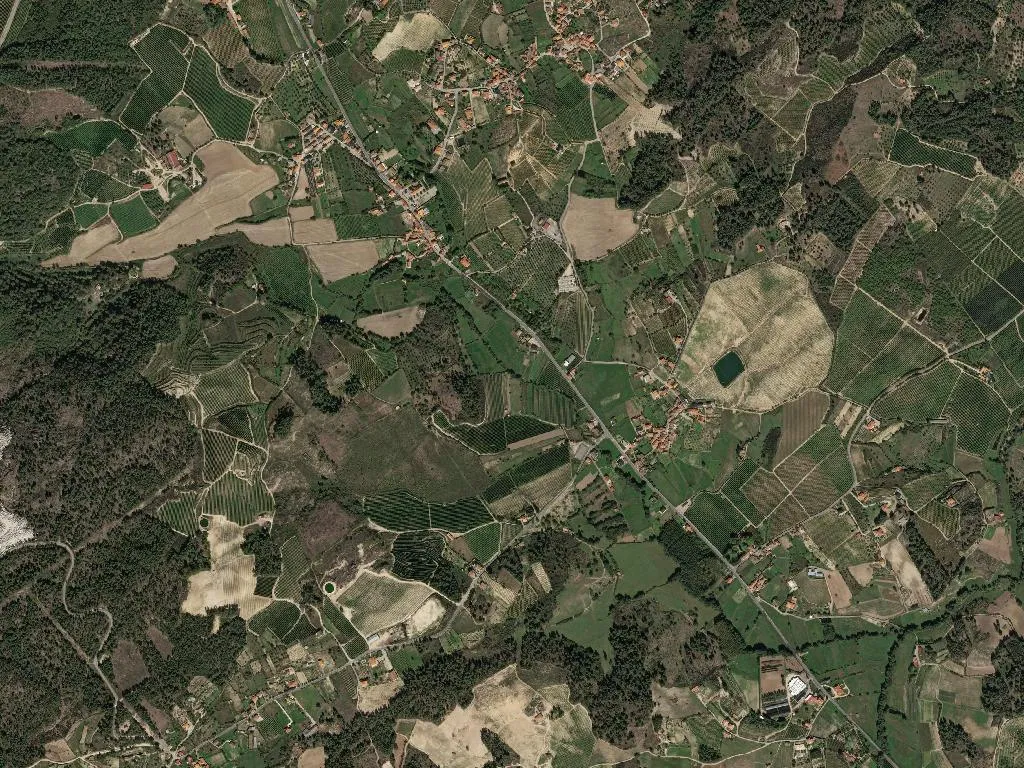
The granite flags clack beneath your boots, a dry, mineral note that ricochets off walls the colour of wet slate before vanishing into the hillside hush. Vila da Rua perches at 581 m, high enough for the Douro’s maritime wind to arrive only as a memory: on clear days you can still catch a faint whiff of sun-baked schist drifting up-river. Five hundred and ten souls keep the village alive, their houses strung along the single road that christened the settlement and still dictates the rhythm of every grocery run, funeral procession and Sunday stroll.
Weathered stone, thinning choir
Open-air arithmetic tells the rest. More than two hundred residents are over sixty-five; fewer than forty are under eighteen. The equation is carved into the landscape—stone-walled terraces kept immaculate by one solitary bent back, geometric vegetable plots tilled at dawn, wooden shutters that yawn open only for the morning sun and snap shut at dusk. The granite itself has aged like skin: ash-moss patina, hairline cracks jewelled with yellow lichen, doorsteps hollowed by generations of left feet.
São João: the year’s only exclamation mark
For forty-eight hours every June the village performs its own census. Emigrants, grandchildren and weekenders flood back for the Feast of St John, parking bumper-to-bumper along the narrow road, releasing bursts of Lisbon and Paris accents into the night. Inside the mother church candles are planted like saplings in front of the saint, each flame a bargain struck with fate. When the final bonfire collapses into embers the silence returns, heavier than before, as though reasserting a leasehold.
When: 23-24 June
Where: Igreja Matriz and churchyard
Bring: grippy soles—the cobbles are uneven and the gradients unforgiving
Granite country, wine in the mind
Officially the parish lies within the Douro DOC, but at this altitude vineyards survive only in family anecdotes. Rye still bristles in a handful of fields, potatoes are stacked in thin ridges, and the peach trees produce fruit no bigger than a snooker ball, sugar concentrated by cold nights. Wine is discussed more than drunk: grandparents recall October descents to the valley’s quintas, a bottle of 1994 saved for a christening, the schist soils that begin eighteen kilometres away. Up here the bedrock is granite, cold and austere, cradling night moisture until mid-morning and flavouring local memories rather than local vintages.
Where to taste: the house wine ran out decades ago. Zé’s tasca pours Dão by the glass; for schist-driven reds follow the switchbacks to Quinta do Tedo.
A wayside national monument
The village’s only listed building, the Cruzeiro do Espírito Santo, has stood beside the cemetery since 1910. There is no signpost; ask Armindo who sells walnuts from a folding table and he’ll jerk his chin toward the lych-gate—“up there, where the old lot graduate”. The stone cross is simply part of the furniture, dusted with maize pollen and bird lime, photographed mainly by visiting grandchildren.
Coordinates: 40.9767, -7.6078
When to go: any day, but Sunday mass leaves the churchyard gate unlocked
Late sunlight slants across the western façades and turns the granite to burnished heather honey. Somewhere a chainsaw drops a gear, a chicken protests, the scent of freshly turned earth drifts over a wall. Vila da Rua does not court the stranger; it continues, slowly, with the mineral patience of a place that has watched whole lifetimes depart along the road that gave the village its name—and knows the asphalt ends just beyond the last house.