Full article about Espinho do Dão: schist, pine and Dão wine at dawn
Where goats outnumber people and the river scents the air with wet slate
Hide article Read full article
Morning light slips through the pines and prints long shadows on the schist walls. The parish church bell counts nine – eight-thirty, village time. In Espinho do Dão the day still starts as it did when the Carnation Revolution was breaking news.
Between ridge and river
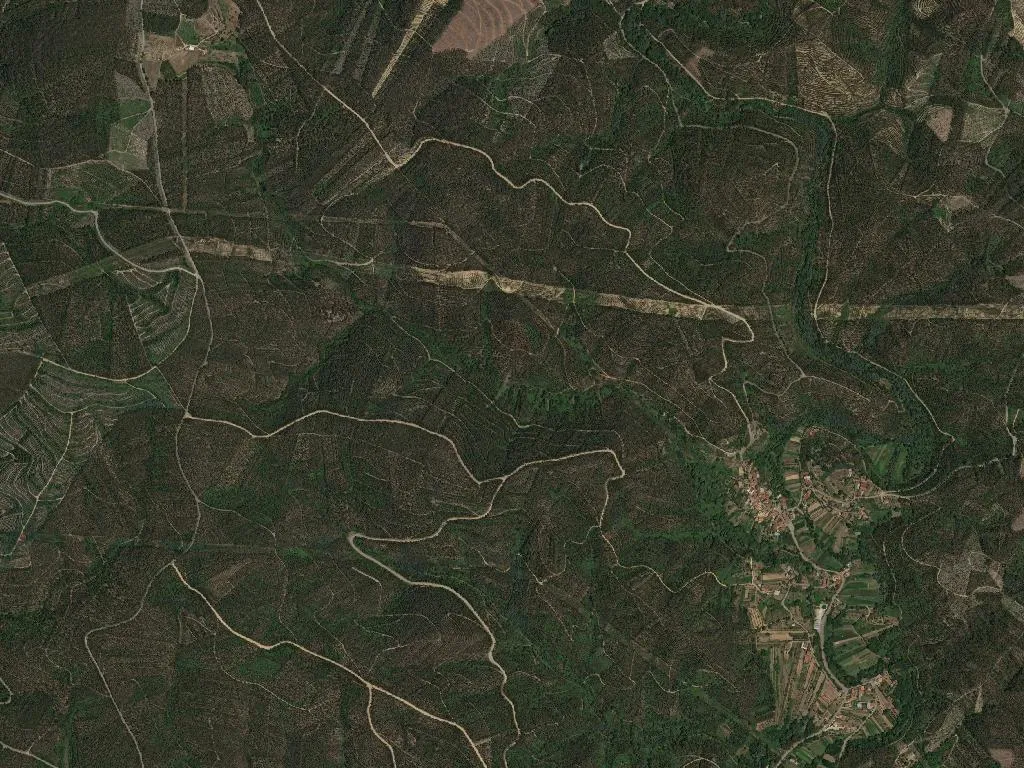
At 231 m above sea-level, Espinho spreads across 4,100 hectares that shelter 984 permanent residents. Dirt tracks link the hamlets: Pala, where João herds forty goats; Monte de Lobos, mis-named now – no wolf has been heard here since the Salazar years. After pruning season the air tastes of burnt pine; when the Águeda swells the soil smells of wet slate. Wild-boar prints – four delicate crescents – cut the mud, later traced by the night fox.
Granite, gilt and Saturday candles
Inside São Miguel’s mother church the air is a blend of old beeswax and lavender. The gilded retable was re-gilded in 1998; elders insist the restorers got carried away. Half-way to the primary school sits the whitewashed Chapel of St Anthony: Dona Rosa lights a single taper there every Saturday before driving to Mortágua’s market. The stone cottages stand their ground, split timbers recording every winter since flax fetched more than wine.
Mill races and memories
Ferns have colonised the watermills on the Pala stream. The last stone wheel stopped the year António emigrated to Chalon-sur-Saône, 1973. Former maize-threshing circles now serve as tractor bays, yet the terraces survive: Touriga Nacional on Sequeira’s slope, Alfrocheiro behind Zé Manel’s house. Here Dão wine is not a revenue stream; it is lunch-table lubricant, the bottle handed to a neighbour, the vintage laid down for a grand-child’s baptism.
Saturday bread, September home-comings
The communal wood-oven in Largo fires at dawn. Kid goat is slid inside at seven, emerging three hours later with crackling that shatters like thin ice. Turnip soup is thickened with last year’s haricots that Amélia shelled and saved. On the first Sunday after 29 September the emigrants return: Swiss and French plates nose-to-tail along the lane. Dona Alice fries pumpkin filhós from memory; her sponge collapses unless the batter is beaten by hand for thirty minutes. The Migrants’ Fair falls on the second Saturday of August – Zé Augusto has flown from Roissy since 1985, still bringing chocolates no one needs now that Intermarché stocks Lindt.
Clocks without hands
Dawn mist knots itself around the Águeda valley. Zé’s café opens at six – espresso and a custard tart in the middle of nowhere. Visitors can detour to Quinta da Pellada for a tutored tasting, but Zé Manel will sell you a demijohn of last year’s red for two euros. The abandoned threshing floor on Cabeço do León is the place to watch the schist turn honey-coloured while the pine ridge blacks out against the sky.
When the bell strikes seven the village dogs hold the note. Day’s end, supper time, tomorrow the vines wait. Espinho asks for nothing more.