Full article about Marmeleira: maize, mist & Dão vines at 113 m
River-mist hamlet where schist barns store maize and Touriga Nacional waits in crates
Hide article Read full article
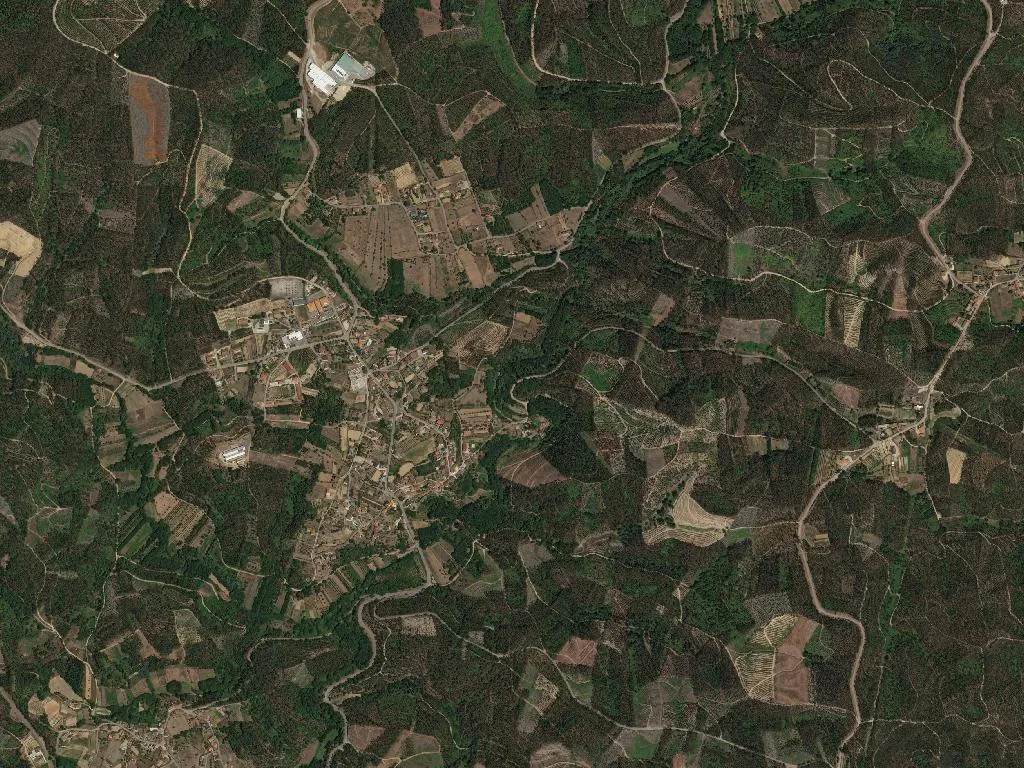
The single-track lane corkscrews between fields where the chlorophyll glare of maize alternates with the umber of freshly-turned earth. Marmeleira reveals itself only gradually: a scatter of low whitewashed houses sliding down to the Dão at a mere 113 m above sea level—one of the lowest wrists of Mortágua municipality. River mist lingers until late morning, tobacco-scented from stubble fires; a cock crows, then the faint diesel throb of a New Holland rounding the bend.
Rural Geometry
Four-hundred-and-eighty-nine souls occupy 1,850 hectares—twenty-six neighbours per square kilometre. Census arithmetic tells the interior story: forty-four children under fourteen, 220 residents past retirement age. Farmsteads sit at the end of ochre tracks, their schist walls the colour of wet sand, roofs soot-darkened by decades of resinous eucalyptus smoke. Barn doors stand open to reveal pyramids of last year’s cob maize sharing space with a rusting 1977 Massey Ferguson.
Terraces & Watermeadows
Because the parish lies inside the Dão DOC, vines are trained in tidy patamares on sun-facing slopes, the river moderating August highs and January frosts. There are no baronial quintas here; instead, micro-producers haul plastic crates of Touriga Nacional to the cooperative press in Mortágua. Down on the alluvial flats, irrigation ditches feed plots of sweet corn whose surplus yellow cobs still fatten the village pigs. After October rain the soil exhales a damp-cereal breath, mingling with fireplace smoke drifting from every chimney.
The Visible Routine
Six licensed holiday lets—converted haylofts and a 1950s railway-worker cottage—receive weekenders from Porto looking for absolute silence. There is no café, no gift shop, no interpretative panel. Logistics are simple: Mortágua’s Intermarché is eight minutes by car; Viseu’s hospital and designer-shoe boutiques thirty. Walkers share the tarmac only with the daily Rede Expressos minibus and the occasional milk tanker.
Texture of the Everyday
What counts as attraction is olfactory, not monumental: white smoke at dusk, the ammonia tang of tomato vines tied to hazel sticks, dogs that announce strangers long before they appear. The parish repeats itself: bread is baked six kilometres away because the last oven closed in 1998; wood is split and stacked under the eaves; grapes are hand-picked into orange crates during the third week of September. When Monday’s school-bus strike coincides with pruning season, teenagers stay home to wield secateurs beside their grandfathers. As the sun drops, low light ignites west-facing windows and the valley inhales; you realise Marmeleira asks only that you notice the exact grain of things—lichen cross-stitching a wall, rust mapping a gate, a thread of hearth-smoke unravelling into the pale Dão sky.