Full article about Pala: Where Granite Terraces Breathe Dão Wine
Silent stone terraces, emerald pools and €3 farmhouse wine in Mortágua’s hidden parish
Hide article Read full article
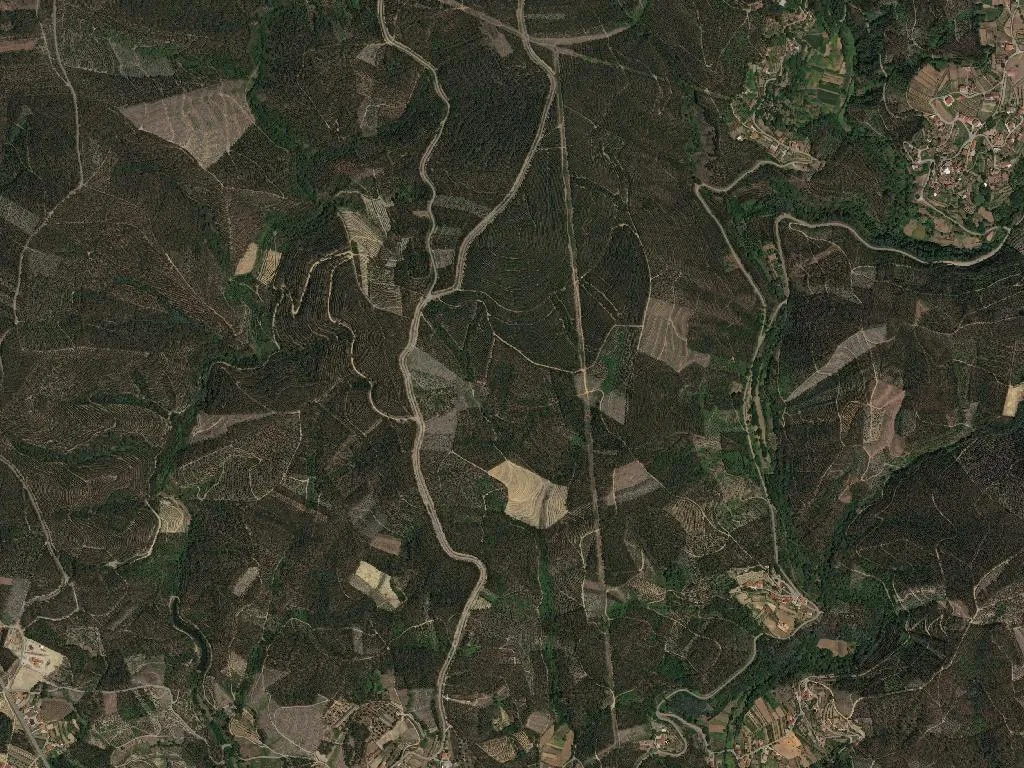
Granite doesn’t announce itself; it simply endures. In Pala, a parish of 859 souls folded into the northern flank of Mortágua, the stone is the first and last thing you notice—dry-stack walls bruised by centuries of sun, their mortar long gone, still refusing to fall. They parcel the land into pocket-handkerchief plots that climb from 240 m to 400 m above sea level, each terrace stitched with the Dão’s pale schist. No roadside placards brag about the demarcated region; the only clue is the sudden hush when the EN234 peels away and the air thickens with resin from the pinhal on the ridge.
Geography
Average altitude: 304 m. The vineyards—forty-odd hectares of Touriga Nacional, Jaen and Alfrocheiro—stop just short of the pine belt. Below them the Ribeira de Pala threads a granite gorge; by August it’s a necklace of emerald pools linked by trickles strong enough to power a single watermill still grinding corn for chicken feed. The parish road (CM1043) narrows to a single track after the last house; beyond that, only footpaths and the blue-and-white waymarks of the 7 km Ribeira trail.
Demography: 291 residents over 65, 54 under 14. Primary school closed in 2009; the bus to Mortágua leaves at 07:10, 12:40 and 17:20, weekdays only. The nearest GP surgery is 14 km away in Tábua; for A&E you drive 45 km to Viseu, praying the fog doesn’t settle on the N17.
Wine
Every row is registered as Dão, yet no quinta here bottles under its own label. Instead, grapes sell for €1.20 a kilo to the cooperative in Mortágua or disappear into five-litre garrafões that re-emerge at farmhouse doors priced at €3 a litre. The 2022 harvest began at dawn on 12 September; six pickers from the next village arrived with their own knives and plastic crates, paid in wine and a lamb stew lunch.
Where to stay
Booking lists two properties: Casa do Rio, a four-bedroom farmhouse with infinity pool (€120 a night), and Casas de Pala, three studio cottages carved from a 19th-century barn (€70). Otherwise, ask in the pastelaria “O Gato” whether Maria—former Caixa Geral teller, now 72—feels like unlocking the spare room (€35, cash only, breakfast included if the hens are laying).
Eat
O Gato: opens at seven for bica (€0.65) and thick slices of flamengo cheese in caraway-seeded bread (€2).
O Celta, 3 km out on the CM1043, fires its wood oven only at weekends. Phone ahead (231 980 123) for arroz de cabidela or chanfana, €12 including house red and a slice of queijada still warm from the tin.
O Pala grocery stocks frozen pão de forma, unleaded petrol in jerrycans and the parish’s only ATM—withdraw before Saturday 13:00 or wait until Monday.
Walk
Ribeira de Pala linear trail: 7 km, 2 hrs, waymarked in blue and white. Start at the stone bridge over the Caima (40.4138, -8.2729); pass three roofless mills, climb through heather and strawberry tree to the chapel of São Brás, then descend to the river beach—clean water, no lifeguard, best after 16:00 when the valley shade reaches the sand.
Useful services
Fuel: 24 h self-service in Mortágua, card only.
Pharmacy: Mortágua or Tábua.
Bank: Caixa Agrícola, Mortágua, Mon–Fri 08:30–15:30.
Mobile signal: Vodafone holds 4G in the village square; NOS and MEO drop to 3G.
When to go
May–June: heather flowers, temperatures in the low 20s.
September: harvest colour, nights cool enough for a jacket.
Avoid August: 35 °C at noon, valley mosquitoes after dusk.
Winter: persistent fog, black-ice on bends—drive only if you know the camber by heart.