Full article about Arca & Varzielas: granite villages above the mist
At 690 m, granite keeps vigil over silent pastures of Arca e Varzielas
Hide article Read full article
A Grey Granite Skyline
The grey granite walls of the old buildings warm in the afternoon sun. At 689.7 metres above sea level, the air feels sharper, colder in the mornings when mist rises from the valleys of the South and the Bestança. Arca and Varzielas merged on paper in 2013, but they have always shared the same slope-sculpted geography, the same pasture-based economy, the same silence broken only by the church bell of Arca – a dry peal that carries for more than a kilometre and, at seven o’clock, even the dogs have stopped barking.
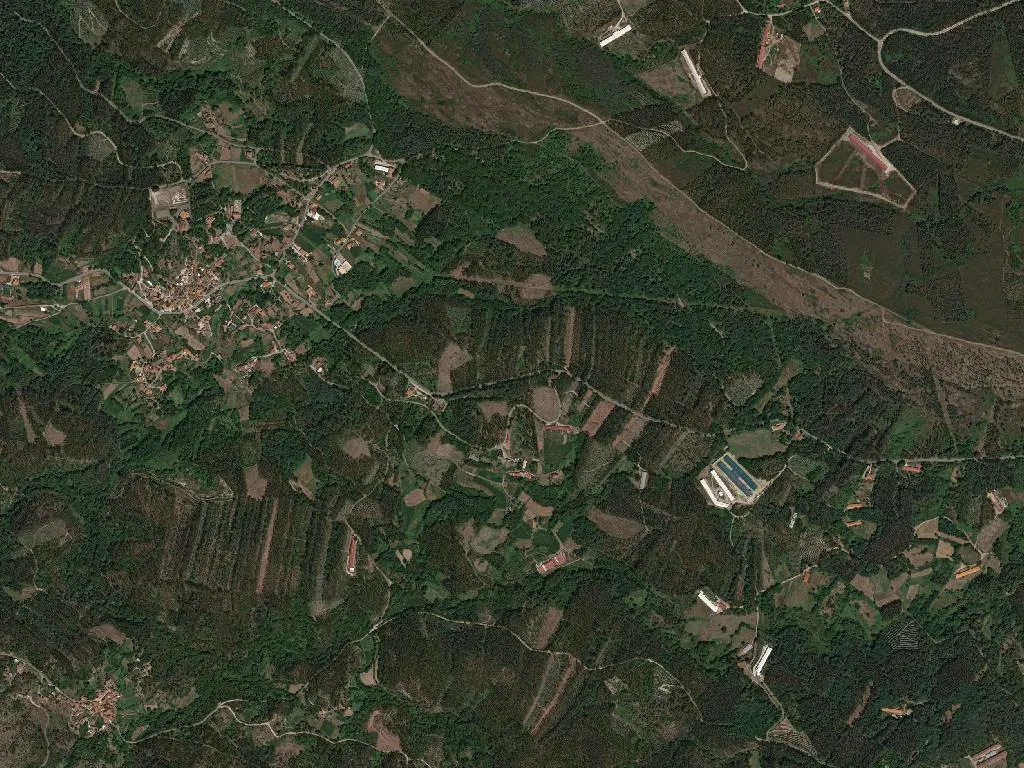
Five hundred and fifty-nine people live here, scattered across 2,036 hectares of broken ground. Twenty-seven inhabitants per square kilometre translates into breathing space, long gaps between houses, dirt tracks linking hamlets that appear only when you round the next bend. Two hundred and six residents are over sixty-five; just thirty-eight are children. The statistics tell the familiar Portuguese mountain story – outward migration, ageing, the quiet endurance of those who stay – yet some return. Filipe, who spent fifteen years plumbing in Lyon, came back two years ago to look after his parents and now grows apricot-flavoured tomatoes in a greenhouse where brambles once ruled.
Stone that Outlives Us
Two listed monuments testify to time stacked on these slopes. Arca’s parish church, its Manueline portal bleached by centuries, has been a National Monument since 1922; at the base of the tower you can still see the stone where men once honed sickles before the harvest. In Varzielas, the chapel of S. Sebastião – a Public Interest Building – carries the date 1724 carved on a vault stone now soot-darkened by vigil candles. Granite survives its masons, holding in its grain the memory of every chisel strike; on winter nights, when the wind swings north, you half expect to hear the ash-shift of the communal bread oven that once fed the whole parish.
Mountain Pasture, Protected Plate
Altitude and unfenced upland make this natural grazing country. Three DOP products owe their flavour to these ridges: Gralheira kid goat, Arouquesa beef and Lafões veal. A fourth – Aveiro’s Ovos Moles – arrives in grand-daughters’ hatchbacks at the weekend, the cardboard box still scented with sugar and cinnamon. The meat here tastes of heather and wild rosemary rooted in thin, clean soil; animals climb, develop lean muscle, breathe air rinsed by Atlantic weather systems. At Zé Mário’s butcher in Arca the cow is still slaughtered on Friday morning; Saturday brings rib-cutlets to eat with toasted maize broa and a thread of new olive oil.
Where to Stay – and Why
Three recovered village houses offer the only beds for hire. There are no hotels, no coach turning circles, no yield-management algorithms. Guests sign up – tacitly – to wake cold, hear silence, walk tracks where a car is an event. Risk is minimal, logistics modest, crowds impossible. Instagram can wait; photographs here serve chiefly as proof of presence, not social currency. One new holiday cottage, canary-yellow and conspicuous at Cimo de Vila, looks ready to start a conversation – but no one has yet seen its lights on.
Between Ridge and River
Nature grades this landscape at forty out of a hundred on the drama scale: no cataracts, no glass-floored viewpoints, simply the everyday texture of a northern Portuguese sierra – schist outcrops, moss on north-facing walls, water running clear in stone-lined channels, unobstructed wind on the crests. At Curva do Galo a centuries-old cork oak marks the boundary between Arca and Varzielas; each October the hunters’ association holds its picnic there, ladling wild-boar feijoada and pouring red wine that António do Cortiço ages in oak barrels inherited from his father-in-law.
Evening light stretches the shadows of the stone walls. In the distance a tractor climbs a farm track, raising a pale dust the wind quickly scatters. The engine note wavers, then vanishes. Silence returns – the dense, high-altitude kind in which every sound is over-defined. At half past seven the first stars appear above the Senhor da Serra knoll, and in the village the only audible thing is the café fridge humming – Rui never switches it off because “the compressor seizes up”.