Full article about Bell-strokes & Brume in Destriz e Reigoso
Granite silence, baroque gold and oak-smoked kid in Portugal’s hidden Arada-Caramulo parish
Hide article Read full article
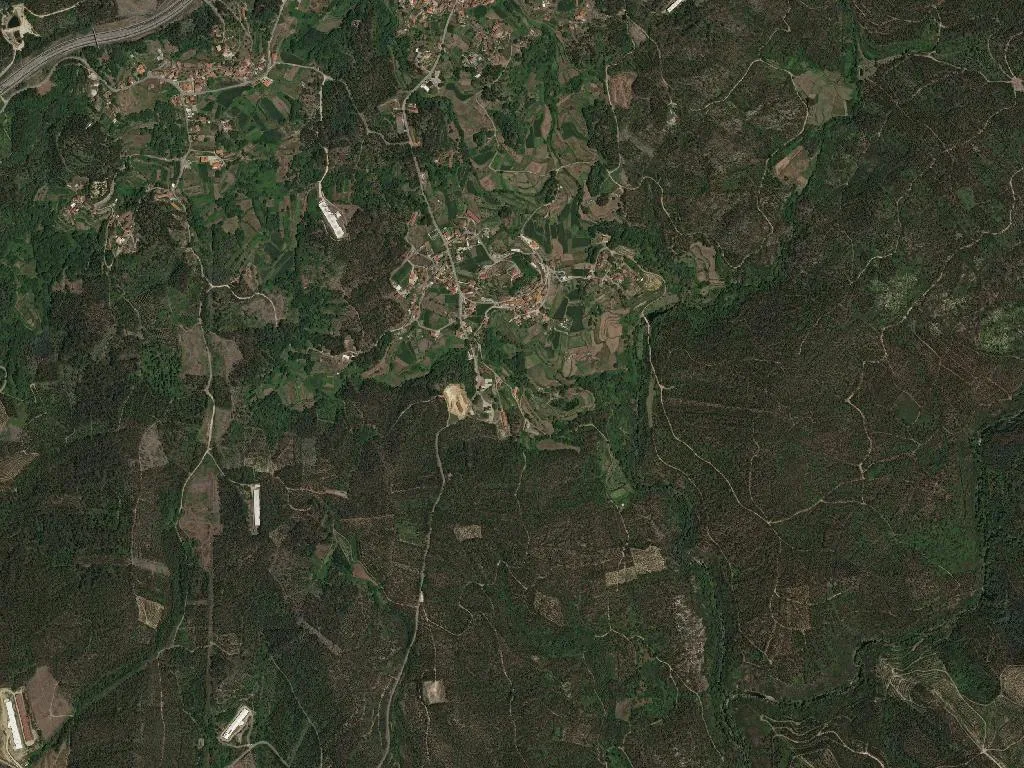
Three bronze bell-strokes echo down the valley and dissolve among the maritime pines. In the civil parish of Destriz e Reigoso, 347 m above sea-level, the hush that follows is almost physical: not emptiness but the distilled presence of granite, gorse and Atlantic air that has lost its salt on the way inland. Dawn fog lingers long enough to dampen the schist walls; the smell of burning oak drifts from chimneys no wider than a rifle slot.
Two villages, one backbone
Administratively fused in 2013, Destriz and Reigoso have shared a heartbeat since at least the twelfth century, when Cistercian land-grants stitched their territory into a quilt of priories and grazing rights. The name Destriz survives from a medieval landlord; Reigoso carries the Celtic-sounding suffix “-gosu” common across northern Portugal. Wedged between the Serra da Arada and the Serra do Caramulo, the settlements weathered the 1810 French flight to the coast and never abandoned their mixed husbandry—maize, rye, Barrosã cattle—still readable in the terraced strips that ribbon every slope.
Gold leaf and blue-and-white stories
The parish church at Reigoso faces due west, its baroque façade catching the last sun like a sheet of beaten bronze. Inside, eighteenth-century gilded carving frames panels of blue-and-white azulejos that narrate the Flight into Egypt in the vocabulary of a provincial craftsman who had never seen either country. At tiny São Miguel in Destriz, Manueline rope-moulding curls around the doorway like ivy carved in stone, a reminder that this crossroads zone channelled both coastal salt and mountain wool long before national roads were numbered.
Kid goat, veal and the taste of altitude
Food here is what the land would permit, perfected by boredom and firewood. Gralheira IGP kid is braised in red wine until the bones surrender, thickened with the same cast-iron pot that roasted yesterday’s Arouquesa DOP veal. Carqueja—yellow-flowered broom—flavoured rice cuts the fat, while salt cod baked under a garlic-and-oil crust shares table space with river trout from the Alfusqueiro. Dessert still obeys the nuns: pastéis de Santa Clara, shards of crisped pastry dusted with icing sugar that demand a tar-black bica as antidote.
Paths through heather and hives
Spread across 22.75 km², 587 souls occupy a population density lower than the Scottish Highlands. The old mule track linking the villages tunnels through oak and chestnut, past stone espigueiros where maize cobs dry like chandeliers. Bee boxes sit in meadows of wild heather; the resulting honey granulates slowly, tasting faintly of chestnut blossom and the resinous wind that sweeps the Caramulo. From the granite outcrop above Destriz the view unfolds in successive blue ridges until the Arada dissolves into sky.
Where the firelight starts at seven
There are four licensed guesthouses, all conversions of labourers’ cottages. Electricity arrived late, Wi-Fi later, but the calendar is still set by the cattle fair in São João da Serra and the day the first swallow is heard. With 186 residents over sixty-five and only forty-five under twenty, collective memory outweighs ambition; every bend in the lane is tagged to a baptism, a funeral, a threshing day. Dusk comes fast behind the mountain: woodsmoke lifts from the rooflines, the sky turns the colour of chilled Campari, and on the kitchen table the jar of honey crystallises grain by grain—an edible geology of a place that has learned to wait.