Full article about Smoke, stone & goat stew in Oliveira de Frades
Leap the Sul gorge, trace the Ox Road, taste clay-pot kid in Lafões country
Hide article Read full article
Smoke, water and stone
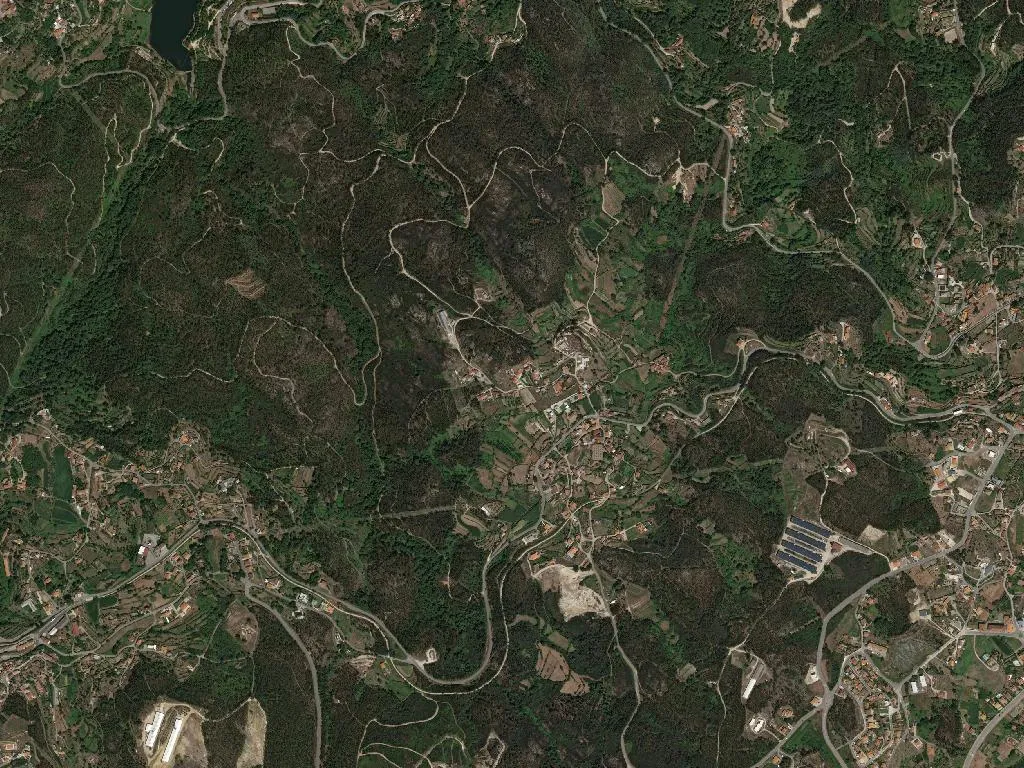
The scent of burning oak drifts from the smokehouse just as the baker slides rye loaves from the wood-fired oven next door. In Souto de Lafões a boy launches himself across the Rio Sul—summer flow so thin that locals call the leap “the grasshopper”. Granite bridge parapets store the afternoon heat like storage radiators; on the slopes above, centuries-old oaks and cork trees refuse to surrender ground to the eucalyptus plantations. This is the civil parish union of Oliveira de Frades, Souto de Lafões and Sejães: 4,006 people spread over 22 km² of plateau that tilts between 300 m and 600 m, where the Sul and the Vouga have carved gorges so deep the rock itself seems to sigh.
The road that once walked cattle to the Atlantic
Before the A25 motorway stole its traffic, the N16 moved live cattle from Lafões to Aveiro’s docks. Drovers called it simply “the Ox Road”; its route is still legible in the landscape—stone bridges 200 years old, river beaches improvised from disused weirs, verges where iron-shod hooves once struck sparks. The Manueline pillory in Oliveira de Frades lost its capital in an 1893 boundary brawl; the missing piece resurfaced a century later in Sr Albino’s vegetable patch, used as a doorstep. Collective memory here is patient: stories wait like village dogs, dozing until the uphill walk home demands conversation.
Administrative reform in 2013 bundled the three parishes into one, yet each keeps its habits. Oliveira de Frades takes its name from olive groves and the Franciscan friars who arrived long before 1974; Souto de Lafões comes from the Latin saltus (forest) and a medieval county map still argued over at café tables; Sejães may derive from the pebbles the Sul deposits each winter. These are toponyms worn smooth by generations—stone, water, tree, belief and graft.
Clay-pot goat, veal and the month’s first market
Local gastronomy is not performance for tourists; it is Tuesday lunch. Four protected products dominate: Gralheira kid-goat (IGP), Arouquesa beef (DOP), Lafões veal (IGP) and, in a nod to coastal trade, Aveiro’s soft-yolk ovos moles (IGP). January chanfana—goat stewed in red wine and juniper—simmers for hours in unglazed clay over a wood fire, the pot blackened like a confessional. Rojões arrive stained scarlet with sweet paprika; morcela, salpicão and chouriço are hung above hearths that double as shrines to St Anthony.
On the first Sunday of each month the market colonises the main street with such certainty that even the butcher’s dog loses his bearings. Buy chouriço at the Lafões Agricultural Cooperative, founded in 1910 by a republican doctor who understood pork better than politics, or eat slow-cooked veal at O Moinho in Souto, where house wine comes in plastic bottles yet tastes of iron-rich soil.
Cold water, hot stone, cork shade
The 12 km Vouga Trail (PR3) follows irrigation channels and pack-horse bridges west from the 16th-century chapel of São Sebastião. Oak canopy muffles granite outcrops; in July the river beach at Pessegueiro fills with children who have never seen the Atlantic but know the reservoir is colder than Zé Manel’s lager. Higher up, Henrique, a second-cousin of the parish council chair, practises falconry among holm-oak groves, keeping peregrines the way others keep Fado in their lungs.
Inside the parish church the baroque retable is swabbed with vinegar and water—cheap chemistry against centuries of incense. Processions still descend to the river as if drawing water from a well. At Carnival, masked “big-heads” duel in improvised verse between hamlets; television crews never appear, and anonymity is protected by papier-mâché.
Dusk settles. Footsteps echo up the cobbled lane, mingle with church bells and the river’s slow syllables. Somewhere a boy launches again across the Sul, the gesture hanging in mid-air like cigarette smoke from Sr Alberto’s window—light, exact, impossible to replicate anywhere else.