Full article about São João da Serra
Vitela calves graze chestnut terraces above the Lafões valley in this silent 409-soul parish.
Hide article Read full article
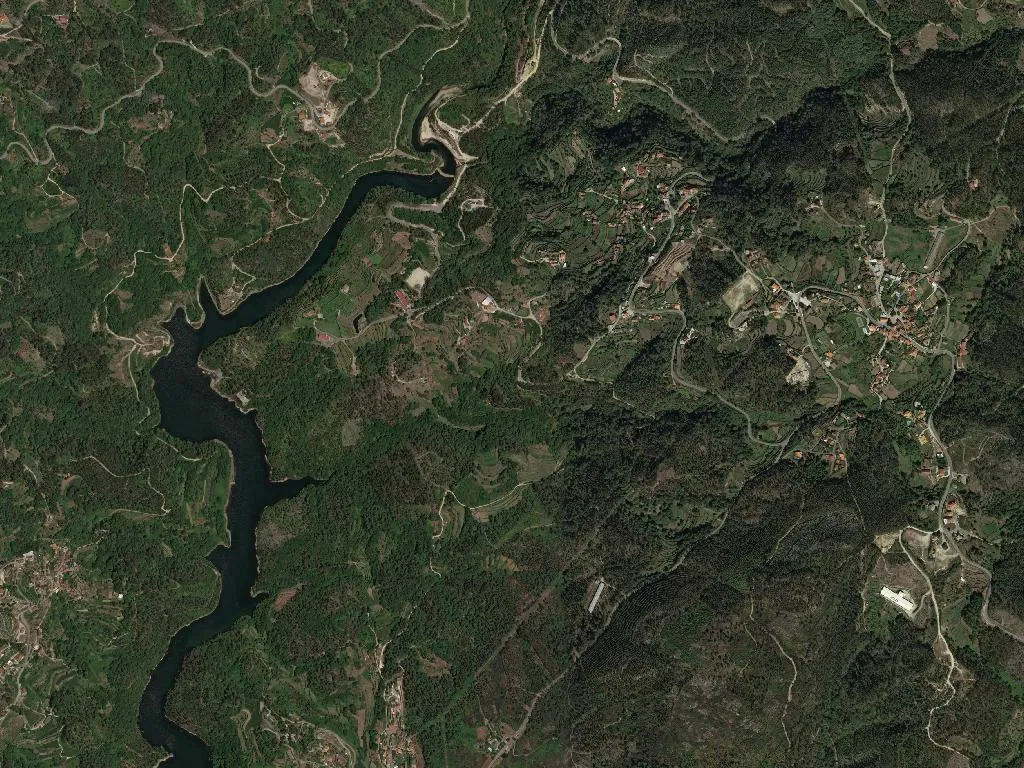
The tarmac narrows after the last houses of Oliveira de Frades, corkscrewing upwards between black-pine and parcels of rye so sharply contoured they look ironed. At 220 m the air lightens; resin and newly-cut hay flood through the open window. Ahead, scattered slate roofs glint like mica – São João da Serra, where the Lafões valleys begin to breathe.
Land and what it gives
Spread across 1,200 ha, the parish is less a village than a loose constellation of smallholdings: vegetable plots the size of tennis courts, granite outbuildings, meadows where cattle graze within earshot of their owner’s kitchen radio. The 2021 census counted 409 inhabitants; 151 are over 65, only 27 under 14. Yet the hedges are trimmed, the maize rows ruler-straight, and every terrace wall has fresh white mortar patching last winter’s frost damage.
This is raising-country. Registered calves of Vitela de Lafões DOP graze the lower meadows; Cabrito da Gralheira IGP kids skip on the steeper chestnut-shaded slopes; Arouquesa beef from the neighbouring Serra da Freita finishes here, sold from a chill cabinet in the parish café. In smoke-houses appended to stone cottages, legs of pork cure slowly over oak and heather, the scent drifting down lanes too quiet for Google Street View.
The pace of those who stay
There are no signed trails, no gift shops, just four modest guesthouses whose visitors arrive with walking boots and paperback Portuguese dictionaries. Population density is 34 people per square kilometre – silence is the default soundtrack, punctuated by pine needles shifting in a thermal or the two-stroke cough of a distant Husqvarna strimmer.
Footpaths still serve their original purpose, linking fields rather than viewpoints. Follow one east and you reach the 19th-century chapel of São Sebastião in Cimo de Vila, rebuilt after the 1858 earthquake. Its single-nave interior smells of beeswax and granite damp; on 20 January the entire parish squeezes inside for the house-blessing procession, candles cupped against the winter wind.
Late afternoon, when the sun skims across rye heads and shadows stretch like taffy, the church bell tolls the Angelus. Nothing dramatic is announced – only the day folding itself away, wood-smoke rising, and the certainty that tomorrow someone will climb the terraces to hoe beans, whether the world notices or not.