Full article about São Vicente de Lafões
Chestnut Arouquesa calves graze Vouga water-meadows beneath 17th-century belfries.
Hide article Read full article
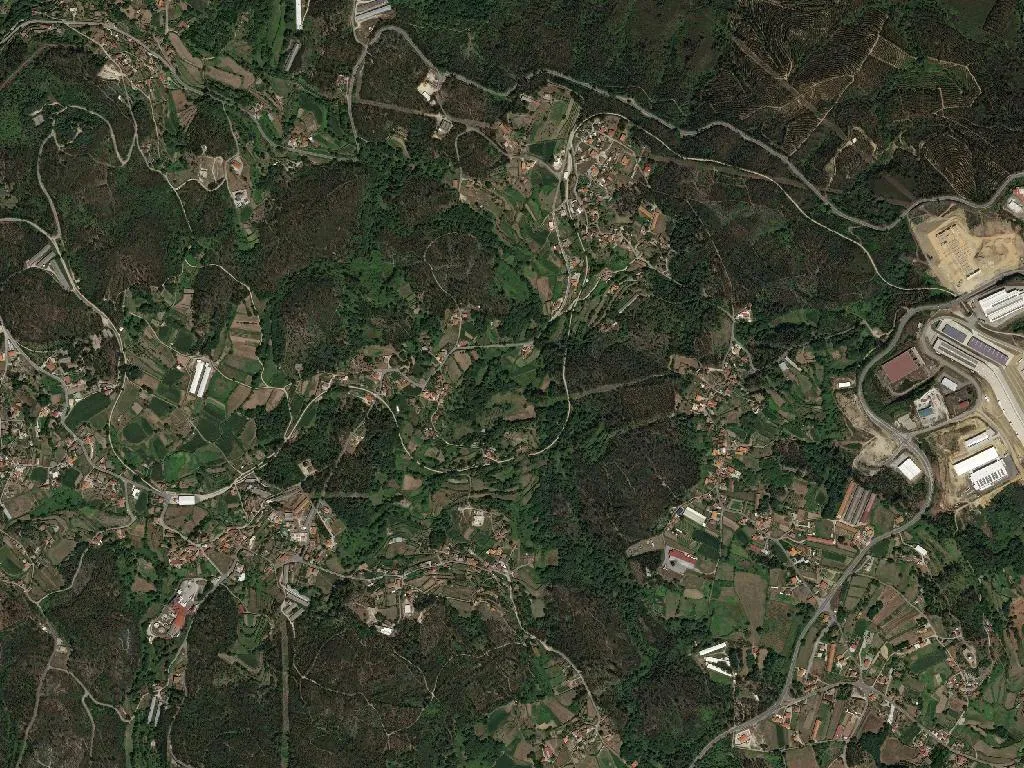
Smoke rises arrow-straight from a stone chimney, unravelling in the cold morning air. In the water-meadows of São Vicente de Lafões, dew pearls on grass where chestnut-brown Arouquesa calves graze with the composure of animals that have never known a deadline. Beyond them, dry-stone walls of weather-beaten granite sketch ancient rectangles around terraces of maize and potatoes that step gently down to tributaries of the Vouga.
The parish—748 souls across barely eight square kilometres—still follows its medieval footprint: schist and granite houses clustered within earshot of the 17th-century Igreja Paroquial de São Vicente. Inside, the polychrome statue of the deacon-martyr has watched over these lands since before Portugal’s borders were fixed. Wayside chapels and granite calvaries punctuate the lanes, modest signposts of a faith once used to measure distance as much as devotion.
Weaving linen, shaping the land
For centuries the rhythm here was set by flax. After the spring sowing, women spent winter evenings spinning fibre into thread, their wooden looms clacking while men tended the Arouquesa herd and hoed the narrow strips of rye. Three kilometres down the N16, Oliveira de Frades’ town-house museum keeps one of those looms, its beech frame split like an old violin, beside rough sheets of unfinished linen and Roman milestones that remind you these hills at 335 m were a thoroughfare long before Braga had a cathedral.
At table, the certified taste of Lafões
Geography writes the menu. Vitela de Lafões IGP—milk-fed veal raised on these meadows—emerges from a wood-fired oven blush-pink, its flavour intensified by nothing more than mountain salt and a brush of garlic basting. On feast days the air fills with the crackle of Cabrito da Gralheira IGP kid, spatchcocked over charcoal and eaten with fingers rather than forks. Carne Arouquesa DOP, sliced from the same cattle you walked past that morning, completes a trio of protected specialities unique to this pocket of the Beira interior. Cornbread, warm and yellow, mops up juices, while smoke-cured chouriço and paio provide salty punctuation. Dessert is a silver-tray of Ovos Moles de Aveiro—conventual egg-yolk sweets that travelled inland along the same Vouga valley that once carried barrels of salted cod to Porto.
Walking between stone and water
A 9 km way-marked loop heads south-east towards São Pedro do Sul, the River Sul whispering below moss-covered walls. Mixed forest—oak, maritime pine and the pale trunks of eucalyptus—opens suddenly into small clearings where maize dries on four-legged espigueiro granaries, their weatherboard sides raised on mushroom-shaped stilts to outwit mice. You may meet a farmer still turning soil with a mattock whose handle is dark from decades of sweat, or an Arouquesa cow that lifts its lyre-shaped horns, registers your presence, then returns to the serious business of grass.
Late-afternoon light slants through the oaks, throwing long shadows across the beaten-earth path. From the belfry, three slow bells carry down the valley; the granite holds the day’s heat, releasing it like a stored sigh. In São Vicente de Lafões the faint scent of raw linen still lingers in the damp mountain air, braided with wood-smoke and the sweet, almost buttery aroma of veal roasting for tonight’s table.