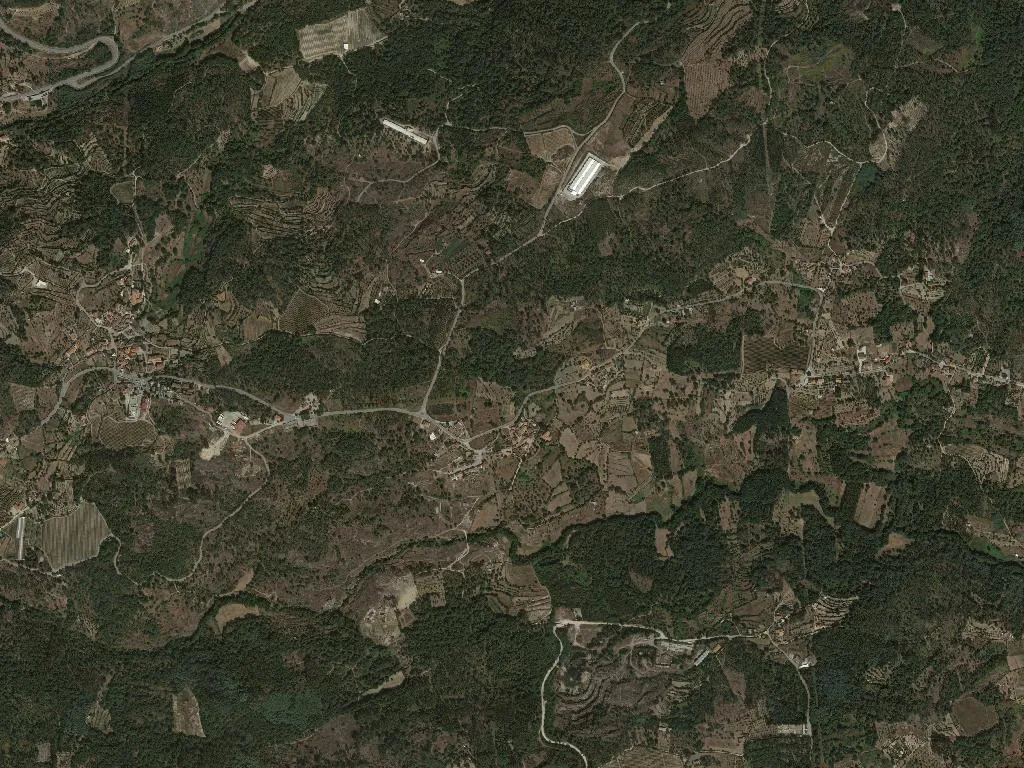
Full article about Germil: where Dão vines breathe schist mornings
Germil, Penalva do Castelo, hides terraced Dão vineyards, door-knock goat cheese and harvest clocks set by sunlight and tractor.
Hide article Read full article
The September slope
The vineyard climbs in tight terraces, each row propped by a schist wall the years have soldered together. The grapes have turned but still resist the pinch: September in Germil, when the 436-person hamlet keeps time with the Dão demarcation. Between the rows the earth smells sun-struck; on windless mornings you catch the faint tang of must that dripped overnight and dried into the dust.
What the land gives for lunch
Albertina’s goat cheese arrives still warm from the milking shed—no roadside stall, you knock. The rind is tissue-thin, the paste almost white, and the finish carries a note of broom and high-summer grasses. If a lamb was slaughtered, it appears the Sunday after the 11 o’clock mass, simply grilled, coarse salt, a thread of cousin-in-Lourosa olive oil. There is no menu, no booking: you stand at the doorway where someone is smoking chouriço and ask if there’s a slice to spare.
Behind the village the olive groves are pocket-handkerchief plots, half-wild, but they still surrender enough fruit to fill blue crates for the Tondela press. The oil is peppery, catches the throat—perfect for breakfast bread, even better for softening the garden-bitter jiló that grows beside the winery door.
Clocks powered by tractor and sun
When sunlight hits the east wall of the Igreja Matriz, every farmer knows it’s half past nine. Zé Mário pulls the starter cord; the diesel cough travels uphill before the gearbox clatter follows. After that, traffic thins to the baker’s van and the vet’s pick-up. Children have left for the school bus to Penalva, women for the Guardão textile plant or the care home in town. Who remains? Those with vines to watch, goats to guard, or nowhere else to go.
Harvest week repopulates the place. Offspring arrive Friday night from Lisbon, bearing pristine crates and soft city hands that blister by noon. Grapes are picked in sunshine or thin drizzle—they refuse to wait. At dusk the baskets ascend to the adegas where open stone lagares foam with juice. The scent is almost syrupy, incense-thick, settling into clothes. When fermentation calms, someone sets aside a jug for tomorrow’s snack: dark-crumbed migas drenched in sweet must, eaten standing, fingers only.
Then silence reasserts itself. Leaves curl and drop, wire trellises stand like ribs against the sky. A wind rides up the Vouga valley carrying burnt eucalyptus, and overnight the first hoarfrost glazes the jacket you shrug on for the bar. Inside the cellars the wine sleeps, wood ticking softly under moon-warmed staves. Outside, Germil shrinks to a single gate-latch, a distant dog, the unnoticed scent of damp firewood that, all the same, never leaves.