Full article about Lusinde: where vines speak louder than people
Stone lanes, foot-trodden lagars and lamb stew at a blue-painted door in Penalva do Castelo’s mounta
Hide article Read full article
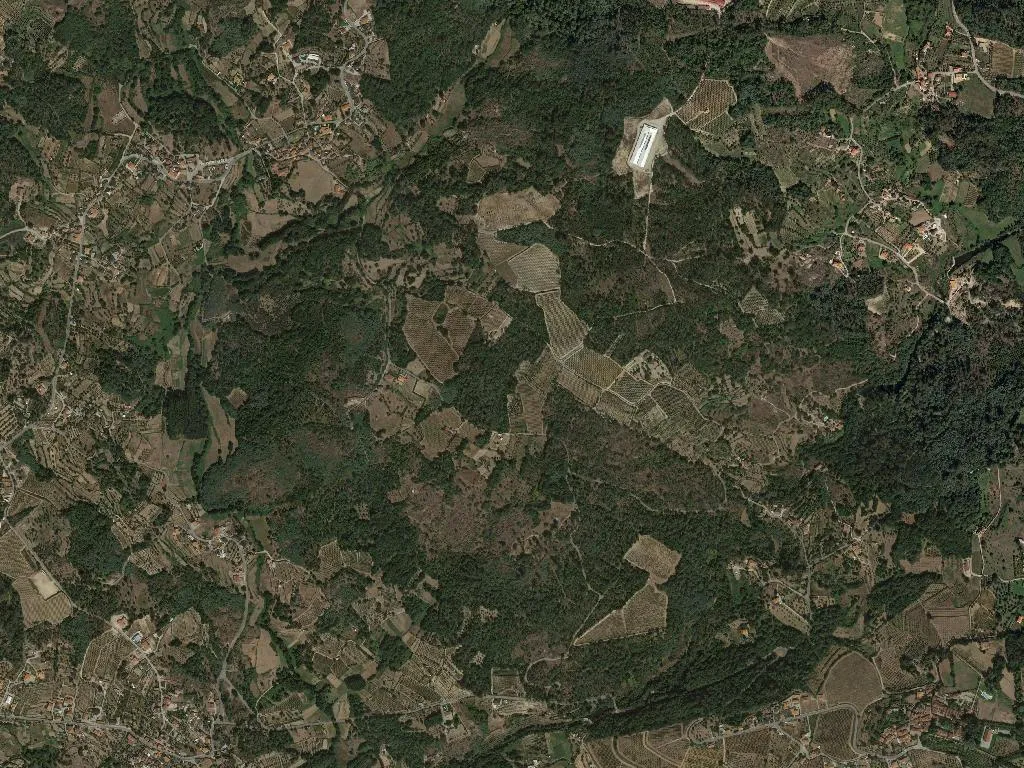
The wind drifts up Rua do Calvário at its own pace, carrying the smell of roast chestnuts and flipping cork-oak leaves against Sr Albano’s gate. At 452 m above sea-level the schist doorsteps are still well-cold when, at eight sharp, Penalva’s bakery dispatches the first hot loaves in Zé Mário’s van. Spread across 280 hectares of northeast-facing slope, Lusinde’s 190 residents have room enough to clear a throat without waking next door.
Stone geometry and the grammar of vines
Vines are not scenery here; they are the year’s dessert. Dona Odete’s ‘Cardinal’ table grapes, sold from blue-paper cones at Penalva’s Sunday market, finish lunch in every farmhouse. The rest is utilitarian: Jaen and Tinta Roriz destined for the stone lagar at Lagar do Pego, where juice is still trodden by foot each September. Half-way to Aldeia de Cima the track suddenly blushes pale grey—an outcrop of granite slabs children repurpose as lids for clay bread-ovens. Old men tap the rock and remark, only half joking, that “stone’s the only thing that never needs mending”.
Houses behave like siblings: single-storey, four-sided roofs, front doors that open straight onto the kitchen. In the internal courtyards you may find Sr Aníbal’s anvil and the beam-press where his daughter celebrated her first grape harvest in 1987, ribbons still tied to the lever.
Flavours that outstay the visitor
There is no restaurant, and none is required. Knock on Dona Amélia’s blue frame and you’ll be served lamb stew thickened with farm-bread, olive oil from Quinta da Boa Vista, and a tumbler of house white drawn from the kitchen tap. The cheese arrives wrapped in flannel in the tractor toolbox of a Manteg herdsman—still soft, spooned onto a plate striped with Serra honey while you sit in a wicker chair once used for tallying time by the chestnut-tree shadow.
The arithmetic of staying
Seventeen children share a playground that once held a full primary school; today two classrooms and a support teacher suffice. Seventy-nine pensioners trade soup recipes at the day centre and play Swedish rummy on Saturday evenings under the football club’s solitary floodlight—on at six, off at nine, or whenever the unofficial referee calls “last hand”.
Only one building bears the tidy plaque of Alojamento Local: the old village school, repainted butter-yellow, where foreigners come for silence and leave clutching tins of olive-oil biscuits baked by the cleaner. Dawn brings the first tractor, the bar dog barking at the postman, and the reek of fresh bread ricocheting off stone before sunlight strikes the church façade. That is how Lusinde announces it is awake—again.