Full article about Pindo’s Smoke-Choked Cheese Cellars & Granite Vines
Visit Pindo, Penalva do Castelo, for oak-smoked chorizo, spoon-soft Serra da Estrela cheese and night-fresh Jaen wine.
Hide article Read full article
Smoke, Cheese and Granite
The air in the curing cellar is thick enough to bite: oak smoke clings to your coat, pig fat glistens on the rafters and a single light bulb throws shadows over 40 chorizos swaying like hams in a Dickensian inn. This is not a restaurant set-dressing; it is Tuesday morning in Pindo, and Adelaide Teixeira is checking the draught the way her grandmother taught her—by the colour the soot has turned on the beam. At 463 m the winter fog from the Dão valley parks itself just below the village, so the smoke has nowhere to go but in circles and back into the meat.
A map you can taste
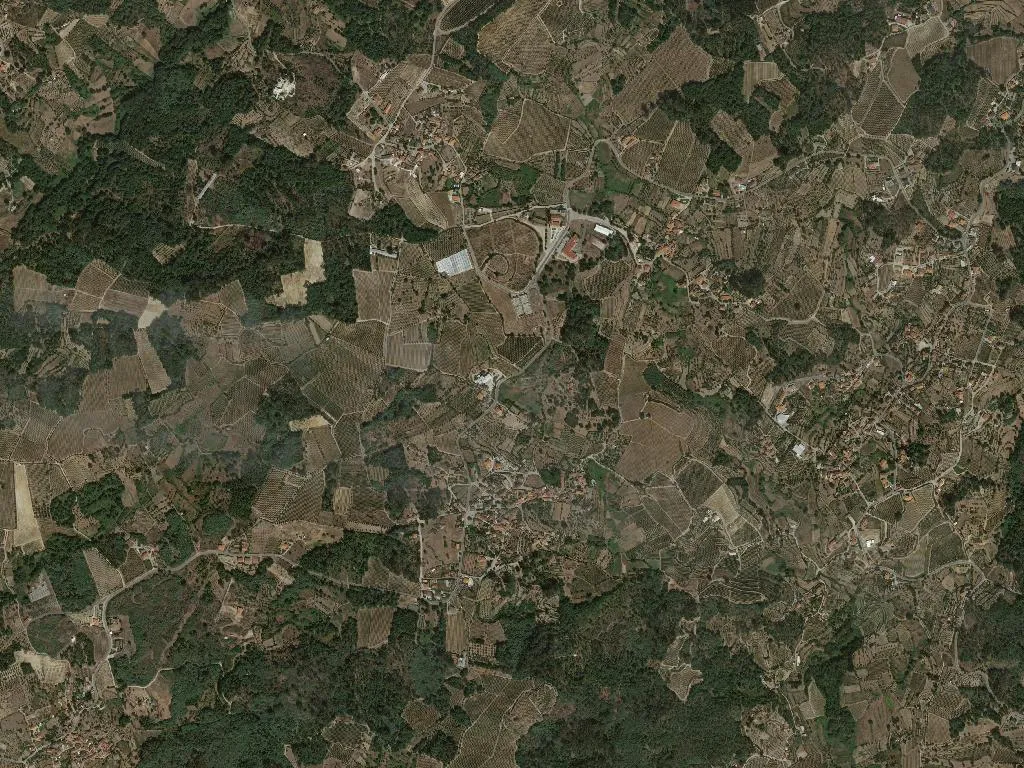
Spread across 1,676 hectares of granite ridge, the parish still divides its slopes exactly as the 1952 agricultural census recorded: vines on the sun-facing scarps, Bordaleira sheep on the rest. Of the 1,716 residents, 523 are over 65, but retirement is a foreign concept. José Oliveira, 71, rises at 04:30 to heat the thistle rennet for Queijo Serra da Estrela DOP; the milk must hit 32 °C before the sun hits the mist. The same families control the rennet, the pastures and the lambing calendar, which is why the EU protection actually means something here: the cheese is still ladled into rush baskets woven by the same hands that milked the ewes.
The cheese room is a lesson in hygrometry—summer moisture 92 %, winter 68 %. The wheels swell and sigh, developing the buttery give that demands a spoon when mature. By-product becomes delicacy: the whey is re-cooked into requeijão, a cloud that sells out by 09:00 at Penalva’s Saturday market. The lamb, meanwhile, grazes unfenced until late October on broom and wild clover; the flesh is rose, not ruby, and tastes of thyme rather than feedlot corn.
Granite, night frost and Jaen
Pindo sits on the northern lip of the Dão PDO, the demarcation line running through the vines behind the football pitch. The bedrock is coarse granite veined with quartz; day heat drains fast at this altitude, so the Jaen (Mencía) and Alfrocheiro keep bright acidity without the jammy weight of lower vineyards. There is no boutique cellar door, only the cooperative built in 1963, its concrete lagares still in use. Inside, a hand-written ledger lists the 28 members; tonnage is measured in 600-litre toneis, not barrels. Ask nicely and the fore will dip a glass from the 2021 tank: violet nose, schist-snap finish, the taste of a region that refused to plant international grapes even when Brussels was paying to pull them up.
Bread days and laundry stones
The communal oven behind the chapel fires only twice a week. On those mornings the queue starts at dawn—dough trays covered with tea towels, grandmothers swapping seed potatoes while the temperature climbs to 240 °C. The corn bread emerges dense, almost damp, its crust cracked like lake ice; wrapped in linen it keeps for a week, the edible clock of field labour.
Below the oven the 1923 lavadouro still channels spring water into twin basins. No one hauls sheets here any longer, but the stone is grooved by 100 years of knuckles scrubbing flax. Stand quietly and you can hear the echo: women trading gossip in the dialect that drops final “s” sounds the way the river drops stones.
How to visit (without ruining it)
There is one registered guesthouse—Casa do Pátio, three doubles around a granite tank where goldfish winter over. Booking is by WhatsApp; the owner, Ana, also sells half-cheeses if you ask the day before. No one will offer you a tasting menu; instead you will be handed a glass of white Dão and directed to the smokehouse to draw your own conclusions. The trail-signed “Rota do Queijo” is a 7-km loop through three farms; start at 09:00 and you will arrive back as the oven smoke rises—timing matters. Saturdays the parish council opens the 16th-century chapel just long enough to dust the gilding; ring the bell hard, the verger is slightly deaf.
Leave before dusk and the village will already be resetting: lights off by 22:00, dogs curled against doors, the smell of woodsmore drifting across the lane like a signature. Pindo does not curate itself for travellers; it simply continues, and that is the experience.