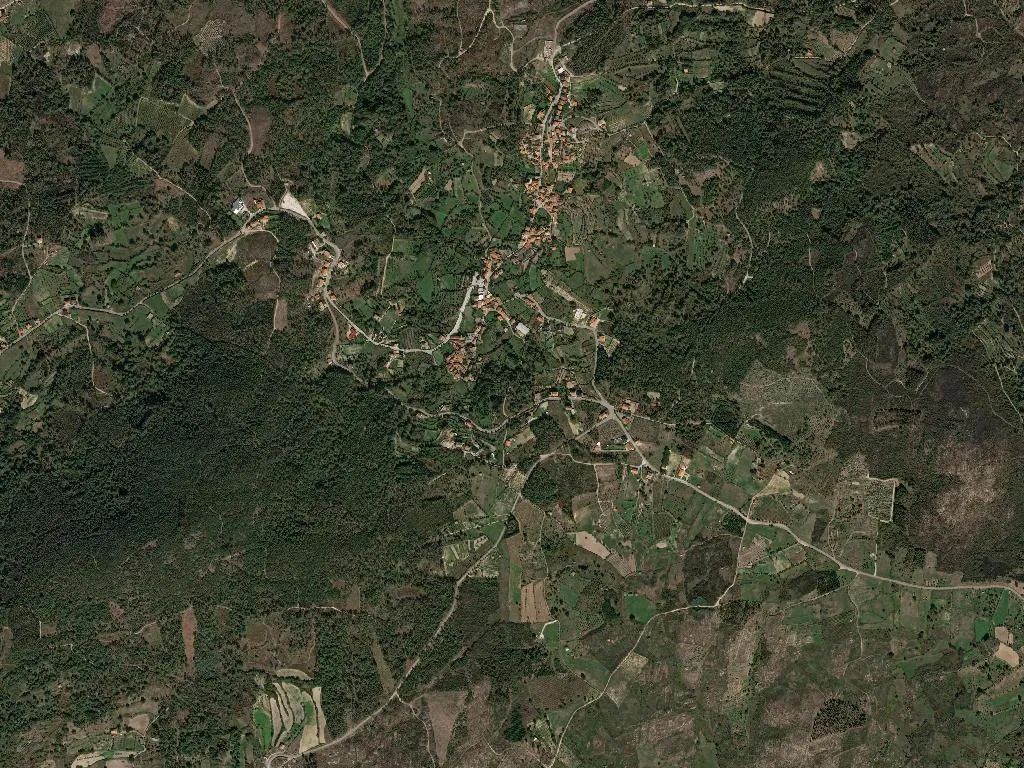
Full article about Vila Cova do Covelo & Mareco: mist, mills & vanished voices
Walk the PR6 mills trail, taste Serra cheese and count 251 granite-silent souls
Hide article Read full article
Footfalls on the Ponte dos Moinhos
Sixty metres of sun-bleached planks above the Carapito, and every footstep lands like a dropped book in a reading room. The valley is that quiet. At 582 m the granite cottages don’t bounce back the light – they swallow it, hoarding it the way an old neighbour stacks coal for the season. Two-hundred-and-fifty-one souls are registered here, 122 of them past retirement age; on the ground it feels like half that. Water and stone have been negotiating territory since the Reconquista; neither side has conceded.
Between broadswords and scallop shells
The tower of Vila Cova’s mother church is built to vanish when the mist clocks in – which is every afternoon except Sunday, when the bells need to be heard. Across the lane the former commandery of the Order of Santiago keeps up appearances: locked oak door, house-martins nesting in the cracked cross of Saint James, grass colonising the parapet. Facing it, São Domingos and the Capela do Carmo complete the triptych – knights, pilgrims, mill wheels. You can still make out the scallop shell and sword on the parish coat of arms, last updated in 1987 and ignored ever since.
Eleven kilometres of river memory
The PR6 Rota dos Molinhas is less a trail, more a family shoe-box tipped out: loose schist, waist-high broom, the smell of damp earth that drags you straight back to grandad cleaning his shooting boots. Abandoned watermills gape like broken molars; their paddles were sold for firewood decades ago. At the top the hamlet of Carapito unravels: roofs open to the sky, doorframes leading straight into briars, a single upstairs window framing nothing but cumulus. It’s a family photograph taken after most people had already left the room.
Cheese, lamb and Dão in a jug
Mareco’s primary school closed in the nineties; the classroom blackboard now lists daily specials. Serra cheese arrives unannounced, cracked open by hand because knives are for tourists. The lamb has never seen a hashtag: shoulder on the bone, slow-roated until it sighs off the fork. Wine comes from the terraced plot behind the house, decanted into a five-litre jug that never encountered a label. Eating here feels like being hugged by someone who doesn’t need to ask how you’ve been.
The river trio that refuses silence
At dusk the sun drops behind the Sameiro ridge and the Carapito, Dinha and Mau rivers start their three-part commentary. It isn’t white noise; it’s conversation, older than any of the parish records, delivered in liquid consonants. Long after you’ve locked the car and headed back to the A25, the murmur rides with you – a background track no streaming service can replicate. Leave a bedroom window open anywhere lower down the valley and you’ll understand: time doesn’t tick here, it trickles.