Full article about Beselga’s granite breath: silence, sardines & exile
Penedono’s sky village counts 270 on paper, fifty in winter, one fountain in June
Hide article Read full article
The stone still holds the heat
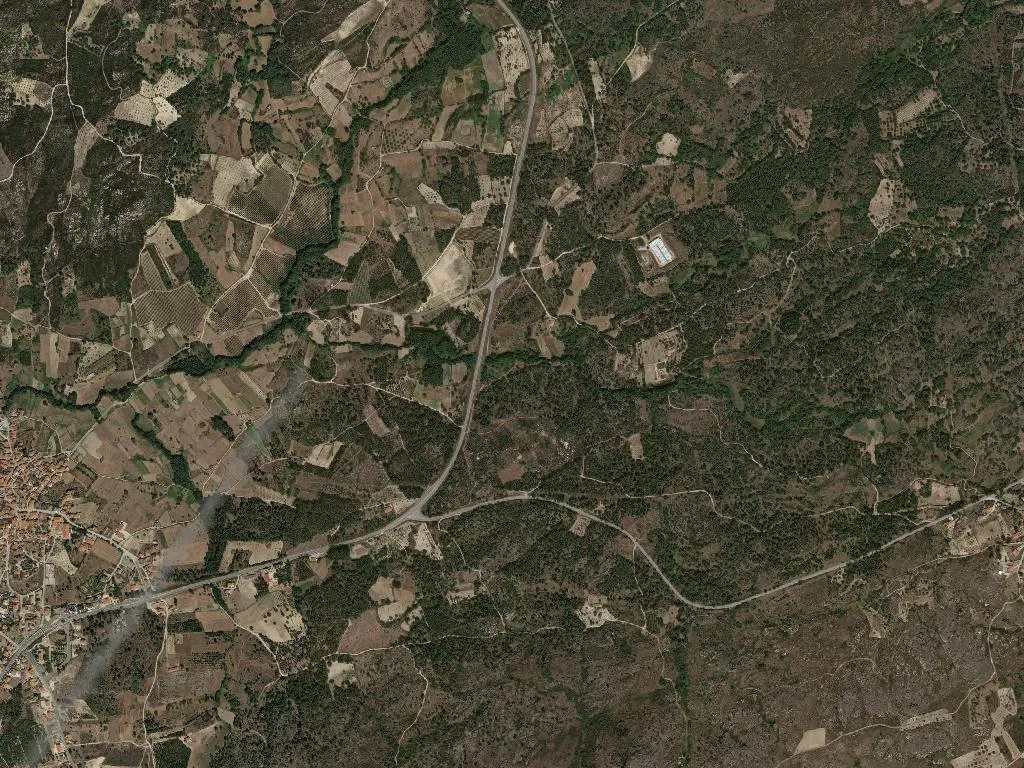
At 731 m the sun slips behind schist gables and the air smells of hot resin and heather. Below, summer clouds clot the Távora valley like milk in a pan; above them Beselga perches, its roofs the colour of burnt toast. The houses are not “clinging” — they have been hammered into the slope with picks and pig-headedness, generation after generation, until the rock itself learnt the shape of each wall. Two hundred and seventy people are registered here, but in mid-January the head-count feels closer to fifty: just the scrape of poultry on granite thresholds and the pistol-crack of oak logs spitting in hearths.
The geometry of leaving
Academic talk of “demographic contraction” collapses into one window: Maria do Carmo’s, shuttered since her neighbour died. One-hundred-and-eleven pensioners, ten children. The primary school closed a decade ago; its classrooms now store cardboard boxes labelled “France” and “Luxembourg”, taped up for the next emigrant’s move. Walk through at four o’clock and you’ll see doors ajar, wicker chairs warming themselves on the step, a tabby cat whose owner is already in a Coimbra cemetery. Wild boar have turned the old footpaths into pig-runs; a vanished vineyard supplied stone for someone’s new-build in Lamego.
Two rhythms of pilgrimage
São Pedro, 29 June: wake before the cockerel, walk to the spring, splash your face with “branch-water”, then eat charcoal-grilled sardines freighted in from Fundão. Locals simply call it “going to the fountain”. The bigger date is the Sunday nearest 15 August — the Romaria da Cabeça. Returnees from Paris hand around bags of star anise and Normandy butter; toddlers bawl because the 4G drops behind the chapel walls. After dark the churchyard tastes of generator fumes and burnt sugar from the doughnut van. Monday morning leaves a still-life of folded chairs and green Super Bock bottles stacked by the sacristy door, saved for next year.
High-altitude vine rows
This is not the Douro. This is Sr Joaquim’s plot: eighty rufete vines planted where his mule refuses to tread. The grapes ripen in mid-October, just before St Martin’s Day, and the birds take every second berry. The resulting wine smells of wet slate and long nights; no merchant south of Miranda will buy it, so it rides to Viseu in the boot of the engineer-daughter’s Polo for Christmas lunch. The cooperative tried a replant in 2018 — €3 500 a hectare — but the snow of January 2020 sheared the canes clean off.
Logistics of solitude
Outsiders call it the middle of nowhere. From Penedono town hall it is 19 km, yet the drive eats thirty-five minutes: three cows on the road, a milk lorry that will not reverse. The daily bus leaves at 7.15 sharp — not 7.10, not 7.20 — with twelve seats; if the river in Sernancelhe is high it simply turns back. Forget the bread and you eat water biscuits till Tuesday. After 7 p.m. the pharmacy is shut, so you dial the Trancoso ambulance and wait. They say one driver took two hours because the sat-nav had never heard of Beselga.
The bell tolls six times; sound skids across the cobbled square, tumbles down the gulley where alexanders grow. For three seconds even the innkeeper’s dog loses its bark. Then silence returns, smelling of split chestnut and chouriço smoke.