Full article about Penela da Beira: Stone Tombs & Atlantic Skies
Penela da Beira, Penedono—walk Iberia’s highest concentration of prehistoric tombs, hear silence older than the 321 souls who weather Atlantic storms.
Hide article Read full article
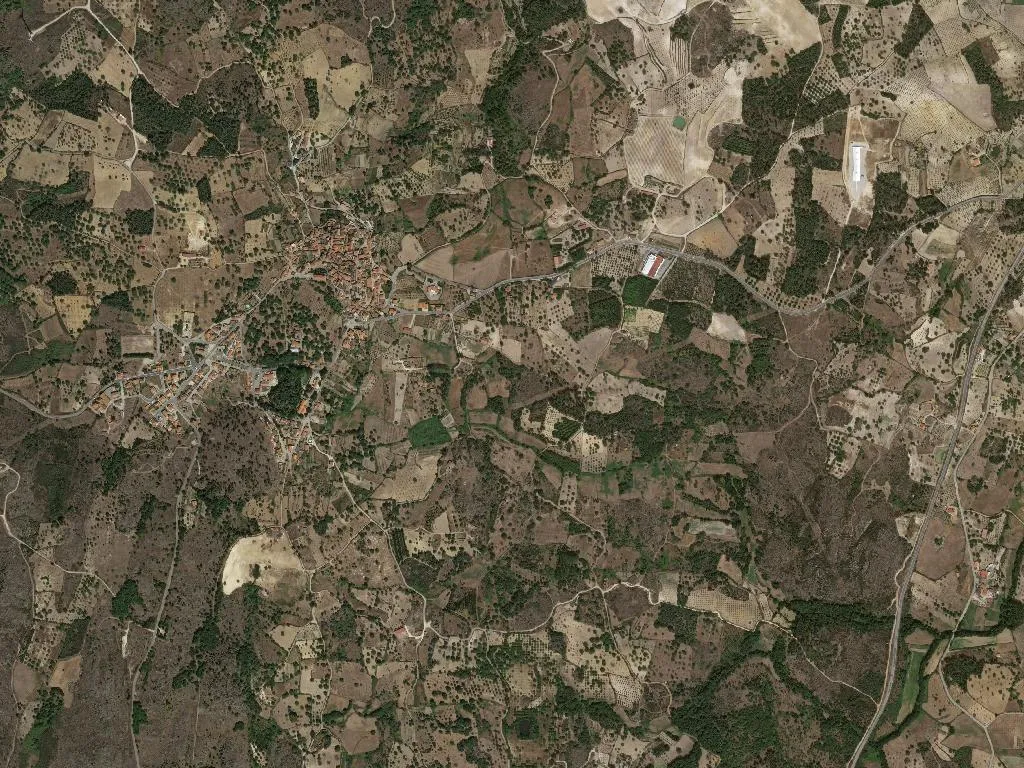
Granite shears across the hillside at 817 m, its slabs tilted like tectonic plates left to cool. The wind that scours Beira Alta carries the iodine snap of heather and the dust of schist roads; nothing breaks it until the treeline at the Spanish border. In this amphitheatre of stone live 321 people scattered over 18 km²—fewer than the red-billed choughs that ride the thermals above them. Each house seems mortared to bedrock, its eaves pitched to deflect Atlantic storms that arrive with November clockwork.
Stones that remember
The plateau harbours the largest cluster of prehistoric tombs in the whole of Penedono council: five burial monuments plotted like waypoints of an extinct constellation. Chief among them is the Dolmen of Capela da Senhora do Monte, granted National Monument status in 1910. At dusk the capstone throws a shark-fin shadow across the chamber; lichens glow arsenic-green in the grooves where Neolithic thumbs once pressed. Stand inside and the wind is suddenly bass-note low—an acoustic 5 000 years in the making. Archaeologists come for the carbon dates; everyone else comes for the hush that follows when you realise the landscape ahead of you is the same one that guided Iberian copper traders.
Calendar of belief
May drags the village uphill. The Romaria de Nossa Senhora da Cabeça turns the dirt track to the chapel into a slow procession of flannel shirts and babies carried papoose-style, voices braided into a litany that competes with skylarks. A month later São Pedro arrives and the parish council sets up long tables under plane trees: roast veal smoked over oak, Douro reds poured from aluminium jugs, polythene bags of caramelised chestnuts for the children who have flown in from Bordeaux or Geneva. For two nights the demographic pyramid rights itself—140 elders, 17 teenagers, one accordion—and dormant houses regain their yellow window glow.
Geography of forgetting
Population density hovers at 17 souls per km². Walk east for twenty minutes and you meet no one, only dry-stone walls collapsing into gorse, holm oaks warped by centuries of Atlantic gales, bramble arches swallowing mule paths whole. Winter fog can erase the plateau for a week; temperatures tick downward until the granite itself glistens with hoar frost. The toponym Penela first appears in an 11th-century charter—Latin Penelis, a small rock—yet the real chronicle is written in megaliths, in slate outcrops, in roofs angled 15° south to burgle every minute of January sun.
Evening arrives with a low bell note from the 16th-century church. Slanted light ignites the dolmens the colour of burnt toffee, then everything cools to pewter. You do not sightsee here; you synchronise your pulse to schist and silence, and walk on before the dark makes the path indistinguishable from the sky.