Full article about Anreade & São Romão de Aregos: Douro stone & wine
Terraced schist walls, chapel candlelight, hand-pruned Avesso
Hide article Read full article
The River’s Quiet Echo
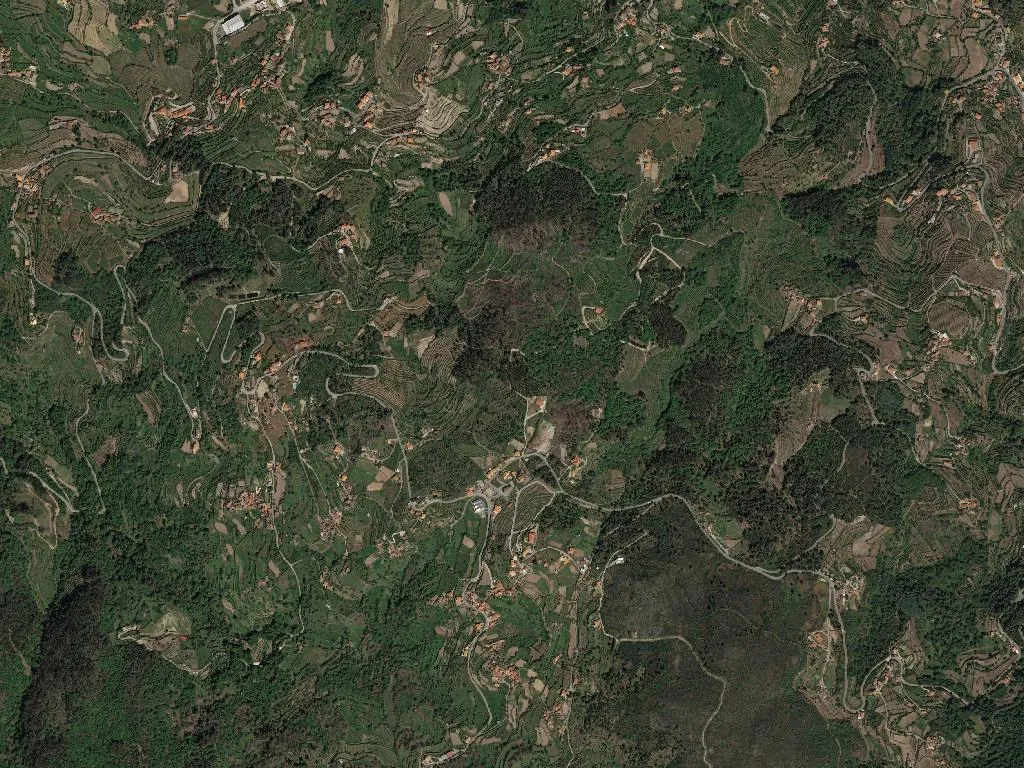
Stone in the Douro makes no ringing sound; it gives back a dull thud, as though the hill itself were swallowing the noise. Ninety metres below, the river completes another slow bend. Above, the ground climbs in disciplined steps—vine, olive, orange—each terrace buttressed by dry-stone walls whose first builder is forgotten but which, since 2021, have been listed as a monument of national significance. The walls are still grout-checked each spring; if one slips, an entire row of vines could ride the schist downhill into the water.
From Sancti Romano to Anreade
The place-name first appears in a 10th-century charter as “villa de Sancti Romano”, a dependency of the vanished Cárquere monastery and, until 1836, seat of its own municipality, Aregos. São Romão grew around its namesake hermitage; Anreade, officially wedded to it in the 2013 parish merger, takes its title from the Anra family who collected tithes here in the 1300s. Inside the single-nave mother church, candle-smoke and moth-balled linen linger in the ribs of a gilt baroque altarpiece. Higher still, the chapel of Nossa Senhora da Guia keeps watch: in the age of sail, boatmen steering laden rabelos looked for its candlelight to locate the mouth of the Távora.
Vine, Grain, Water
The sub-region of Baião gives Atlantic freshness to Avesso and Azal; every second row is still hand-pruned. Dry-stone espigueiros, their timber roofs split by fifty summers, punctuate the PR3 footpath that drops from the chapel to the Penedo do Sino, an outcrop shaped—if you squint—like a bell. Eight kilometres, cork oaks, heather, the Cesta stream tumbling unseen through bracken, then the Douro suddenly filling the frame, wide and unhurried. In Anreade’s square, a 1784 wooden winepress is rolled out for the August fair; wine is drawn straight from the cask, sharp enough to make the jaw twitch, proof that “green” refers to age, not colour.
A Calendar of Processions
Summer ends with Nossa Senhora da Guia: evening mass, brass band on a makeshift stage, rockets that send dogs under the benches. September gives Anreade the open-air Mass of the Senhor do Calvário followed by a magusto roast of chestnuts and new wine. In May, half the parish still walks the medieval pilgrims’ lane to the Cárquere ruins. Mid-August sends Santa Maria de Barrô’s statue downriver by rowboat, hymns ricocheting between terraces. On Easter night women climb to the Guia chapel carrying beeswax torches, flames shivering in the wind funnelling up the valley. Between dances, the local Rancho Folclórico snaps the Douro’s own 6/8 Vira while Pauliteiros in waistcoats pound the ground with sticks, the bass drum rebounding off the opposite hillside.
What the Table Remembers
Carne Arouquesa, DOC-protected beef, appears both grilled and long-braised in last year’s red until it fibres at the touch of a fork. Kid goat is seasoned only with coarse salt and garlic, then disappeared inside a wood-fired bread oven until the skin pleats and cracks. Wrinkled potatoes mop the juices; a glass of Avesso, kept cold in the spring house, scours the palate for the next mouthful. Smoked chouriço, salpicão and rice-black pudding hang above the hearth; São Romão’s sponge, still warm, carries a faint taste of heather honey from the uplands of Montemuro.
Towards dusk, stop at the Penedo do Sino or Esculca lay-bys: let the engine tick itself cool and listen. Wind first, then—fainter than the smell of wood-smoke drifting up from the chimneys—the river, unseen but insistently present, turning another glossy page of schist downstream. When the terraces catch the last light, the stone glows the colour of burnished barley. It is labour you are looking at, not landscape: centuries of deciding exactly how far a wall must tilt to hold a slope that would otherwise walk away overnight. Stay until the water loses its reflection and the valley becomes a bowl of deep indigo; somewhere below, a table is being laid, the wine already poured.