Full article about Barrô: Granite Tombs & Romanesque Shadows
Stone, sun and silence cling to Barrô’s terraced slopes above the Douro
Hide article Read full article
The granite tombs aligned with the sun catch the first light. They are rough-hewn slabs in the churchyard of Santa Maria de Barrô, a national monument since 1910. Silence here has mass — not absence, but centuries pressed into one continuous note. Lime-washed walls drink heat slowly; cypress shadows ink ruler-straight lines across uneven ground.
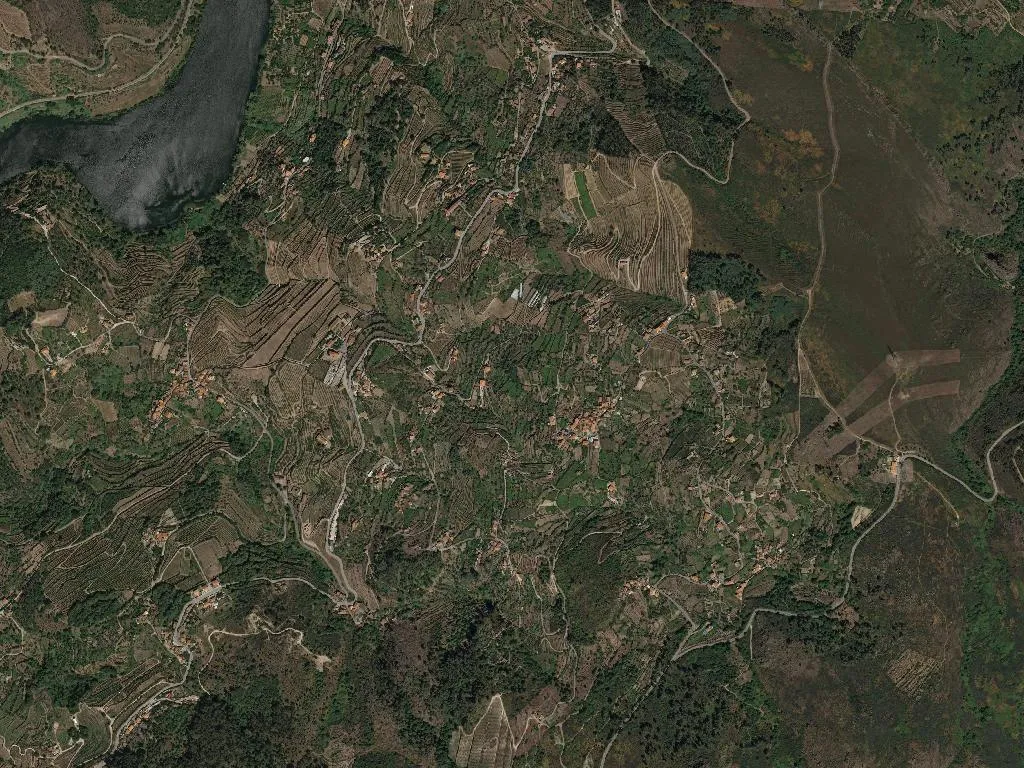
Barrô occupies 1,008 hectares of hillside in the Resende municipality, Viseu district, hovering at 382 m above sea level. Its 595 residents cling to geography: schist and granite houses, vines stitched into terraces, dirt tracks that climb until the view dissolves into the dark green of distant ranges. A population density of 59 people per km² feels expansive when the only yardstick is the interval between human voices.
The Gravity of Romanesque
The parish church commands the old centre. One building carries national-monument status, and since 1910 that has been enough. The façade is plain, almost severe, yet inside bare stone negotiates with gilded baroque altarpieces. Archivolts around the portal are carved with rudimentary foliage — a medieval mason chasing permanence, not prettiness. The floorboards complain underfoot; August air inside is cold, thick with damp and decades-old incense.
Devotion is distributed across the calendar: the Festa de Santa Maria on 15 August, Nossa Senhora da Guia on the first Sunday of October, Nosso Senhor do Calvário in late May. On those days the parish swells — emigrants return, shutters open, the churchyard becomes an impromptu square. A 3.5-kilometre footpath also links Barrô to the neighbouring hamlet of Cárquere for an annual pilgrimage that needs no publicity to survive.
Beef and High-Altitude Honey
The kitchen larder hinges on two certified products: Carne Arouquesa DOP and Mel das Terras Altas do Minho DOP. The beef comes from blonde, stocky cattle that graze the high meadows, developing dense fibre and pronounced flavour. It demands long, gentle heat — pot-roasts that soften without collapse. The honey, gathered from scattered hillside apiaries, mirrors the wild flora: heather, sweet chestnut, broom. Dark amber and slow-moving, it sweetens without cloying.
Barrô sits inside the Vinho Verde demarcation, yet altitude and solar exposure give the grapes a rounder, less sharp profile. Old vines on narrow terraces are still hand-picked. What is trodden in private cellars rarely reaches the market; it is Sunday-lunch wine, poured for family, not export.
Where to Stay, How to Be
Eight rural houses are registered with the Porto and North tourism board. There are no hotels, no hostels, no rush. Guests come for the church, for walking, for the luxury of waking without an alarm and eating breakfast while staring across vines. Logistics are simple: your own car, well-kept narrow roads, a guarantee of quiet.
An ageing demographic — 212 over-65s versus 46 under-20 in 2021 — sets the tempo. Conversations happen in pocket-sized squares, beside fountains, on granite benches under plane trees. Commerce is minimal: one café, a mini-market, essential services. Life announces itself in vegetable plots, hen houses, smokehouses where chouriça takes on the scent of oak.
At dusk the church granite turns gold. Swallows score the sky; the bell strikes six; the valley below fills with blue shade. What remains is the sound of wind in chestnut leaves and the smell of damp earth — even when it hasn’t rained, the moisture lingers. You leave Barrô carrying not a photograph but a temperature.