Full article about Felgueiras e Feirão: Where Mist Swallows the Valley
Felgueiras e Feirão, Viseu—Portugal’s sky-high villages of fern fields, rye-thatch roofs, PDO beef and four granite-bell processions.
Hide article Read full article
The fog that clings to the slope
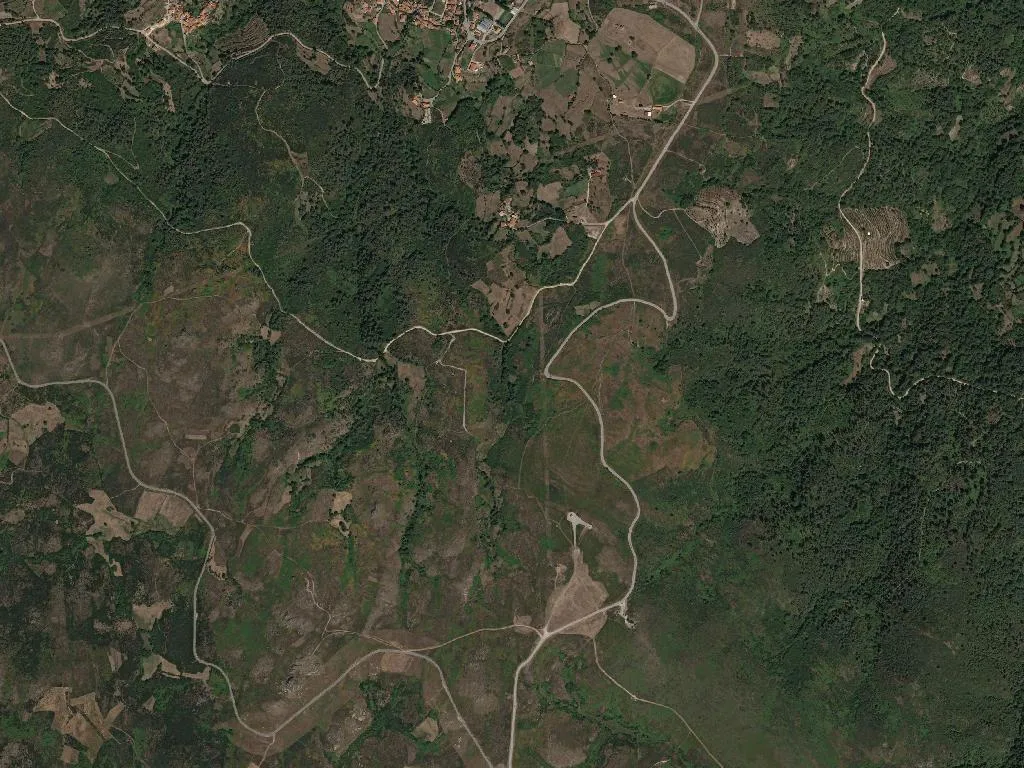
At 1,016 m, the mist is thick enough to erase the valley. Wool coats turn damp in the breath-thin air; the only sound is the Corvo river muttering somewhere between granite boulders. This is Felgueiras-e-Feirão, the highest joint parish in Resende, Viseu, where the land tips abruptly into sky and daily life still negotiates with gravity.
Ferns and forgotten fairs
Felgueiras takes its name from the Latin filicarias – “fern fields” – a botanical relic first scratched onto parchment in the ninth century. Feirão, even smaller, remembers a medieval fair once held on these same windy flats, its toponym borrowed from the 10th-century landowner Fahron. Administratively fused in 2013, the two villages had long since merged in practice: sheep paths, bridal processions and coffin routes already crossed the ridge between them.
Until recently Feirão’s skyline was a zig-zag of thatch; thick rye-straw roofs the colour of dry hay sat low against Atlantic squalls. A handful survive, enough to remind visitors that someone still knows how to tie a colmo straw rope and weight it with schist.
Pantry at a thousand metres
Cooking here is altitude-adjusted. Arouquesa beef – PDO-protected, chestnut-brown cattle that graze the upland broom – emerges from wood-fired ovens with the concentrated flavour of animals that have never seen a feedlot. Honey from the Terras Altas do Minho carries the high-notes of heather and wild lavender; the comb is often still crystallised from last night’s frost. Meals finish with a sharp pour of Vinho Verde that slices through winter stews of bean and shin.
Calendar of granite and bells
Four processions mark the year: Nossa Senhora da Guia in April, Senhor do Calvário in May, Santa Maria de Barrô in August, and the September pilgrimage to the ruined monastery of Santa Maria de Cárquere down by the Douro. On those days the resident population of 364 swells with emigrants returning from Bordeaux, Neuchâtel, Manchester. The parish priest counts accents instead of souls; the church bell, cast in 1742, keeps the tempo for slow-footed marches over uneven cobbles.
When the cloud finally lifts, sunlight lands in slats across the terraces: grey-green gorse, rust-red soil, limewash flashing like signal mirrors. Below, the Corvo slides north to join the Douro; above, the Serra de São Cristóvão tops 1,140 m and still climbs. Breathing here feels deliberate – a conscious decision to stay.