Full article about Ovadas & Panchorra: Portugal’s silent granite twins
Sheep-dotted commons, Arouquesa beef and treacly mountain honey above the Douro
Hide article Read full article
A Whisper of Wind and Earth
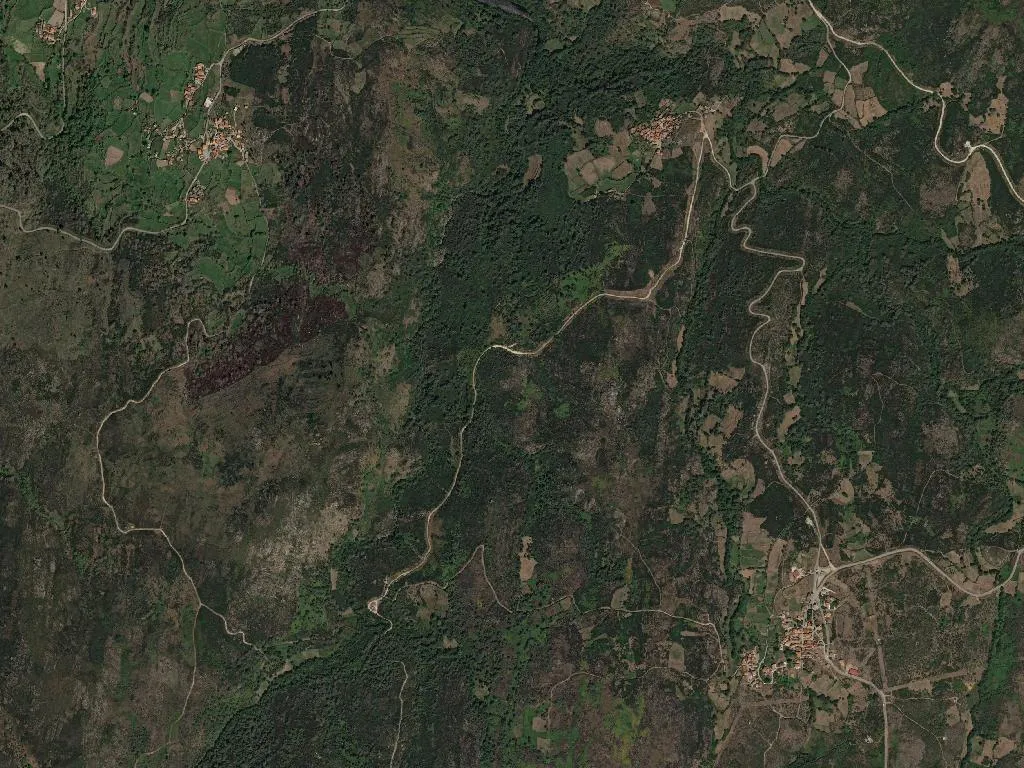
Before any sound, the wind climbs the slope. From the still-bare cherry orchards of March to the schist walls that hem the water meadows, it carries the smell of newly-turned soil and the distant murmur of the Panchorra stream. At 940 m the twin villages of Ovadas and Panchorra materialise — a thin scatter of granite houses caught between the Serra de São Macário and the Douro valley — so sparsely peopled (283 souls across 23.8 km²) that silence feels physical, settling on the skin after dusk when only Senhor Arnaldo’s dog bothers to bark.
What the names remember
Ovadas probably owes its label to the Latin ovis; stand on any granite outcrop and you’ll spot sheep grazing the upper commons, a shepherd still timing the day by the shadow of a chestnut. Panchorra is less obliging — locals mutter about pancho, an old word for heavy clay, but etymology is a parlour game here. What matters is continuity: Ovadas appears in parish records as early as 1728, and since the 2013 merger the two villages share a parish council, a budget, and the same arithmetic headache — how to keep the primary school open when only two babies are born each year.
What you’ll taste (and pour)
Friday mornings, Tia Albertina’s café turns out sponge cake the way her mother photographed it — airy, egg-heavy, the scent drifting across the lane. In June, unpicked cherries thud onto orchard grass for want of hands. The beef on every table is Arouquesa DOP, from chestnut-brown cattle that summer in the high meadows; the honey is mountain-dark, almost treacly. Locals wash it down with Vinho Verde from granite lagares in neighbouring Baião, where João still treads the grapes barefoot — “to know the sweetness with my soles,” he shrugs.
Where the path steals your breath
The Ribeira de Panchorra footpath begins at Dona Rosa’s gate, follows the dry-stone terraces past the mill where her grandson once hid, and ends at the communal washing pool used until the first Hoover arrived. Higher up, the viewpoint is a tear in the sky: on clear days you can pick out the Douro bending around Mesão Frio. In mid-March, the cherry orchards stage their own white-out, blossom drifting like late snow; two weeks later the wind strips the trees to stark grey bones again.
The calendar that still turns
Our Lady of Guidance is feted in May — yes, there’s a procession, but the real liturgy is the dance tent on the football pitch where a DJ spins Portuguese pimba until three. The pilgrimage to Santa Maria de Cárquere is older: you cross the Roman footbridge on foot, straw hat against the glare, and leave with a fistful of corn-bread and chouriço handed through car windows. Four annual parties are enough to measure time: “before Guida’s feast,” “after the romaria,” the year parcels itself out in leftover fireworks and empty wine glasses.
When the sun drops behind São Macário, the chapel granite glows like set honey, cows clop home to the jangle of neck-bells, wood-smoke drifts from chimneys, and cold rises from the valley floor. Sometimes the church bell strikes six, the note rolling out like a voice calling home those who left and never quite came back.