Full article about Paus: Where Bells Drift Over Chestnut-Scented Silence
At 609 m, Resende’s smallest parish swaps bustle for bees, Baroque gold and granite calm
Hide article Read full article
The single bronze bell in the tower of Igreja Matriz strikes seven times, each note hanging in the cool air long enough to reach the next fold of hillside. At 609 metres the sound has room to breathe, rolling over hedged meadows where a handful of Arouquesa cattle – midnight-black, lyre-horned – pause mid-chew to listen. Wood smoke rises from one chimney, then another; somewhere a beekeeper lifts the lid of a hive and notes the weight of the super. The honey won’t carry the turquoise DOP band of the high Minho; it is simply “mel de Paus”, harvested from chestnut and heather slopes that have never bothered with paperwork.
No one wastes breath on the old story that the parish name derives from the Latin pax. After the border scrimmages of the twelfth and thirteenth centuries, Paus kept what it still has: space, silence, and granite walls too stubborn to fall. Of the 421 residents, 142 are over sixty-five; they remember when the village café doubled as a dressmaker’s workshop and the postman arrived on a donkey. The donkey is gone, replaced by a white van that reverses twice a week outside the chapel, but the neighbour’s elderly mule still trots to the vegetable plots each morning, hooves clicking on the tarmac patch that passes for a high street.
Baroque on the ridge
The parish church, raised in the late 1600s, turns its elaborately carved façade to the sunrise. Inside, narrow lancets sieve the light, pooling gold on gilded altarpieces and leaving the nave in penumbra. Devotion spills beyond the building: the hamlet chapels of Santa Maria de Barrô and Nossa Senhora da Guia serve as spiritual milestones across 1,339 hectares of farmland. Each has its allotted feast day, when the faithful climb dirt tracks with sandwiches wrapped in waxed paper and a bottle of vinho tinto tucked into coat pockets.
Processions for Nossa Senhora da Guia (last weekend of August), Nosso Senhor do Calvário (mid-September) and Santa Maria de Barrô (early October) turn the lanes into outdoor refectories. Brass bands from neighbouring parishes launch into marches nobody under ninety can name; trestle tables appear overnight and are immediately buried under cast-iron pots of cozido and trays of roast veal. The meat is stamped Arouquesa DOP – animals bred within 40 km, fed on mountain grasses, their muscle striations fine enough to read like the grain in marble. It is expensive, but no one asks the price when the crackling arrives the colour of burnt sugar.
Lunch in the clouds
The veal is brought to the table still spitting, accompanied by potatoes that have absorbed every drip of fat and stock. Texture is firm yet giving; flavour deep but not gamey. A glass of lightly spritzy vinho verde from the Douro’s southern slopes cuts through the richness. Dessert is a slab of pão de ló soaked in local honey, the floral notes shifting with whatever bloomed in April – broom, heather, lime. No label, no protected designation, just the taste of a parish that measures distance in bee-flight minutes.
Where the green pools
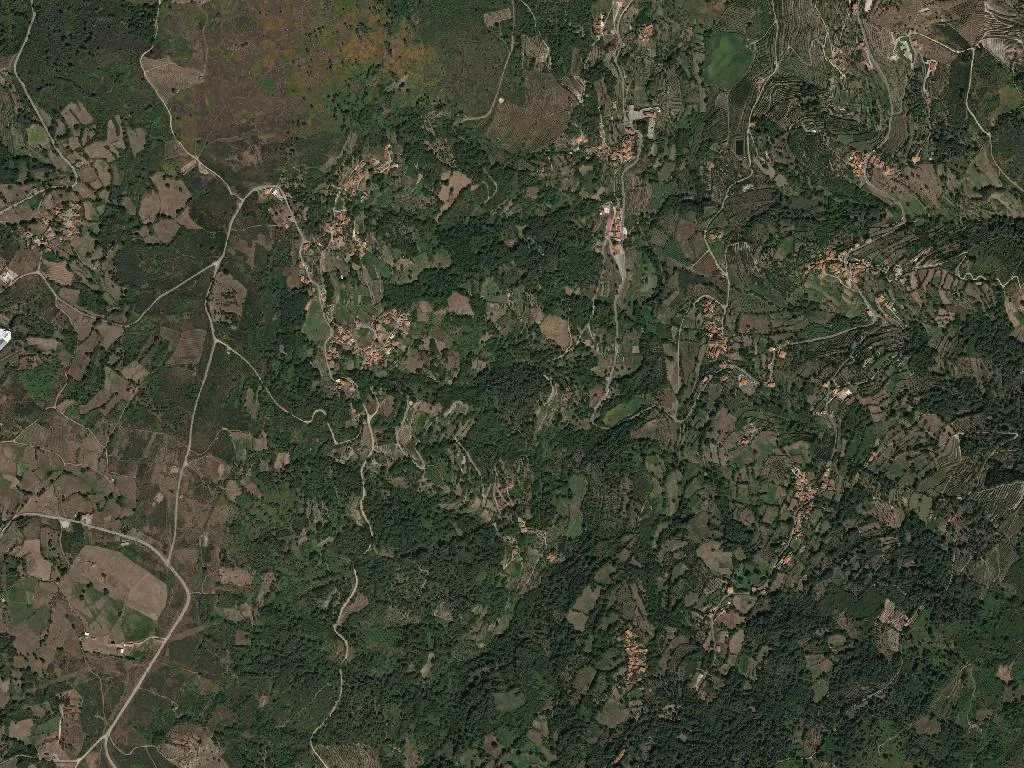
Paus folds and unfolds across gentle ridges stitched with small rivers. There are no nature parks, no interpretive centres, only the real-time functioning of an agricultural territory: cows, vines, olives, hives. Footpaths exist because generations of hooves and boots have kept them open; waymarking is limited to the occasional splash of yellow paint on a gatepost. Follow one track and you arrive at a farmhouse where 500 g jars of honey are sold from a kitchen dresser – pay in cash, price adjusted for rainfall and the mood of the beekeeper.
Late afternoon light grazes the granite, turning walls the colour of warm bread. In the only guest accommodation – a converted hayloft with a single wood-burning stove – the bell tolls again. The echo lingers longer than physics suggests, as if the hills themselves were reluctant to let the sound drift away.