Full article about São Cipriano: Where Granite Breathes
Above the Tâmega, a schist village keeps its stories in stone-cold silence and Arouquesa beef.
Hide article Read full article
The Weight of Silence
Silence here has a body. It presses against your teeth when you open your mouth, cold as the draught that slips through granite at dawn. São Cipriano sits at 632 m, yet altitude is measured in calves, not metres, on the final bend where the tarmac surrenders to schist. By seven the houses are still absorbing night; only at noon do they warm enough to throw back light the colour of wet slate. Four o’clock and they chill again, stone returning to the temperature of well water.
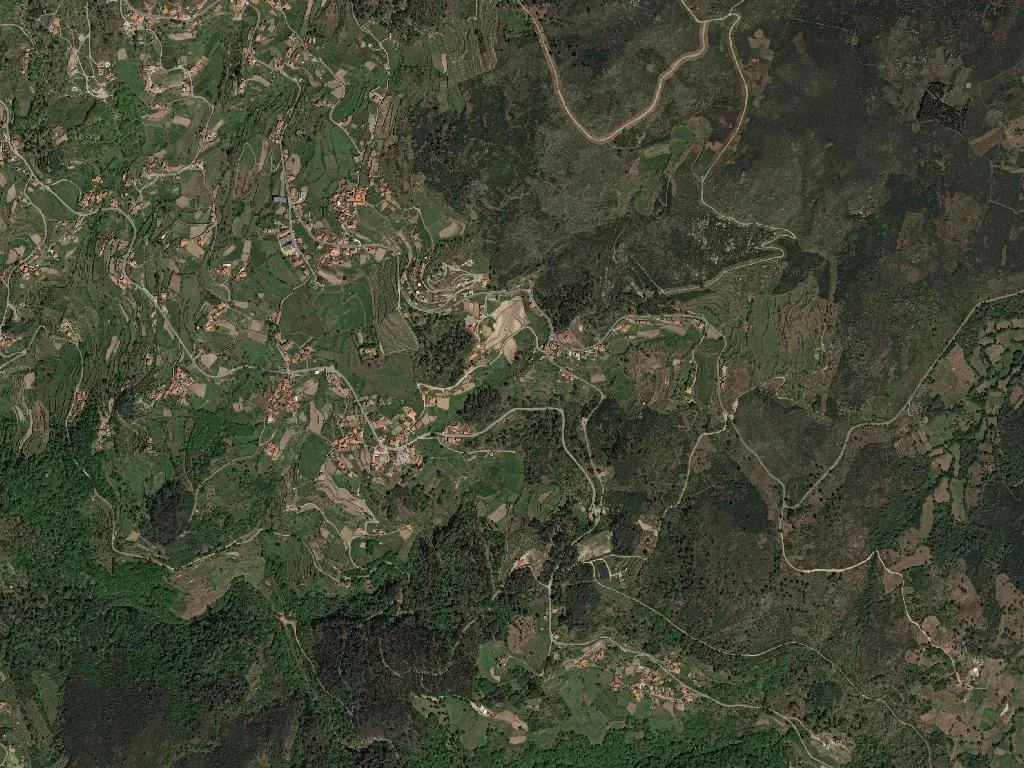
Six-hundred-and-seventy souls share 6.2 km² folded like linen: every crease a path that climbs to Cima and burns thighs, or drops to Barreiro and grinds knees. They know the precise pine snapped in the 2018 storm, the white dog that hurls its voice at strangers, the row of vines Sr. Joaquim refuses to abandon despite the May frost. This is Vinho Verde country, but the green belongs to granite boulders, not sunshine.
Saints and processions
Four Sundays run the civic calendar. January brings Nossa Senhora da Guia: High Mass at eleven, then Dona Emília’s sponge that no one has successfully reverse-engineered. In May the village crawls up Calvário on bleeding knees – fifteen minutes of loose grit, a breather at the wayside cross. August means Barrô: sardines spitting on the churchyard bonfire, children threading between plastic chairs. September closes with Cárquere, once a proper cattle fair, now fifteen parishioners and a bored retriever who still expects incense.
Of the three listed monuments only one matters: the sixteenth-century Capela de São Sebastião, repository of the saint’s tiny straw slippers. The official plaque is irrelevant; the story that he halted the 1854 cholera is currency. Elderly women still swap garden daisies for painless hips.
Beef and mountain honey
Arouquesa oxen graze three years on gorse and heather before becoming lunch. They drink from the Chiqueiro spring, and you taste it – fibres that demand three hours in the pot with bay from the stream bank. The honey is different: hives are parked above the treeline where heather flowers for a fortnight. It granulates fast, snow-white with a bitter kick that scrapes the throat. Detractors say medicine; devotees eat it by the spoon.
Four houses take guests. Avó Zita irons her linen with blue soap so the sheets smell like 1952. Rui’s attic window frames the whole Serra, but the mattress has a valley in the middle. All stays are arranged three days in advance; no one arrives “on spec”. Night-time offers only the church bell, a distant chain-dog, your own pulse slowing to match the village.
When the sun slips behind the Marão, granite turns the colour of a storm-lit Atlantic. Chimneys flare at six – oak smoke that rises straight, then fractures. The scent sticks to jumper sleeves, logs spit like fat, and darkness does not fall here: it rises, ankle to collarbone, a slow tide of quiet. Not fear – simply the gravity of being alive where the world has not yet learned to shout.