Full article about São João de Fontoura: Bell-echo village above Minho vines
Granite roofs, low-trained Vinho Verde vines and August pilgrimages in a 537-soul Resende parish
Hide article Read full article
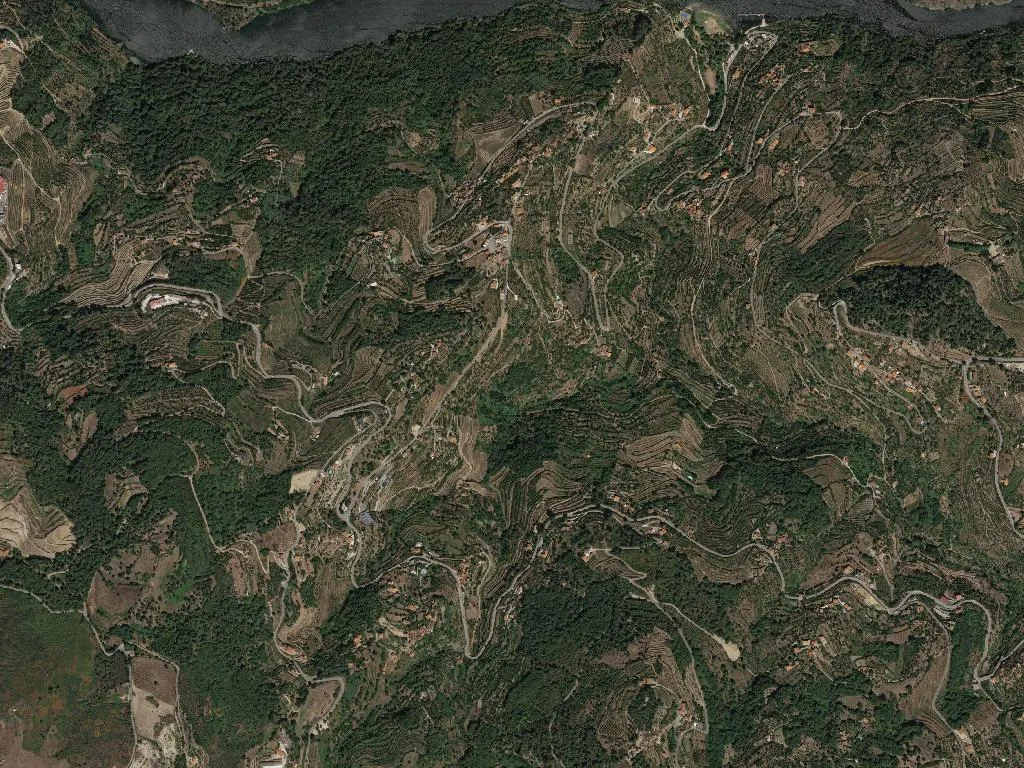
The tolling reaches you before the village does: a bronze note rolling through the Minho uplands, ricocheting off the slate scarps and returning a semitone lower. Only afterwards does São João de Fontoura appear – first as a patchwork of vineyards stitched to the hillside with dry-stone seams, then as a scatter of granite roofs caught between 200 m of altitude and the sky. The parish covers barely 5 km², room enough for 537 souls who can still name every spring, every elderly chestnut that serves as a waypoint.
Between granite and grape
This is Vinho Verde country, but not the riverside sub-zone that tourists associate with riverside boardwalks. At this intermediate elevation the vines are trained low to outwit Atlantic drizzle; the soil is thin, flecked with mica, and yields grapes that keep the wine’s tell-tale snap. Granite posts still prop up a few pergolas, throwing bar-graph shadows across the red earth. Locals pour the finished wine with Sunday’s Arouquesa beef – blond cattle that graze the neighbouring sierras and whose Protected Designation of Origin is taken as seriously as the village’s own surname. In the smoke-blackened kitchens, oak-fired sausages dry over winter, while jars of dark Minho Highlands honey – another DOP – wait to sweeten the January loaf.
The liturgical calendar
August pulls the diaspora home. On the first weekend the parish church of Nossa Senhora da Guia fills with grandchildren flown in from Lyon or Newark; by the second, the neighbouring hamlets have rallied behind the banner of Santa Maria de Barrô and are climbing the lane behind a brass band. The most exacting pilgrimage belongs to Santa Maria de Cárquere: a 7 km foot-march across two valleys, blisters tallied like rosary beads. The rest of the year the settlement reverts to a demographic haiku – 141 residents past retirement age, 46 below voting age – and silence becomes the default soundtrack.
Where the clocks hesitate
There are seven places to stay – no boutique suites, simply granite or terracotta roofs, stone floors that pre-date grouting, and breakfasts of warm corn broa with peach jam. What you book is acoustic: night silence broken only by the watchful bark of a village dog, dawn punctuated by a single tractor coughing its way to the terraces. UNESCO won’t be calling; the Listed Building schedule is blank. The monument is the persistence itself – of terraces re-tied after spring gales, of elders who still roof their own haylofts, of a bell that rings not to mark the hour but to confirm that, 200 m above sea level, someone is still there to hear it.