Full article about Dawn over Dão vines at São Joaninho’s 322 m bell tower
Bronze bells, schist terraces and foot-trodden lagars in Santa Comba Dão’s quietest parish
Hide article Read full article
Dawn at 322 metres
The first light slips in at an angle, prising open the gaps in the wooden shutters. Outside, the 1893 bell cast in Amarante strikes the hour, a low bronze note that rolls across the red-tiled roofs of São Joaninho. At 322 m above sea level the air is rinsed clean; edges sharpen—lime-washed walls, the dark green of pines on the ridge, a ribbon of damp asphalt still dark from last night’s dew.
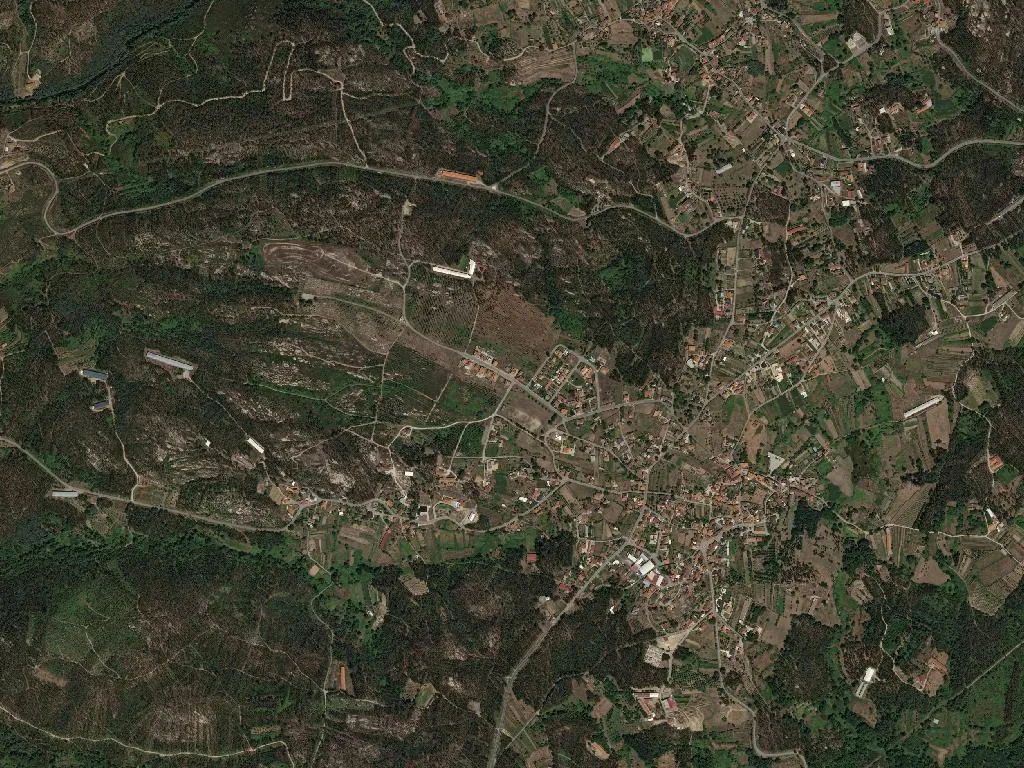
São Joaninho, a parish of Santa Comba Dão, spreads across 972 hectares—enough room for 1,014 souls and a mosaic of smallholdings and vines. Population density is 104 per km², which translates as scattered hamlets: houses clustered round the church, others strung along lanes, each with its vegetable plot and a smokehouse at the back.
How vines draw the map
This is Dão country, not in name only. The 2022 agricultural census lists 38 hectares of vineyard within the parish boundaries, almost all in plots of under half a hectare, passed down through compulsory partitive inheritance. The terraces follow the schist contours like pencil lines, redrawn each generation. In late October the leaves flare copper and gold against the stubborn green of maritime pines. Touriga Nacional, Tinta Roriz and Alfrocheiro ripen slowly here; the wine ends up tasting of chilled nights and granite grit.
The last census sketches the familiar interior profile: 88 children under 14, 367 residents over 65. It is the older residents who remember winter pruning with a short-bladed podão, September’s hand-picked harvest, the granite lagar at Casal dos Pintos where grapes were once foot-trodden. Yet the curve is turning: in 2019 the Lisbon-based Mateus family bought the abandoned Quinta de Santo António, replanted 4 ha and opened four-bedroom Vale do Trigo with a tasting room looking straight onto the Dão ridge.
Way-markers and walkers
The Torres variant of the Portuguese Coastal Camino cuts a 5.2 km diagonal across the parish, way-marked in yellow and blue. Pilgrims cross the old N2 highway, refill bottles at the 1941 São João spring tiled in Sacavém azulejos, ask directions in an accent that might be Basque, Korean or Canadian. A handful stay the night—Casa do Caminho and Casa da Eira both opened in 2021, their licences still warm from the printer. The next morning they climb towards Santa Comba Dão, leaving behind a whiff of transit and boot wax.
Daily life ticks to a quieter rhythm. Café Central, run by the Gomes family since 1958, is the parish’s front room: coffee ground to order, the afternoon sueca card school, gossip travelling faster than broadband. No queues, no rush hour—just the matriz bell restored after the 1975 fire and the seasons turning like a well-oiled agricultural calendar.
When the sun slips west
Late afternoon brings the real reveal. Low light grazes the west-facing façades, picks out flaking ochre render and the faint scar where someone once chiselled away a landlord’s coat of arms. São Joaninho is neither museum nor Instagram set. It is 1,014 people who still make their living from soil and tannin, without asking to be noticed. Woodsmoke from Sr António’s chimney—he still cuts holm oak from the hillside—drifts above Bobi’s distant bark and the singed-leaf scent of last year’s canes smouldering in a back garden. Presence, stubborn and quiet, on a Dão slope that refuses to concede the stage.