Full article about São João de Areias: Baroque gold in granite
Tiny Beira village where river, vine and 18th-century carving still gleam
Hide article Read full article
Granite Warming in the Sun
The granite flagstones are already warm when the first shoes hit them, and every footfall ricochets up the uneven lane towards the church terrace. Inside, the nave is cellar-cool; the Baroque gilding ignites in tiers – high altar, side altars, triumphal arch – as if a century of chisels had plated the stone with solid light. São João de Areias’ parish church hoards that accumulated brilliance: sixteenth-century saints, timber carved between 1580 and 1780, and the rare proof that a farming community of barely 300 souls never once broke its contract with the Beira master-carvers. José da Fonseca Ribeiro, the region’s dominant sculptor from 1750 until his death in 1790, signed the railings and pulpit here, ensuring an artistic continuity almost unknown in a settlement this size.
Sand, Schist and the River that Named Them
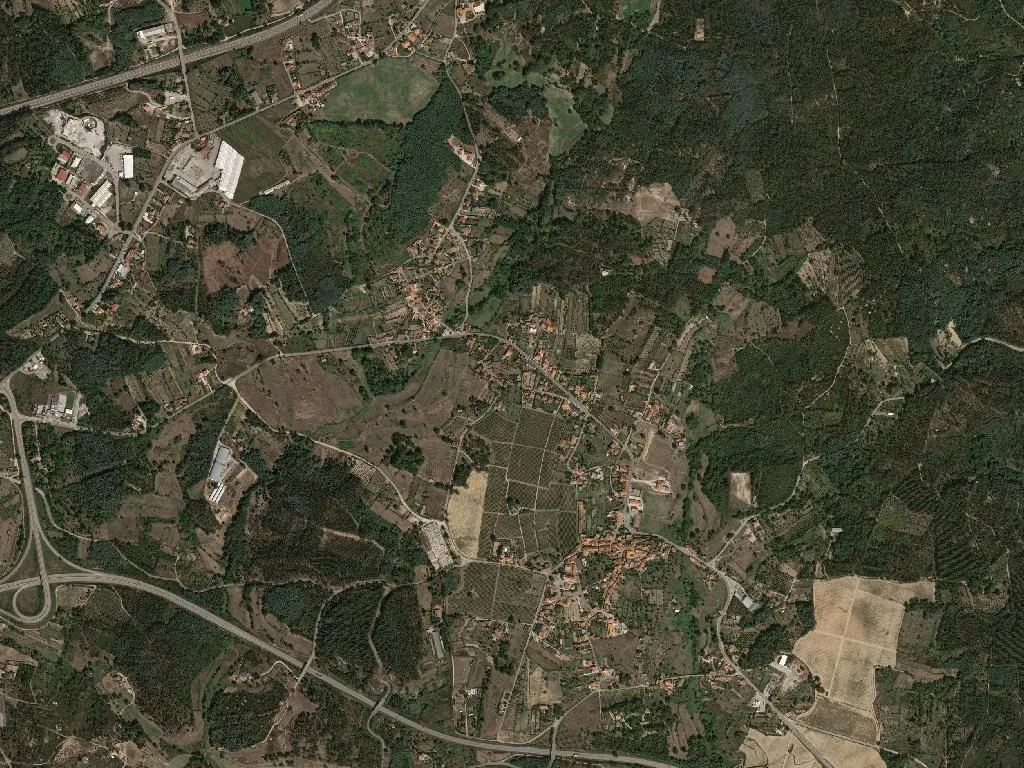
The place-name is its own footnote: São João for the long-vanished chapel of St John the Baptist; Areias for the loose, granitic soils that slip through fingers along the Dão. The river slides past 300 m south of the bell tower, creating micro-climates that soften the nights and curl the edges of the vineyards at 236 m above sea level. Spread across 2,151 ha, 42 % of the parish is Dão DOC vine, according to the 2019 agricultural register. Olive groves take another 18 %, orchards 12 %. There are no sign-posted river beaches or nature reserves, only the thick hush of the marsh meadows and the sudden, wide sight-lines when the dirt track climbs towards the neighbouring hamlet of Currelos.
A Century of Wood Turned to Gold
In the archives of Viseu’s diocesan curia, 47 gilt-carving contracts survive for the years 1680-1780 – an unbroken century of commissions. The stratification is still readable inside the mother church: the 1720 generation installed the main retable, the 1750 cohort added Rococo side altars, the 1780 workshop finished with the triumphal arch. Five outlying chapels complete the inventory – São Sebastião in Casal, São Pedro in Oliveira, Nossa Senhora da Conceição in Aldeia Nova, São Lourenço in Póvoa de Cima, Santa Bárbara on the Serra ridge – all raised between 1600 and 1700, all still roofed, though three have lacked regular worship since 1980. The 2018 parish survey Igreja Matriz e Capelas da Freguesia de São João de Areias maps every altarpiece and image, name by name, guilded fold by fold.
On the Torres Spur of the Camino
The Portuguese Torres route – a lesser-trodden branch of the Santiago network – cuts straight through the parish. Pilgrims enter over the Roman-arched bridge at Vilar, walk 4.3 km between cane fences and the Dão’s gravel bed, and exit by the water-mill at Casal. The landscape feels worked rather than abandoned: 1,721 inhabitants scattered across six hamlets, the largest, Aldeia Nova, claiming 423. Three small guest houses – Casa do Rio, Quinta da Oliveira, Casa de Aldeia – offer a total of 22 beds, proof that hospitality here is measured in single digits, not coachloads.
Wine Without a Label
Despite lying inside the Dão DOC, São João de Areias bottles nothing under its own name. The 130 ha of vines produce roughly 900 hl a year, most of which is trucked to cooperatives in Santa Comba Dão and Penalva do Castelo. Walk the terraces in October, however, and the terroir announces itself: schist on the east-facing slopes, granitic sand on the plateaux, 220 days of sun, and the river acting as a night-time temperature regulator. Forty-eight registered growers still hand-harvest; an informal knock on a cellar door will usually earn a barrel tasting and a conversation about Jaen, Alfrocheiro and the fading tradition of field-blending.
By late afternoon, when low light burnishes the vines and the wind carries the scent of dry earth and fermenting must, the church terrace fills with shadow again. Inside, the gold dims layer by layer, as if a hundred years of craft were quietly returning to the silence that shaped them.