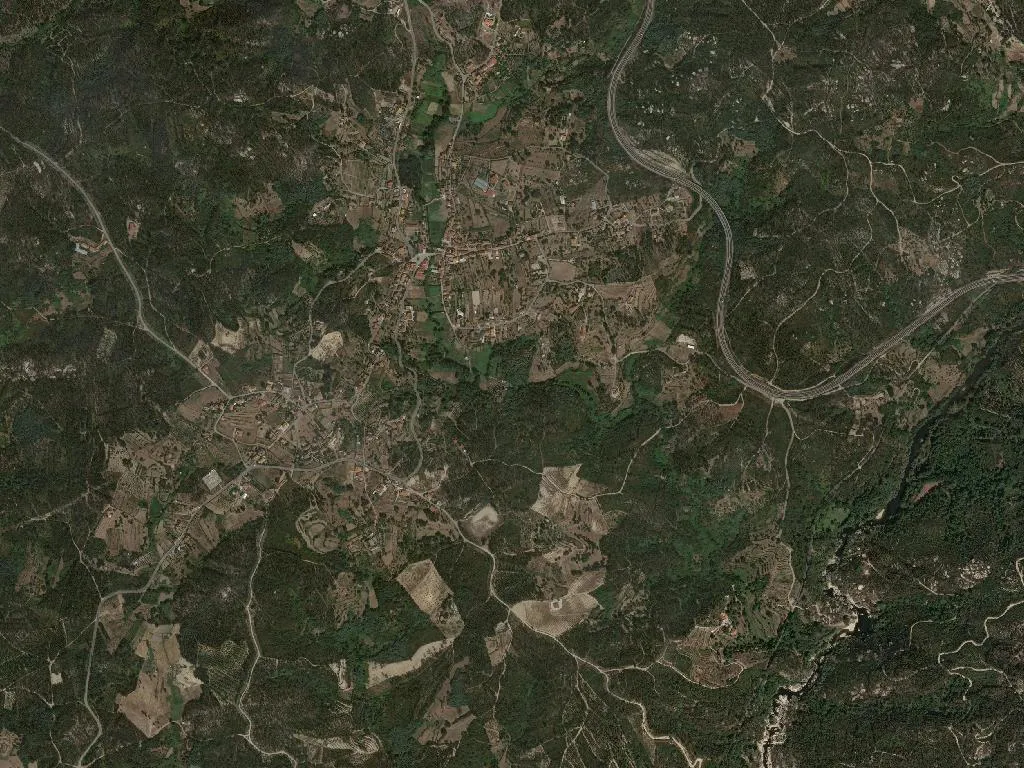
Full article about Harvest hush in Treixedo e Nagozela
Touriga Nacional ripens on granite-walled terraces above the Dão
Hide article Read full article
The first scent of the new vintage slips through ajar doors the moment September reaches Treixedo. On the terraces that tumble towards the Dão, vines sprint across uneven steps, their rows nicked by granite walls that keep one plot from spilling into the next. Afternoon sun warms the wall lizards playing dead on schist ledges. In the hush of harvest you hear only the snip of secateurs and the soft thud of Touriga Nacional landing in wicker baskets.
Two villages, one valley
The 2013 merger of Treixedo and Nagozela yoked two communities that had always shared the river and the vine, yet moved to different rhythms. Treixedo turned towards the old N2 road, profiting from alluvial soils and the footfall of pilgrims: the Portuguese inland branch of the Camino de Santiago still cuts through its orchards and vegetable terraces on a loop locals knock off in two and a half hours. Nagozela, clamped to a hillock, organised itself around the 18th-century Capela de São Sebastião where, every January, the priest blesses the faithful before red wine and cornbread are passed around the churchyard.
Treixedo’s parish church—listed in 1977—stands in the settlement’s heart, its baroque façade flaking like burnt sugar. Inside, a gilded altarpiece waits for Masses that rarely come, while blue-and-white tiles spell out episodes from the life of Saint Peter no one pauses to read. From the churchyard the view drops to the Dão’s ox-bow loops, where herons plane over stands of black-poplar and alder. Below, the old railway spring—used until 1988 to top up the boilers of steam trains on the Linha do Dão—still sends a ribbon of cold water across mossy stone.
What the land gives back
In Nagozela’s family cellars, oak casks from Nièvre hold Dão’s inky red for the statutory eighteen months. Visits arranged through the village community house end with rye toast drizzled with olive oil while the grower taps a barrel and explains how staves became drums during the summer “Dão em Percussão” project, when the square fills with sub-sonic thump.
The kitchen calendar is agricultural: winter kid stewed in clay with red wine and mountain herbs, spring black-eyed-bean rice simmered with pig’s head, summer eel stew when the river rises. Roast kid arrives with cinnamon-scented corn bolo; desserts are dominated by Nagozela’s pumpkin preserve, reduced in a copper pan until it sets like marmalade. October chestnut roasts pull neighbours around bonfires, plastic beakers of agua-pé—lightly fermented grape must—handed to anyone walking past.
Walking vines and stone
The marked trail from São Sebastião chapel to the 12th-century bridge over the São João stream covers four kilometres of cobbled lane flanked by shale walls and granite granaries. One in Nagozela, raised on sixteen wooden feet, is the tallest in the municipality; its boards blackened by decades of ham-smoke. Beside the village well, where water glides over smooth slabs, families spread hand-woven linen and unpack picnics of cornbread and amarelo da Beira cheese.
At dusk, when low sun gilds the terraces and the wind carries the smell of burning vine prunings, volunteer pickers finish with migas—fried breadcrumbs kneaded with sun-warm grapes. Hands are stained imperial purple, empty baskets stack beside the granite lagar, and conversation blends with the stream’s murmur on its way to the Dão. Barefoot on cool stone, fingers sticky with must, you understand the parish not from any postcard scene but from a gesture repeated every September for centuries.