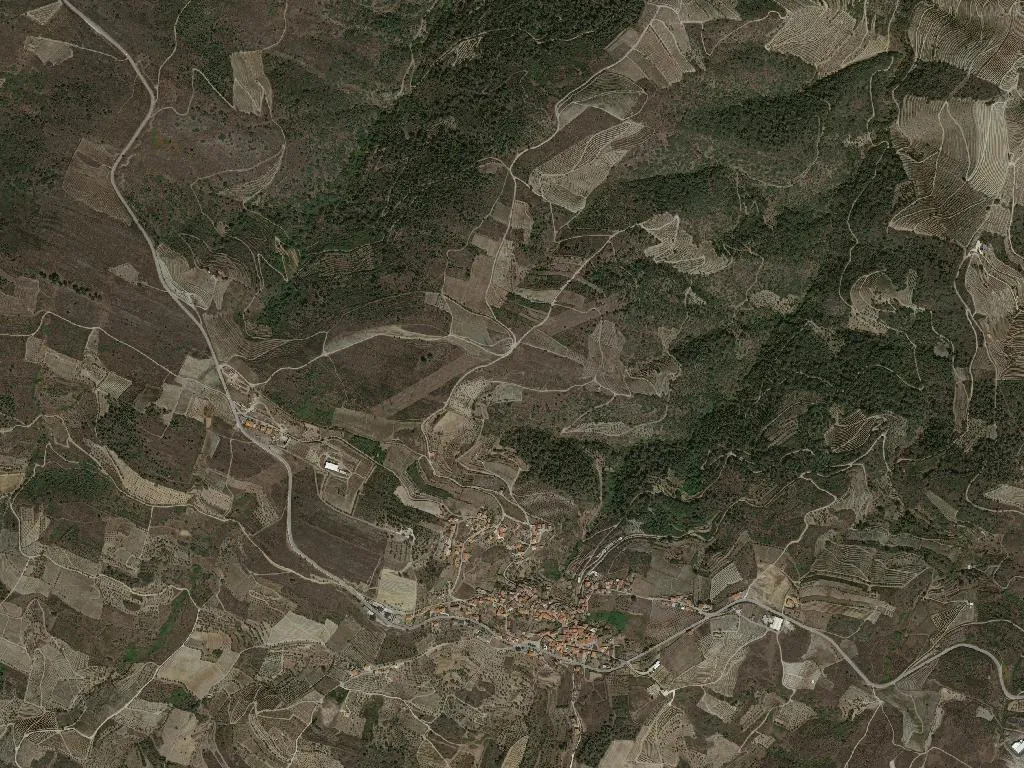
Full article about Castanheiro do Sul: Where the Chestnut Vanished
Stone crosses, locked chapels and a vanished charter mark this Douro hill parish.
Hide article Read full article
The south-facing chestnut tree that isn’t there
An 18th-century stone crucifix rises from the stump of the village pillory in the Largo do Pelourinho. When Castanheiro do Sul lost its charter in 1855 the shaft was hacked off, leaving only the plinth; the sweet-chestnut that once marked the southern gate of the walled settlement had already vanished a century earlier. Today the square is silent except for the clink of coffee cups at the single café and the slow shuffle of 130 pensioners—more than a third of the 382 residents.
What remains of the village
The Manueline foral, issued on 1 February 1514, still dictates the street widths. For 341 years this was a municipality in its own right; now it is a parish of São João da Pesqueira, 595 m above sea-level on the left bank of the Douro. A second rococo wayside cross greets drivers entering from the north. Seventeenth-century chapels are scattered like afterthoughts: Santa Cruz on São Domingos hill opens only on 3 May and 15 August; São Sebastião is locked, its key kept by Dona Idalina in the uphill house; Nossa Senhora de Belém has a lone monthly mass on the last Sunday. The former São João chapel was sold in the 1970s for 150 contos—about £750 at the time—and is now a hayloft smelling of dried fennel and dust.
Up the hill
On 3 May the village decamps 2.3 km up a dirt track to the chapel of Santa Cruz. Families carry checked tablecloths, presunto caseiro and bottles of Douro tinto; those who no longer trust their knees arrive in 4x4s. The pilgrimage begins at ten and ends when the last grandfather pushes back his chair. On 15 August the statue of the Virgin is paraded beneath paper lanterns; on 4 December a handful of Santa Bárbara devotees gather for a 4 pm mass that finishes in near darkness.
What you eat and drink
The village spring, Fonte da Vila Velha, delivers cold potable water 200 m above the square; Fonte da Azinheira dries to a trickle every summer. Terrincho DOP cheese is bought directly from the dairy at Tua, 12 km away along a lane barely wider than a terracotta roof tile. The vineyards cling to left-bank schist terraces—less sun, more rain, same Touriga Nacional—yielding reds that taste of wild lavender and iron. Only two houses in the centre are permanently occupied; the rest wake up at weekends when Lisbon number plates nudge against granite doorways.