Full article about Ervedosa do Douro: where vines outnumber villagers
Terraced vineyards, slate-roofed lanes and the N222’s cinematic curves above the Douro
Hide article Read full article
The scent of schist at sundown
The N222 unfurls like black ribbon, each hair-pin revealing another tier of dry-stone wall and vine. Below, the Douro slides west, a mercury thread between slate shoulders. Ervedosa do Douro perches halfway up the gorge, its terracotta roofs catching the last slant of light. In September the air is thick with warm earth and fermenting must; you taste both on the back of the tongue before any glass is poured.
From pasture to vineyard
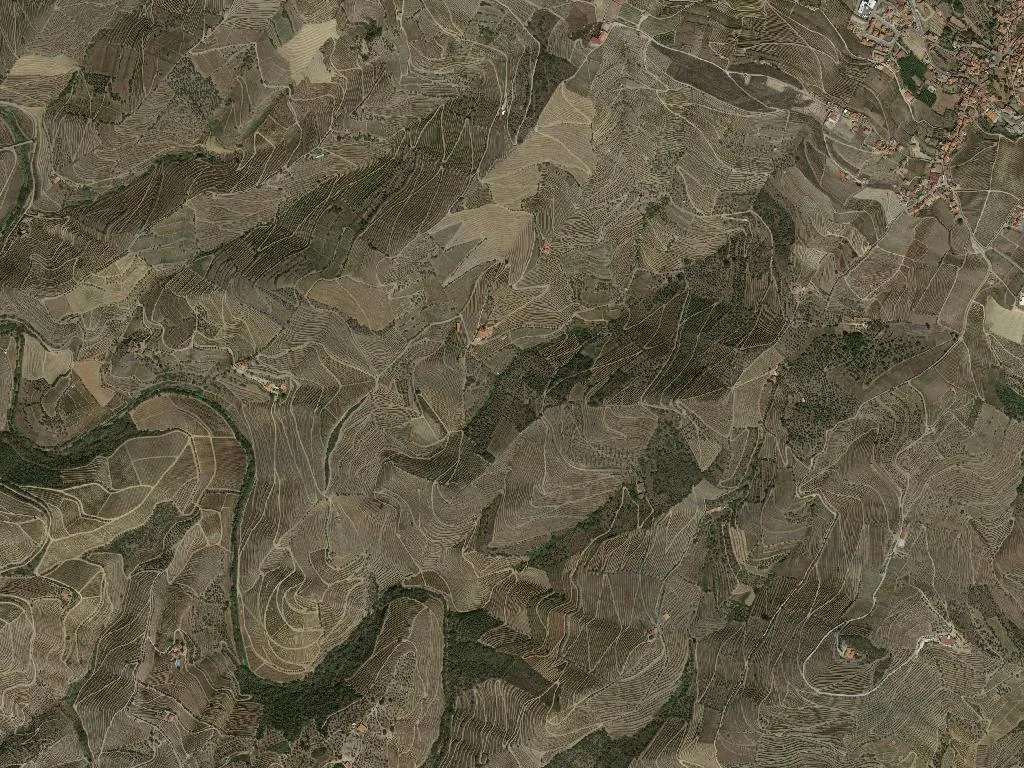
The village name—herbosa in medieval records—hints at what grew here before the 1756 charter of the Companhia Geral da Agricultura das Vinhas do Alto Douro turned pasture into profit. Within a generation the slopes were shaved into socalcos, narrow benches that climb 400 m above the river, and stone lagars appeared in every courtyard. Ervedosa’s promotion to vila in 1993 was paperwork merely catching up with three centuries of economic muscle: 418 ha of UNESCO-classified vines inside the parish boundary alone, every metre hand-built and shoulder-hauled.
Twelve kilometres of tarmac everyone wants to drive
The Automobile Club of Portugal has an annual habit of ranking roads, and in 2015 it handed the laurel to the N222 between Ervedosa and nearby São João da Pesqueira. The reason is optical rather than technical: the asphalt doubles as a moving belvedere, curving through eight separate viewpoints where the river keeps arranging itself into fresh tableaux. Cyclists outnumber cars in early light; by dusk the convertible contingent arrive, engines cooling while shutters click and silence re-orders the valley.
Posta, pipe smoke and midsummer fires
Order the posta mirandesa—an oxen-fed slab of fore-rib—at Casa do Rio, and it arrives scorched over oak embers, fat blistered, centre the colour of bishop’s purple. Chips or rice studded with grelos (turnip tops) are the only sanctioned extras. Begin with alheira, the bread-smoked poultry sausage invented by crypto-Jews to look like pork, and finish with a slice of pão de ló so under-baked its centre pools like custard. The wine list is parish-level parochial in the best sense: verticals of Touriga Nacional from Quinta do Pessegueiro, whose organic terraces you walked that morning, the French oak still holding the same late-afternoon heat you felt on the schist.
On the night of 23 June the square becomes a catwalk of hammered sardines and jumping bonfires for São João; in December the castanheira fires roast chestnuts that are handed out still smoking while villagers debate football and sugar ratios for broa.
Pick up the secateurs
Several quintas now issue open calls for harvest volunteers. A dawn briefing, a pair of gloves and you are sent sideways up a 35° slope to snip purple shoulders of Touriga Franca. By 11 a.m. the basket strap has cut a welt; by 2 p.m. your palms are the colour of bishops’ socks. The payoff is lunch under a mulberry: coarse bread, sheep’s cheese from the Serra da Estrela, chouriço whose paprika stain refuses to leave the fingers, and the first free-run juice of the year—sweet, slightly alcoholic, already tasting of next year’s bottles.
When the valley exhales
Dusk is the shift change. Tractors with cane-laden trailers clatter uphill while the river below turns pewter. Schist radiates the day’s stored heat; wood balconies creak under the weight of boots; someone is practising scales on an out-of-tune accordion. No church bell is needed—everyone feels the valley settle. Stand still long enough and the terraces seem to breathe, 300 years of graft rising and falling behind your ribs.