Full article about Slate, Schist & Vintage Douro at São João da Pesqueira
Terraced vineyards, Roman lagares and a 16th-century pillory crown this Viseu wine village.
Hide article Read full article
Slate and river
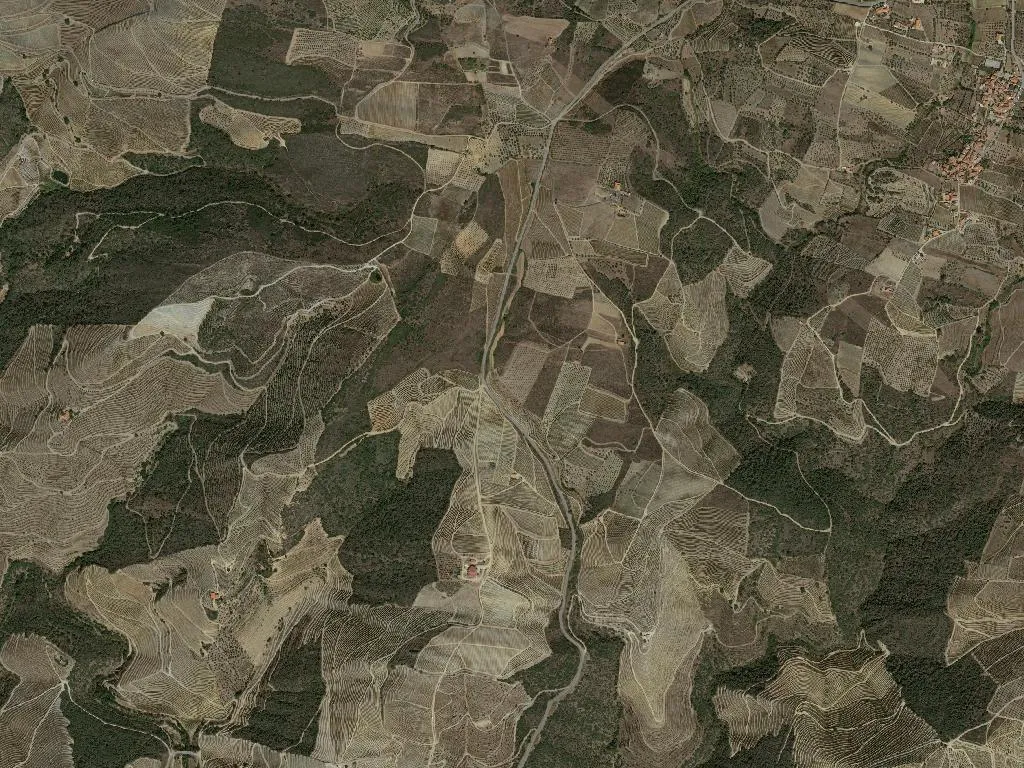
The wind arrives first. Bone-dry, it lifts the dust from the terraces and carries the raw scent of vines. You drop between walls of gunmetal schist until, on the final bend, the Douro finally flashes into view. At 534 m the village hangs above the water; below, the river slides west beneath a landscape that has been a UNESCO World Heritage Site since 2001.
A name drawn from water
“Pesqueira” simply means fishing place. The first charter dates from 1088, when Countess Teresa donated land to the Bishop of Lamego. The patron saint supplied the prefix, wine provided the future. When the Marquis of Pombal demarcated the Douro in 1756—Europe’s first controlled wine region—São João was already at its geographic heart. A parish priest, Abbot António da Costa, helped draw the boundary line; the settlement was raised to a town in 1836 and merged with Várzea de Trevões in 2013. Today 2,273 people farm 5,000 ha of vineyard.
Carved stone, talking stone
A sixteenth-century Manueline pillory stands in the main square, classified as a building of public interest. Inside the parish church a gilded baroque altarpiece faces eighteenth-century azulejos, and the statue of St John glints with Venetian-glass eyes. The former town hall is now the Museu de São João da Pesqueira, its walls given over to Julio Resende’s mural showing Pombal’s commissioners mapping the region. Cross the river on the 1893 iron bridge—sections prefabricated in Sheffield—and the lattice still hums when the wind funnels up-river.
Where the schist is walked barefoot
At Cava de São João twelve Roman lagares—granite troughs for treading grapes—are cut into the rock; some still bear heel-marks. September’s vindima turns the village into an open-air cellar: in the Wine Museum visitors stomp fruit in a 200-year-old lagar while clay pots of goat chanfana bubble on wood stoves. Jeropiga, the fortified must, circulates in enamel cups. Platters hold Terrincho DOP sheep’s cheese, black-pork charcuterie and corn broa. Across the parish boundary in Várzea de Trevões the communal oven turns out half-moon Biscoitos de Várzea, the only ones of their shape in the entire district of Viseu.
Griffons over the valley
Footpath PR2 zig-zags 8 km down to the river; from São Salvador lookout griffon vultures ride thermals at eye level. River-polished schist forms a natural “beach” beside the water. The 5 km PR1 ridge walk is best at sunset, when terraces glow like oxidised copper. Quintas along the way—Avessada, Crasto, Monte Travesso—pour tawny ports and unfiltered reds, no mule transport required, just a steady stomach.
The longest night
24 June, midsummer eve. Bonfires crackle on the bank, boats string coloured lamps between masts, sardines grill over open braziers. Fireworks bounce off the schist terraces, the sound climbing the vineyards and lingering in the still-warm air, an echo that stays with you long after you leave the Douro.