Full article about Soutelo do Douro: Stone, Smoke & Schist Terraces
Centuries-old granite, olive-wood cheese and vertiginous vines above the Douro in São João da Pesque
Hide article Read full article
The pelourinho still presides over the square, its octagonal granite shaft inked with the date 1514 and the armillary sphere of Manuel I. Run a thumb across the carved stone and you feel the chill of five centuries. Dawn is broken only by the slam of a weather-warped door against the old town-hall wall; the lime wash here is nicotine-tinged, fingerprint-smudged, scented faintly with the charred dossiers that once fed the courthouse stove.
Soutelo do Douro keeps its losses in masonry. Until 1830 this was a town in its own right, with its own charter granted by Bishop D. Paio Furtado in the fourteenth century. Lisbon’s bureaucrats redrew the map, stripped the place of its privileges, and left the stone to remember. The name, they say, comes from the Latin for pasture; Churra da Terra Quente sheep still graze the strips of grass between the vines.
Vine terraces that spill to the river
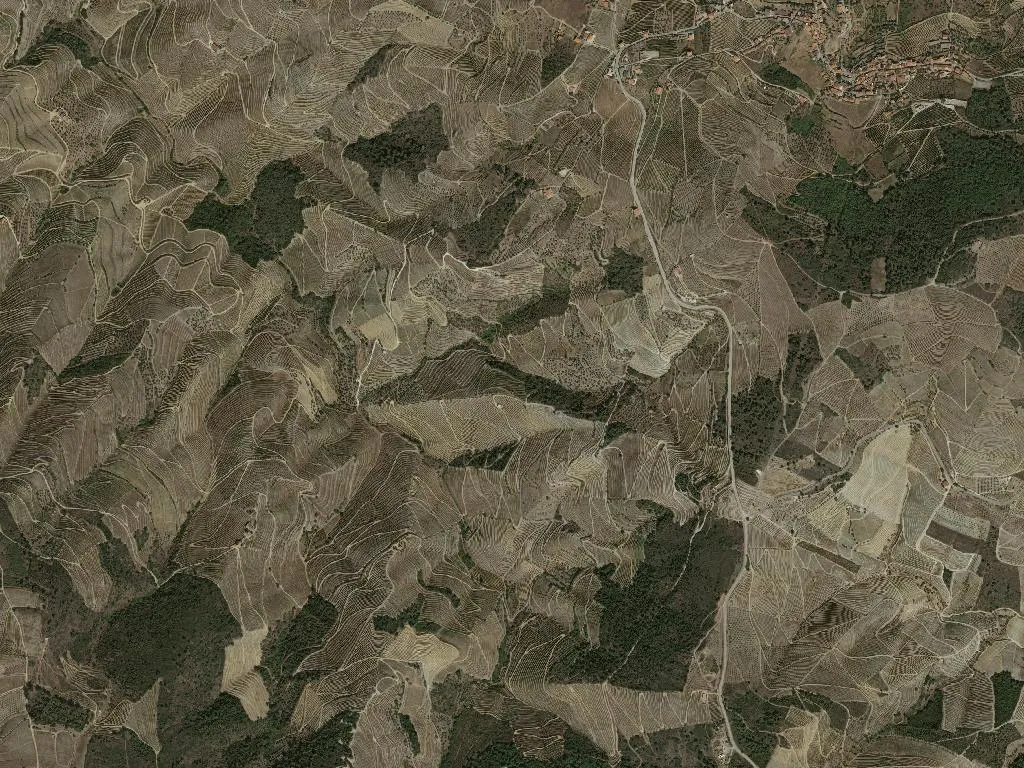
At 357 m the schist burns bare feet. Vines descend in walled ledges so steep each row is a day’s labour and each terrace a family archive. When the sun drops behind Casal de Loivos the rock still radiates the day’s heat, the same heat that fills the berries and buckles the farmers’ knees. UNESCO arrived in 2001 and affixed a plaque; the growers never needed one.
Smoke-cured cheese
Inside the fumados, wheels of Terrincho DOP hang where grandfathers once cured hams. Sheep’s milk, thistle rennet, salt, time. Slice one open and the aroma of olive-wood smoke clings to the paste. The table offers no inventions: black-pork charcuterie, thumbnail-sized olives from the field edges, chestnuts that split in the fireplace. Wine comes from the quinteiro’s own rows, poured into agate cups; conversation runs to the ’94 harvest, the year the rains never came, the neighbour who will not see the next.
São João night
In June the church windows blaze. Generations who left for Lisbon, Porto, the Renault plants outside Paris return, and the streets relearn the cadence of their footsteps. Flames of the São João bonfire lick the sky; sardines char on makeshift grills; chilled white wine arrives in plastic cups. The old occupy the same granite ledges they claimed as children; their London-born grandchildren cannot name the lanes but still find the scent trail to the grandparent kitchen. The census lists 372 inhabitants; on São João evening the population swells tenfold.
When the last firework dies, the pelourinho is alone again. The armillary sphere, worn smooth, still bears the royal coat of arms if you trace it slowly. Night dissolves the Douro into shadow; stars prick the skyline above the Marão ridge. Soutelo subsides into its own particular silence – the kind only those born here can actually hear.