Full article about Vale de Figueira: Bronze-Age Menhir & Fig-Smoked Douro Air
São João da Pesqueira schist hamlet where 3,000-year stones, altitude-sharp wines & saffron-milk-cap
Hide article Read full article
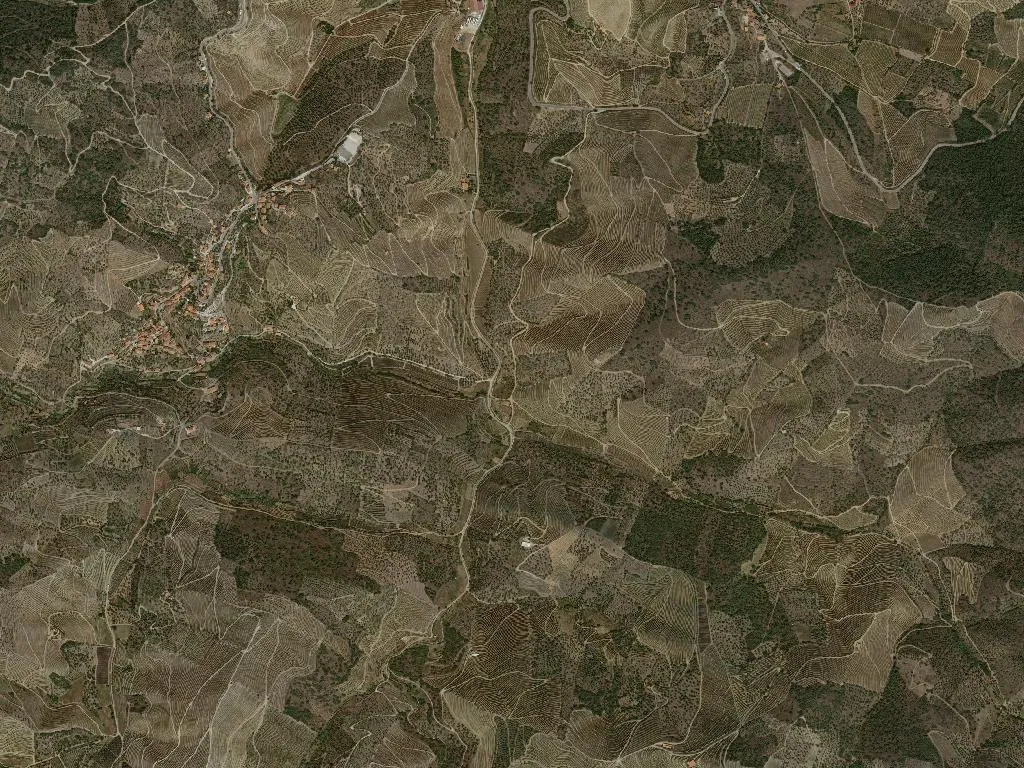
The scent of woodsmoke drifts through late-afternoon air already sweet with split figs. Beyond the schist walls of Vale de Figueira, the only sounds are the faint strike of the parish bell and the wind riffling the terraces that step 140 m above the River Távora. Slanting sun stretches violet shadows across the vines that will become altitude-sharpened Douro wines: reds with grip, whites that bite.
Between the fig trees
The name is literal—mediaal documents from 1290 already mention “Vale of the Fig Trees”. By 1764, when the crown created the parish, it had become Vale de Figueira-a-Nova. The mother church, Nossa Senhora da Apresentação, wears its architectural palimpsest proudly: Mannerist portal, Baroque bell-cote, Rococo altar gilded in the 1820s. In the forecourt stands a 1697 granite cross paid for by a Brazilian-returned emigrant; each June the priest still circles it with incense and water to bless the fields.
Touching three millennia
A 3 km interpretative loop climbs from the village to three eras in stone. First stop: Alto da Escrita, where a two-metre menhir—unique in the municipality—may have marked a Bronze-Age tribal boundary. Five minutes on, the Negrio rock-cut press, its troughs still stained purple, speaks of Roman or early-medieval winemaking. Finally, an Iron-Age warrior’s head, found by a ploughman in 1988, scowls from its display case in the tiny parish museum. You are encouraged to run a thumb across the menhir’s grooves; the granite is warm from the sun, polished by 3 000 years of other curious fingers.
What the valley puts on the table
Order ensopado de borrego and you receive a clay bowl of lamb slow-cooked with white wine, mint and wild marjoram, sided by wood-oven bread the cook bakes at dawn. Autumn brings saffron-milk-cap mushrooms folded into scrambled eggs; winter means game stews shot with Terrincho DOP, the firm, nutty ewe’s-milk cheese made from Churra da Terra Quente milk. Ask for a bottle from the 500 m-high Quinta do Extremina and you’ll taste how the night-day temperature swing gifts Touriga Nacional its violet nose and schist-driven spine. Knock on Dona Alda’s green door with a red in hand and she’ll ladle out caldo de nabos—turnip-top broth sharp with chilli and lemon—refusing payment with a grin.
Fires and shared loaves
On the eve of 24 June the village quadruples in size. Returned emigrants from Paris, Neuchâtel and Newark light São João bonfires that crackle until sunrise, while basil plants in coloured pots are exchanged between sweethearts. In late July the communal ovens are fired again for the Festa do Pão. Alentejano loaves—an echo of ancestors who migrated south in the 1950s—are proved on hessian cloth, slid in on chestnut peels, then broken and dunked in new olive oil while still hot enough to scald your fingers.
Spread across 16 km², only 356 souls remain. When darkness falls, woodsmoke threads between the ancient figs and the last torch of sunlight slips from the terraces, the bell note hangs unanswered—an echo searching the schist for its own reflection.