Full article about Figueiredo de Alva
Snow-bright Alva water, chestnut smoke, Dão wine—this São Pedro do Sul parish breathes endurance.
Hide article Read full article
River-white
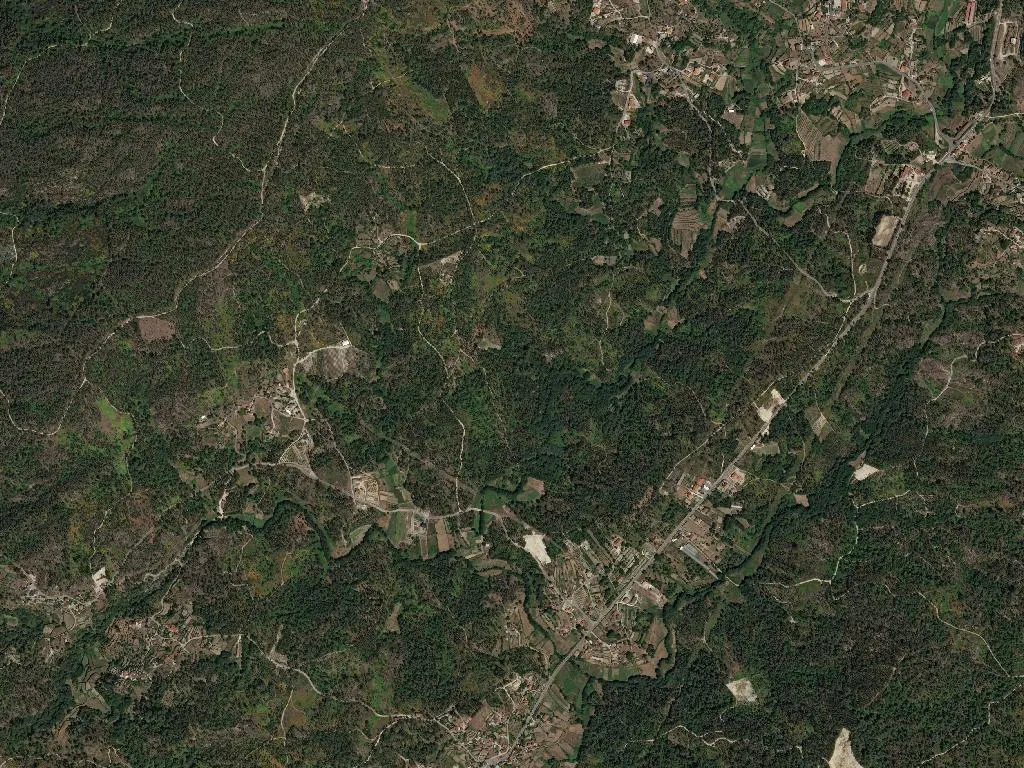
The Alva slips over granite like liquid glass, its voice a low percussion that fills the narrow valley. At 455 metres above sea-level, Figueiredo de Alva clings to the Mondego’s southern folds—1,468 hectares of chestnut, pine and smallholdings stitched together by slate-roofed hamlets. Morning air carries river chill and the sweet-sharp tang of resin drifting from kitchen hearths where 721 people still split kindling exactly as their grandparents did.
What the water named it
Local chronicles insist the river christened the place first: Alva, whiteness, for the way snow-melt from the Serra da Estrela arrives almost luminous over polished stone. Only in the late 1800s did the council add “Figueiredo”, tipping its hat to a land-owning family whose influence outlived their money. The double-barrel stuck, a reminder that geography and genealogy are equally stubborn here.
Scars that still smoke
Drive the N342 eastwards and charcoal stripes appear among the green—bare trunks from the 2017 fires that licked the edge of the village until Spanish water-bombers arrived. Regrowth is visible if you walk the old shepherd paths: lime-coloured shoots of heather pushing through blackened chestnut husks, the silence occasionally broken by a crack as a burnt limb finally falls. In August, when the wind swings round to the east, conversation still turns to evacuation routes.
Dão on the table
The parish sits inside the Dão PDO, where Touriga Nacional soaks up granite minerals and Atlantic breezes. Order roast Cabrito da Gralheira IGP at O Mondego in Aldeia de Póvoas and the kid arrives with skin blistered from a wood-fired oven, the meat almost vapour under a crust of coarse salt and crushed garlic. Locals mop the juices with broa made from rye and corn, then follow it with Carne Arouquesa DOP slow-braised in red Dão and bay. The wine list is short—three labels, all from within 20 km—and nobody pours until the stew has had its second stir.
Life in low density
Census sheets tell the story: 74 children under 14, 227 residents over 65, 49 people per square kilometre. Houses are spaced like pieces on a half-finished chessboard, linked by single-track lanes where you stop for every approaching car because passing places are rare. Four stone cottages take paying guests; bookings come from Porto engineers who want the sound of water rather than Spotify, and from French retirees tracing family lines back to 19th-century emigrants. Evenings revolve around Zé’s café at the entrance to the village—open at seven, closed when the owner is tired, espresso thick enough to stand a spoon in.
Dawn fog erases the river first, then the terraces, then the slate roofs. All that remains is the steady hiss of water against stone, the reassurance that the Alva is still working, ferrying last year’s leaves downstream while the valley decides whether to wake up or simply dream a little longer.