Full article about Manhouce: Altitude, Silence, Arouquesa Beef
At 953 m, São Pedro do Sul’s granite hamlet survives on DOP cattle and Zé Mário’s café
Hide article Read full article
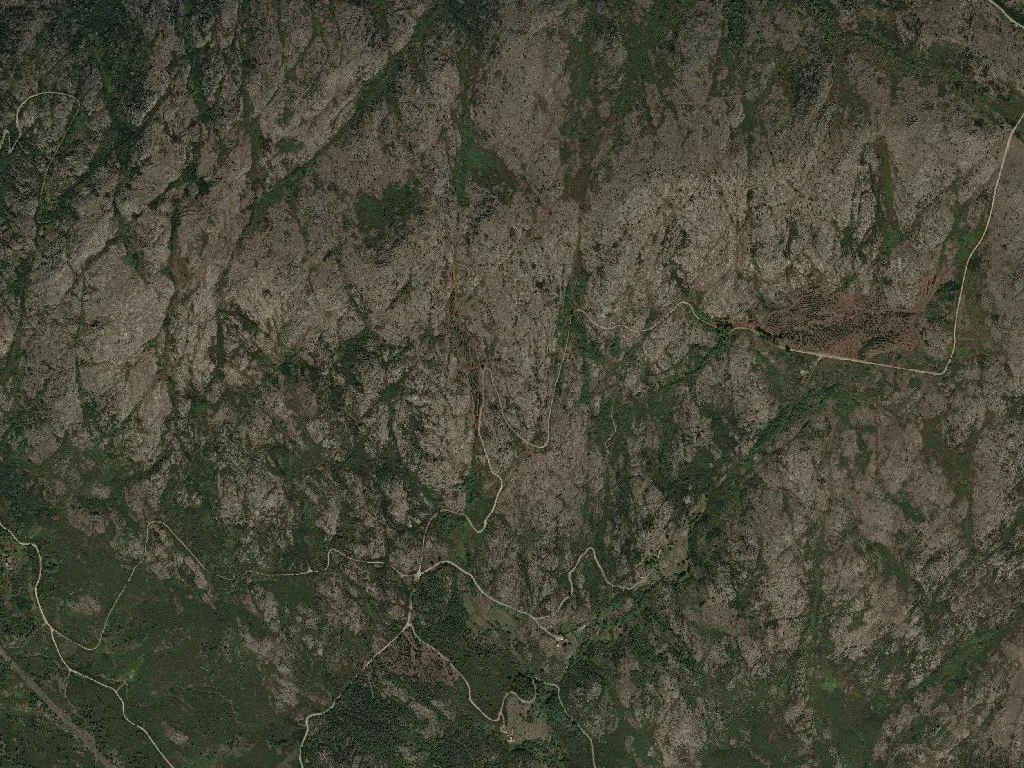
The cold finds your fingers first. At 953 m the air slices rather than bites – no poetic licence, just the exact altitude stamped on the parish sign. Manhouce doesn’t declare itself; it materialises after a bend on the N324, between schist walls first stacked in the eighteenth century and never quite finished. Four-hundred-and-sixty-six souls are scattered across 40 km², but the figure that matters is 213 – the number of them already past retirement age. The primary school shut in 2009, the bakery followed five years later. What remains is Zé Mário’s café, unlocking at seven to serve bread freighted up from São Pedro do Sul and bolting the door at eight, when the last trio of village taxis clatter home.
Cattle & Stone
Carne Arouquesa isn’t some rustic marketing tag – it has held DOP status since 1996 and the beef is born on these 700–1,000 m pastures of barley grass and white clover. Most of the herd belongs to the Agrosaúde co-op, founded 1981, which pays its 23 local breeders €3.80 per kilo live-weight – a price fixed in Braga, not here. Each animal carries an electronic tag in its ear and, more poetically, its owner’s name etched on the brass bell: “António da Fonte”, “Carlos do Penedo”. The cadence of those bells keeps better time than the church’s single Sunday strike.
Two Monuments, Both Closed
Guidebooks reduce them to a footnote, yet precision matters. The chapel of São Brás, erected in 1758 during D. Miguel de Távora’s evangelising swing through the Lafões valley, shelters a baroque side-altar salvaged from the dissolved monastery of S. Cristóvão after 1834. Across the square, the Casa do Largo – manor house, 1782, carved proudly above the door – served as the royal tax collection post until 1860. It still belongs to the Carvalhiais family, who holiday here exactly a fortnight each August; the rest of the year the windows are boarded, silence accumulating like dust.
Slope-side Vines
There is no “Dão sub-region” at this altitude; there are three EU-registered hectares of vines planted between 650 m and 800 m on schist-grauwacke soils. Alfrocheiro Preto dominates because it ripens a fortnight ahead of Touriga-Nacional and up here every extra day of sun is negotiable currency. The resulting wine is bottled at the São Pedro do Sul co-op, sells for €6 and wears the label “Altitude 953” – rounded up, because 947 apparently doesn’t shift bottles.
Winter Arithmetic
Fog clocks in during October and signs off in April. Snow falls on average twelve days a year; when it does, the municipal road 522 is sealed at kilometre seven where the gradient tops 12%. The town hall contracts Lusoponte to clear a path, but the SLA allows 24 working hours. Meanwhile the village’s 23 primary pupils simply stay home. The last home birth happened in 2018 – Ana’s second child, delivered by a Viseu GP who commandeered a GNR Land Rover; the ambulance couldn’t handle the iced ramp.
Kid for a Weekend
Gralheira-mountains IGP kid actually comes from the ridge beginning 3 km away. Miguel, the only licensed mobile slaughterman, supplies forty-day-old animals at 6–7 kg. They are roasted three hours over oak in the single weekend restaurant, “O Céu”, open Friday–Saturday by prior booking until 20h Thursday. On other days Zé Mário will fry you a portion, but it is frozen kid from Mangualde; Miguel only slaughters on Fridays.
The Sound of 0.3
By 22h the last street-lamp on Rua da Igreja blinks off. Silence is not absence here but a measurable density: 0.3 inhabitants per km². You hear cattle shifting against their stakes, Adelino’s dog barking at the moon, water chuntering over schist. At 01h30 the Agrosaúde milk lorry climbs the gradient, headlights raking stone walls, engine shaking the mountain. Then the hush returns – the precise acoustic distance between your body and the rest of the world, calibrated not in kilometres but in decibels.