Full article about Pindelo dos Milagres: fog, oak-smoked chouriço & silence
São Pedro do Sul’s high-plateau parish where 571 souls farm Lafões vines and Barrosã cattle
Hide article Read full article
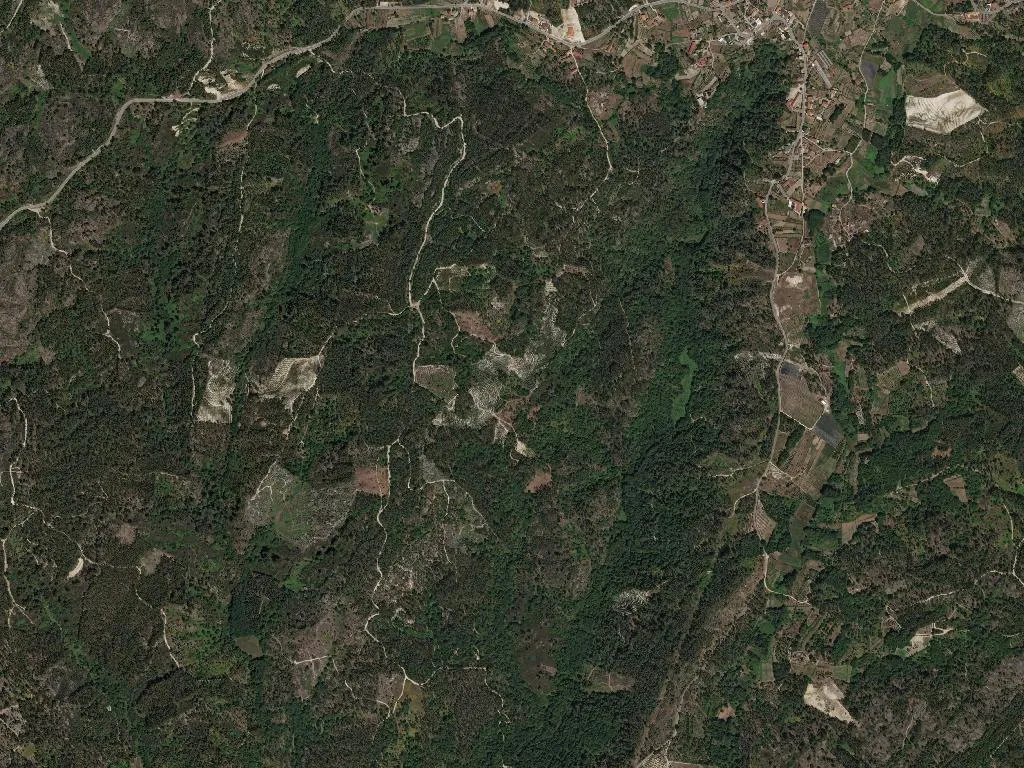
Morning fog unspools through oak and chestnut, sliding past stone walls that have parcelled these uplands since the 1864 land registry. At 439 m the air is sharp enough to carry the single toll of Santo André’s bell across the valley—one resonant note, then silence thick enough to taste.
What the land allows
Pindelo dos Milagres spreads over 24 km² of Beirão plateau, a parish re-drawn by Liberal reforms in 1836 yet still shaped by the 1513 charter of Dom Manuel I. Only 571 people remain, 253 of them over sixty-five; the under-fifteens number forty-one. The arithmetic tells its own story: departures for the Renault plants of Île-de-France and the construction sites of Neuchâtel in the 1960s-80s, followed by a trickle returning after the A24 motorway and a new primary school arrived in 2018.
Fields of irrigated potato and maize alternate with narrow terraces of Touriga Nacional, the vines rooted in schist that earns Lafões DOP status for its granite-edged reds. Cattle of the caramel-coloured Barrosã breed drift up to the communal oak woods of São Macário on fine days, herdsmen following with the same ash-handled crooks carved by their grandfathers.
Altitude on the plate
Altitude dictates the larder. Milk-fat lamb is still roasted outdoors in a bread-oven fired by oak prunings; corn bread rises overnight, its crust imprinted with the family’s initials. Inside, oak-smoke blackens strings of chouriço above the hearth while cast-iron pots simmer rice and chicken blood—cabidela—thick as velvet. No tasting menus, no reservation apps: you eat what the kitchen is serving, usually at a table of cousins who can recall which meadow the lamb grazed.
No itinerary required
There are no coach parks, no colour-coded trails. You can follow the 4 km Rota dos Moinhos, where five nineteenth-century water-mills still channel the Rio de Mel; or climb the cobbled sheep track to the Nossa Senhora da Lapa lookout at 600 m, the Vouga valley yawning below like a green fjord. Solitude is guaranteed—even in August you will meet only shepherd dogs and the occasional German couple who read about the Lafões wine route in a Stuttgart supplement.
The single place to stay is Casa do Romeiro, a two-bedroom granite house rebuilt by António and Maria José. They leave sour-dough starter on the oak dresser and a bottle of their own red by the open hearth. Payment is in cash, preferably the exact amount; Wi-Fi is a polite fiction.
What endures
By dusk the sun skims the ridge, firing the oak canopy while cold air pools in the lanes. The bell rings again—not a call to prayer, simply the parish announcing itself. Outside the only café, men in flat caps debate the price of chestnuts while inside the television shows a Porto match on mute. The chapel of miracles collapsed in the 1700s, but its name survives on the parish council letterhead and on the hand-painted sign above the door of “O Milagre” café. The real miracle is smaller: a place that still produces what it eats, remembers who it was, and offers the rare luxury of a night sky untouched by sodium light.