Full article about Pinho: pine-smoke mornings in São Pedro do Sul
Granite granaries, chestnut groves and accordion nights at 497 m in the Vouga hills
Hide article Read full article
The percussion of pine logs
The day begins with the crack of resinous pine logs on cast-iron grates – a slow, metronomic beat that feels like a drum-major counting time before the parade. In Pinho, 497 metres above sea-level, fire-lighting is still grandfather-taught: twist yesterday’s Jornal de Notícias into a loose bird’s-nest, add pine bark curls, strike the match. Granite farmhouses exhale warmth at their own unhurried tempo while the square stone espigueiros – miniature granaries propped on staddle stones – throw long shadows across the lane like a skyline built for corn, not people.
A geography of restraint
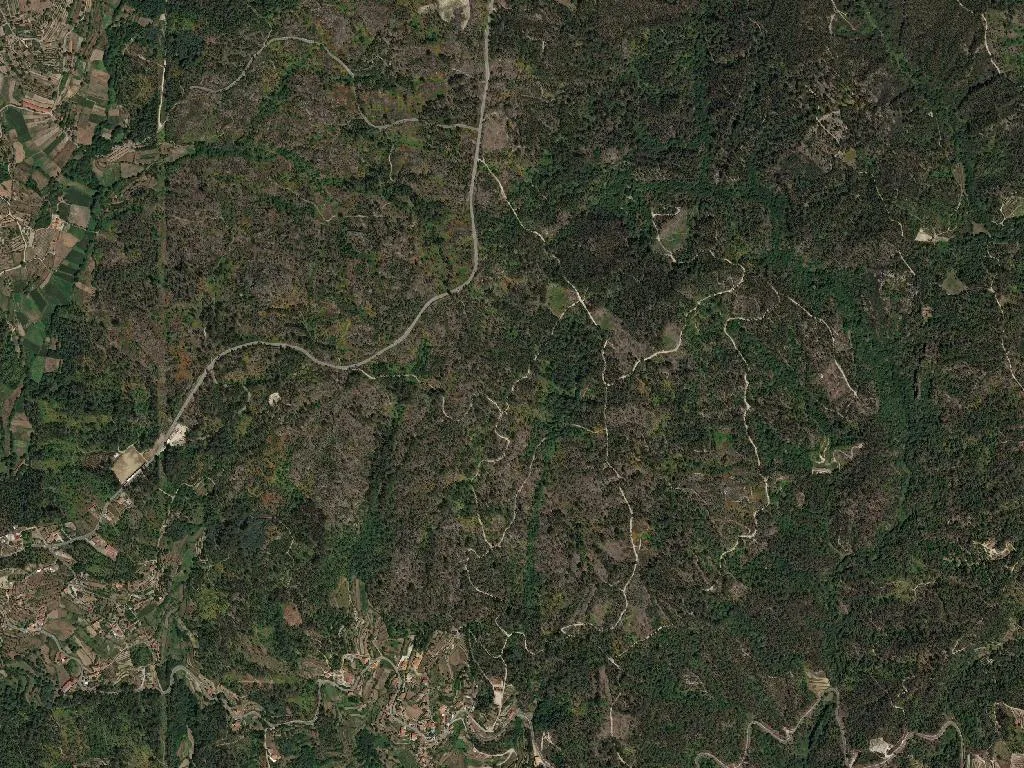
Cartographers claim the hamlet takes its name from surrounding pinewoods; locals swear it simply means “small as a pin”. Either way, Pinho is easy to miss – a single grey stitch between the wooded Serra de São Macário and the gentle valley of the Vouga. Sweet-chestnut groves belong to whoever bothers to climb for them; no wind ever volunteers the best burrs. Streams career downhill to the river like late pupils to morning assembly. There are no way-marked trails; navigation is by scent – wood-smoke or the diesel cough of Zé Manel’s 1977 Massey Ferguson – and by the certainty that every path ends at someone’s cousin.
The electoral roll lists 654 souls. Half sat beside me in the two-room school; the rest are “foreigners” from Figueiredo, three kilometres away. Three holiday cottages have sprouted geranium-filled planters that no one ever waters; they remain resolutely un-fooled.
Saints, processions and roadside chapels
The parish church needs no gilding to command respect – its plain Romanesque portal is authority enough. Each June the festa turns the square into our own micro-Cannes: patchwork quilts instead of red carpet, roast kid circulating like salacious gossip, Dao red flowing faster than the stream. When Sequeira’s accordion still haunts the valley at 2 a.m., no one phones the council – proof the village is still breathing.
Wayside shrines serve as GPS co-ordinates. “Before the hermitage bend” pin-points António’s gate; “after the granite cross” leads to the cattle yard. Santo António’s chapel stays padlocked nine months, yet on the saint’s day it opens like a day-blooming cactus; even the Almadas’ Labrador enters, cap doffed.
Meat, wine and the wood-fired oven
The secret to the roast kid is not rosemary or garlic but time – and Sr Albano’s brick oven, older than the parish council itself. Chanfana – goat stewed in Dao red – simmers in the same black clay pot D. Idalina inherited from her mother-in-law; altering the recipe would feel unconstitutional. Carne Arouquesa DOP comes from cattle that graze the high scrub; they decide the menu, not us.
At Pinho tables, diets are classified information. Talk turns to rainfall, livestock prices, Westminster-style Portuguese politics – all through mouthfuls of Dona Lucinda’s pão-de-ló, a sponge so moist it seems to have wept tears of joy in the oven.
Autumn: the chestnut harvest
October is when the village most resembles itself. Soutos fill with returning swallows – Port-based sons, Lisbon grand-children who know the place only from their grandmother’s WhatsApp. Leaves are swept like parlour carpets before important guests. Night falls; the borralho crackles and chestnuts pop like New Year sparklers.
Visitors leave with pockets full of satin-brown nuts, the dry rustle of leaves underfoot, the smell of wet basalt – and the sense that here time does not pass; it simply settles on the hearth like Celestino’s tabby cat, content never to stir again.