Full article about Where São Martinho das Moitas Meets Covas do Rio
Granite ridges, 258 souls and Michelin beef above São Pedro do Sul
Hide article Read full article
The mountain that pays for loyalty
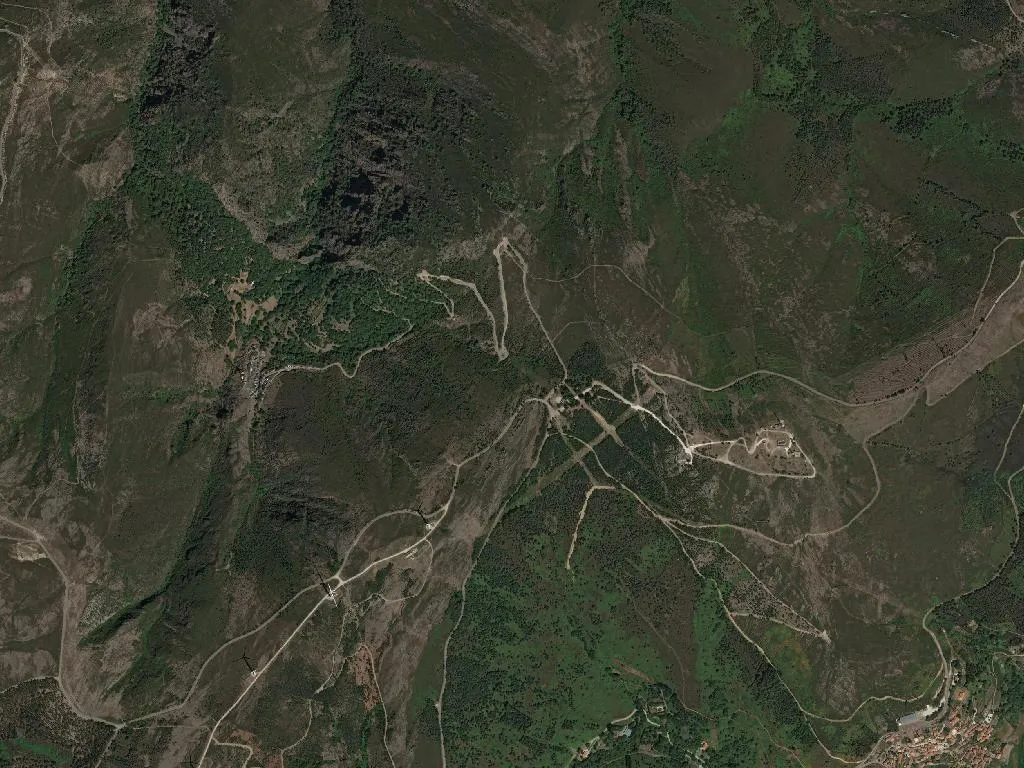
At 895 m the morning air is thin enough to sting, even in August. Mist unspools across the Serra da Gralheira, erasing the track that corkscrews upward from São Martinho das Moitas to Covas do Rio. A dog barks somewhere below; wind combs through maritime pines. Between the two villages—eight kilometres of single-lane asphalt, heather and broken schist—only the mountain speaks.
The administrative marriage of São Martinho and Covas stretches across 53 km² of granite and gorse, yet barely 258 inhabitants remain. Walk for two hours and you will meet more stone-walled pigsties than people: terraces once planted with rye now grazed by the tan-coloured Arouquesa cow, her muscles toned by gradients that would trouble a goat. The breed’s DOP-labelled beef—dark, close-grained, tasting of heather and wild thyme—commands Michelin-star prices in Porto, but up here she still ambles past abandoned threshing floors, bell clanking like loose change.
Altitude agriculture
What the mountain withholds in topsoil it returns in flavour. Cabrito da Gralheira, an IGP kid goat raised entirely on these slopes, develops its faintly resinous sweetness from browsing arbutus and rockrose. Animals are left on the hill until the last possible moment; the short journey to the abattoir in Viseu keeps stress—and lactic acid—low. The result is meat that needs nothing more than coarse salt, a drift of oak smoke and a winter appetite.
Vines survive where no tractor can follow. South-facing ledges, hand-built from slate, trap the sun until dusk; diurnal swings of 20 °C lock acidity into the grapes. Locals still call the wine “Dão de altitude”, though the region’s regulatory board refuses to recognise sub-zones. The bottles—when you find them—carry only the name of the grower and a vintage that might amount to 300 litres. Open one beside the hearth and you taste schist, pine sap and the stubbornness required to farm at the cloud line.
The arithmetic of staying
Visit on a weekday and the ledger of abandonment is plain: 131 residents over 65, just 14 under 25. The primary school closed in 2010; the café in Covas unlocks only on Saturdays. Seven tourist beds—five in restored schist cottages, two in a manor house whose family left for France in 1975—stand ready, immaculate, mostly empty. Guests arrive with hiking poles and star charts, depart with the guilty relief of people allowed to leave.
Daily life is calibrated to livestock and the weather forecast. Breakfast is at 05:30, before the mist lifts enough to reveal which fields the cattle have wandered into. The nearest doctor is 25 minutes away in São Pedro do Sul; when snow drifts across the pass, two days of isolation are routine. Yet those who remain talk less of hardship than of bookkeeping: how many calves, how much firewood, whose turn to ring the church bell when someone dies. In the cemetery the gravestones read like a single extended family—surnames repeated since the 18th century, the same granite used for houses, walls, bread ovens.
Dusk drops the temperature to single figures even in midsummer. Inside, oak logs spit resin against the hearth; outside, the silence becomes so complete you hear your own pulse. There is no mobile signal, no street lighting, no curated “experience”. There is only the mountain, the animals, and the quiet certainty of a place whose survival depends on the few who refuse to let the fire go out.