Full article about Sulphur-scented dawn over São Pedro do Sul’s 67° springs
Romans, kings and modern physiotherapists still bathe in the same granite valley
Hide article Read full article
Where the Earth Breathes at Sixty-Seven Degrees
Steam rises from the ground before first light. It is not mist – it is brimstone, 67-degree sulphurous water punching through the valley floor of the Vouga and colliding with the dawn air to form a white scrim that hangs above the granite eaves. The scent is metallic, weighty, almost surgical; it clings to jumpers, skin, the inside of the nostrils of anyone walking through São Pedro do Sul before eight o’clock. For the best part of two millennia this exhalation has set the tempo of the place. Romans channelled the spring for a bathhouse that has never closed – a continuum that has outlasted emperors, kingdoms, republics, dictatorships and every administrative shake-up Lisbon could devise.
The Spa that Mended a King and Never Closed its Doors
The story is well aired, but it still sounds better here, where it happened. In 1169 Dom Afonso Henriques, founding monarch of Portugal, fractured his leg so badly court physicians despaired. He ordered a thermal hospital built over the springs; the stone structure still carries his name. Balneário D. Afonso Henriques sits three metres from the original Roman pools, now sheltered inside the country’s only thermal museum – itself grafted onto Queen Amélia’s 1894 bathing pavilion. Within a hundred paces you step through polished Roman masonry, twelfth-century ashlar and fin-de-siècle azulejos. Around sixteen thousand patients pass through every year, making this the busiest spa in Portugal and explaining why a mountain town of 5 497 people sustains 243 inhabitants per square kilometre – one of the densest settlements in the northern interior. Rheumatologists, physiotherapists and five small hotels have replaced the imperial guards, but the water still arrives at exactly 67 °C before being tamed to a comfortable 37 °C for the pools.
Three Names, One Valley
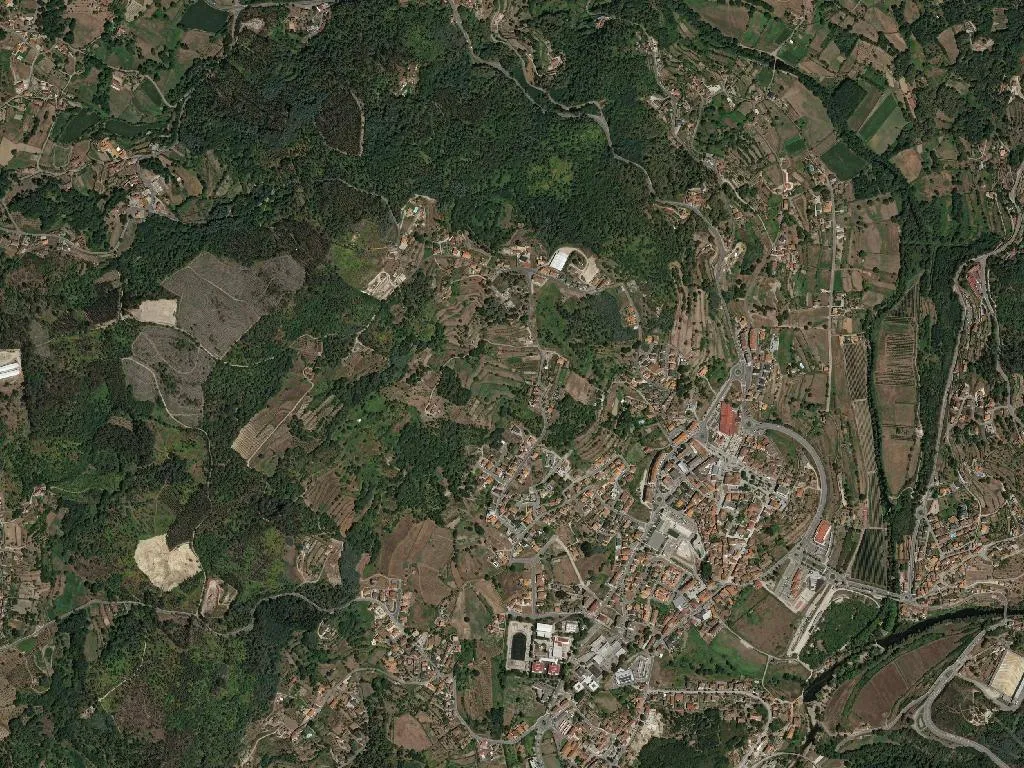
The 2013 parish merger stitched together São Pedro do Sul, Várzea and Baiões – distinct hamlets the river had already unified. São Pedro owes its name to its medieval parish and its position south of the municipal seat. Várzea derives from the Latin varzea, the fertile river flats that still spread like a green apron between water and granite escarpment. Baiões remembers a medieval landowner called, simply, Baião; the man vanished, the toponym stayed. The entire parish occupies 22.5 sq km at an average altitude of 299 m, a steep amphitheatre of dark schist clothed in chestnut, oak and umbrella pine.
Meat, Smoke and a Sponge Cake that Refuses to Crumble
Local menus revolve around two protected proteins. Carne Arouquesa DOP – beef from long-horned mountain cattle – is grilled or slow-braised until it tastes of Alpine butter and sweet herbs. Cabrito da Gralheira IGP, kid reared on heather and broom, emerges from wood-fired ovens with the elasticity of silk and the depth of game. Both appear as rojões à moda de Lafões, nuggets of pork neck seared in lard and deglazed with red wine. In low stone smoke-houses, oak smoke drifts for weeks over chouriço and salpicão fat enough to bloom on the chopping board. Wednesdays bring the open-air market where these are sliced thick and served with corn bread still warm from communal ovens.
Puddings have their own postcodes. Margaride bakes a pão-de-ló so moist it collapses in the centre; Várzea turns out miniature queijadas; convent recipes yield yolk-heavy doces de ovos. Dão wines – taut Touriga Nacional reds and waxy Encruzado whites – scrub the palate clean. Some locals finish lunch with a glass of the same sulphurous water that began their morning, arguing it aids digestion. Only here does that logic hold.
The Levada, the Bridge and the River that Stitches Everything Together
The Vouga Ecopista, a converted railway line, offers the least hurried way to read the valley. Cyclists and walkers follow the water between alder and willow, the current ticking like a metronome. A short detour leads to the Ponte do Pego, a single granite arch thrown across the river in 1852 with no ambition beyond permanence. South-facing slopes carry tiny terraced vineyards; in October the foliage flames ochre and claret. The Serra da Arada and Monte de S. Macário rise a few kilometres east, with granite footpaths and the 60 m cascade of the Fraga da Pena, but you can lose days simply following the Vouga’s bends.
Chapel Feasts, not Billboard Festivals
The liturgical calendar is measured in chapels rather than stages. Forty days after Easter, Nossa Senhora da Saúde – Our Lady of Health – processes through the spa gardens, devotion and hydrotherapy still walking arm in arm. On 11 November, São Martinho pairs the first new wine with roast chestnuts. In Drizes, 8 September belongs to Nossa Senhora da Nazaré; 15 January to St Amaro, whose statue is carried between granite houses. Várzea keeps the Sunday before Christmas for Nossa Senhora da Expectação, while Corpus Christi carpets the streets with sawdust mosaics. The parish church of Várzea, a late-Renaissance essay in bare stone, and the chapel of São Martinho still toll the hours; the community answers.
Arrive during the harvest and divert to the Adega Cooperativa on the edge of town: within five kilometres of the press, grapes become Dão wine, and the cellar hands need little persuasion to pour a glass that tastes of stalk and juice.
By late afternoon the last bathers emerge, skin flushed, gait loosened. Steam thickens again over the Vouga, carrying the day’s olfactory ledger: sulphur, oak smoke, kid fat roasting somewhere up the hill. It is a combination no airport perfumery will ever bottle, and it lingers in the nostrils long after the road curves away from the valley.