Full article about Serrazes: Where Granite Outlives the People
Knife-tight walls & fog-draped terraces cling to São Pedro do Sul’s wildest ridge.
Hide article Read full article
Grey granite elbows its way right to the roadside, raw and unapologetic, as if the land simply forgot to dress it. In Serrazes, stone is never just geology; it pins the maize terraces in place, props up slate-roofed cottages, and rattles the ankles of anyone foolish enough to descend Rua da Igreja in the rain. The wall-joints are knife-blade tight—locals once blamed “clingy schist”, but the trick is the mason’s refusal to hurry.
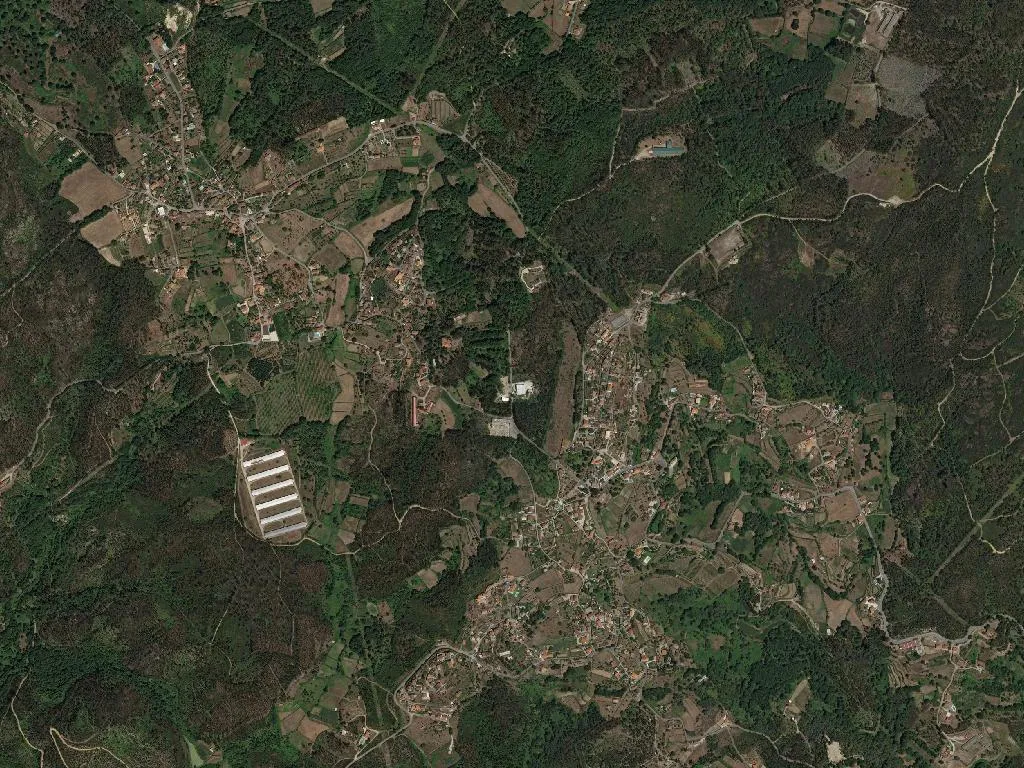
Space itself breathes differently here: 890 souls scattered across 1,323 hectares, enough acreage to lose your voice calling across the threshing yards. Dawn fog snags on the gorse of Pego; dusk gilds the terracotta of Carril and turns mica flecks in the granite into ground glass. Demography has petrified too—over-65s outnumber the under-25s by three to one, and the parish council roll-call never changes: the same surnames, the same Atlantic-blue eyes, the same refrain that “weather isn’t what it used to be”.
Carved Stone, Etched Time
The chapel of São Brás forces every visitor to bow—its door was built shoulder-high so a man enters on humility. Inside, the scent of candle stubs and moth-balled wool mingles with laurel wreaths drying above the altar. Outside, the churchyard is the village’s obituary page: António who felled oaks, Amélia who never married, the grandson who left for France and never came back. The 1897 calvary leans a few degrees off true; each pock-mark in its granite is a year of hail or hunger.
Oldest cottages face due south to snare the thin winter sun; their north walls, blind as tortoise shells, repel the wind that can still deliver snow in May. In the stone barns a walnut-handled scythe hangs from a nail—no one uses it, no one throws it out. The great open hearth, the fogareira, survives only as a photo in the village pub, yet on damp evenings someone still fires a chestnut-roasting brazier to dry boots after the harvest.
Taste of the Serra: Arouquesa & Gralheira Kid
Sunday brings Arouquesa DOP beef down from the neighbouring ridge, strung in net bags. The moment it hits the pan the yellow fat crackles like a concertina; the smell drifts along Rua do Poço and coaxes old Albano outside in his slippers. It is eaten with potatoes from dry-farmed terraces; if the maize harvest is good Natária kneels at four a.m. to slide corn-bread into the wood oven while nightjars mistake the moon for daylight.
Gralheira IGP kid is not reared here but perfected here. The wood-fired oven at O Corte needs three hours to reach temperature; the perfume of strawberry-tree logs hangs like profane incense. The crust bronzes, the meat turns almost translucent, eaten by hand, doused with rough red from a five-litre jug that Zé Mannel ferments in the boot of a Renault 4L.
On the valley slopes the terraces are too narrow for tractors; pruning is still done with a hoe slung over the shoulder while the wind whistles up from the Dão. Wine ferments in blue-painted concrete tanks—no label, just a faded photograph of the grandfather who planted the vines in 1953. In summer it is served chilled under the walnut tree with lupin seeds and talk of milk prices.
Sleeping Between Ridges
Three restored houses are scattered across the parish—one in Carril, one in Pego, one higher up beyond any street name. They are built of living stone, their doors thick enough to creak like boat timbers. There is no television; instead the Milky Way feels within arm’s reach and the silence is so complete you hear your own pulse. Morning begins with a neighbour’s rooster and warm bread left on the step in a linen cloth.
Walkers head for the Fraga da Pena, where water dives fifteen metres through moss that smells of crushed lemon, or climb to the Senhora da Lapa shrine where boulders form a natural throne—legend says whoever sits there never loses the way, even when they leave. At night the stone’s warmth leaks away grain by grain; dew falls like fine gravel and rooks streak across the sky to roosts only they know.