Full article about Sul’s granite dusk hums with cow-bell gold
Roman ruts, chestnut shadows and goat-feast smoke in São Pedro do Sul’s hidden hamlet
Hide article Read full article
The Granite Still Holds the Sun
The granite is hot enough to sting your fingertips come dusk—having banked the sun all afternoon, it now releases the heat grudgingly, as though reluctant to let anyone grow cold. Over the brow of the hill a russet Arouquesa cow lows, the sound catching on the stones and rolling down the valley until it meets the dry double-clink of the bell in Aldeia Velha. The light is the sort of gold you could slice with a palette knife; it fills the air so thickly that every oak and chestnut becomes a paper cut-out, edges so sharp they almost hurt to look at.
Roman Wheels, Local Feet
Some of the cobbles you tread are older than the concept of Portugal itself. Setts the size of shoeboxes lie half-buried beside the Valadas bench or in the middle of the Póvoa footpath, still carrying the ruts of wagons that left Hispania for Portus Cale two millennia ago. No brown sign advertises the fact; nobody here notices. Children learn to hop over them the way Londoners dodge the same pothole outside their front door every morning.
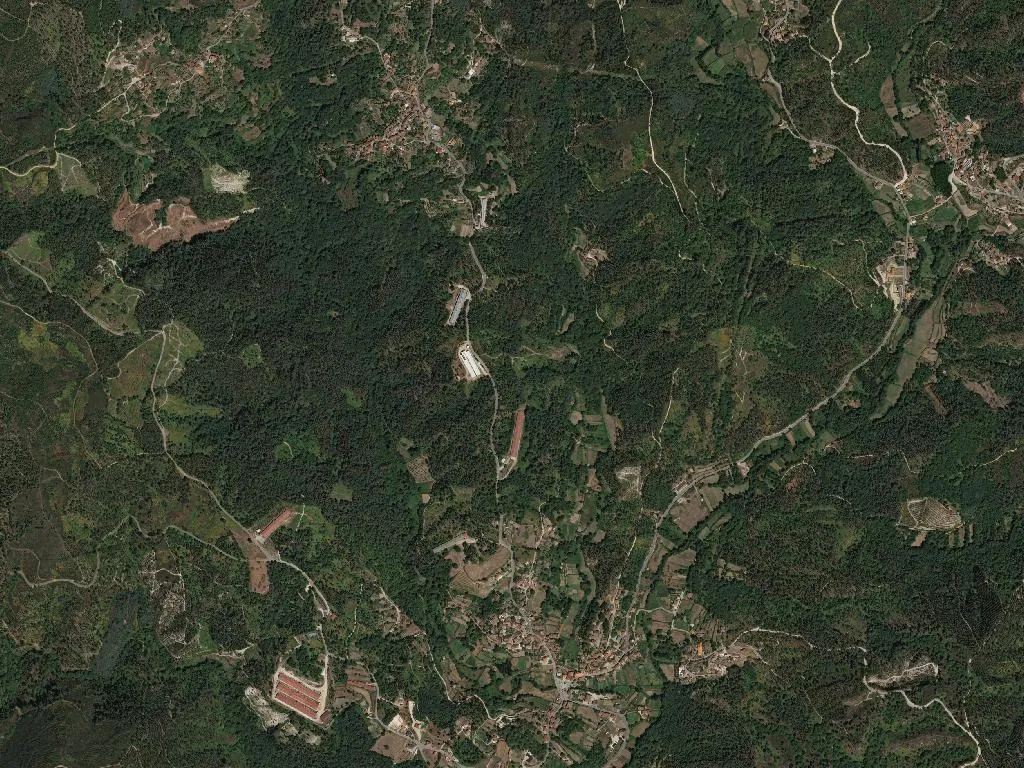
The hamlet is simply called Sul—"South"—because that is what it is. Stand in the doorway of Café Vidal in Manhouce, ask for directions, and the barman jerks a thumb toward the municipal road: "Down there, where the wind forgets to turn." No patron saint, no miracle, no medieval charter—just the scatter of stone houses that begins where the Serra de São Macário starts its long descent toward the Vouga.
A Parish Feast Without a Poster
There are no processions, but on certain October afternoons the smell of roast kid drifts from yard to yard. Someone has slaughtered a goat in the back garden, and the entire village eats. Neighbours appear at your door with a steaming dish, the wine arrives in a rinsed-out plastic cider bottle, the table is laid on the veranda because the hearth can no longer keep up with the heat of conversation.
Beef with a Passport, Wine with Attitude
The yellow tag in the animal’s ear certifies Arouquesa DOP, yet it tells only half the story. António at the Adega can recite yesterday’s grazing grid for every beast and calls each by nickname—"the Speckled One, the Black, the Donkey"—even the one whose departure he can’t bear to watch. The flavour is built in winter: short grass seeded on communal scrub, water drawn from a granite spout cold enough to make your teeth sing, and the long, deliberate wait for muscle to relax into fat.
The kid is rubbed with coarse salt, left overnight, then roasted over a wood fire until the skin shatters like thin toffee and the meat unravels into milky, mountain-scented fibres. Visitors who have eaten goat elsewhere swear the animal is the same; locals know it is the Atlantic-laced wind, the slate soil, the rain that remembers the sea.
Drive ten minutes north-east and you reach Quinta do Cerrado’s Dão vineyards. Here granite bedrock forces the roots ten metres down for water, producing a red that attacks the palate with a dry-slate punch and a finish that leaves your molars squeaking. Rui serves it at cave temperature—whatever the season—and warns first-timers: "Treat it politely or it will order you about."
Gralheira on the Horizon, Birches at Eye-Level
The Serra da Gralheira is the parish compass. When the ridge hovers over your left shoulder you still have climbing to do; once it fills the windscreen you have arrived. None of the paths appear on Google Maps; they are narrow, earth-bound tracks that the tractor will widen only if António from the Canto remembers to grade them. One zig-zags from Póvoa to the old guard-house, where gorse smells of coconut and broom needles anyone who brushes past. In April the birch buds open the colour of absinthe; by August everything is biscuit gold and the soil complains underfoot like burnt toast.
Bedrooms That Breathe
Accommodation is in actual homes. Dona Amélia’s sheets carry the scent of home-made olive-oil soap; her window looks into the goat shed, so dawn begins with kids bleating for milk. Zé Manel’s fireplace stays alight from October to May; his cat sleeps on the feet of any guest who dares remove boots. There is no television, but there is a bookcase of volumes left by a son who moved to Lisbon and never quite came back.
Night arrives suddenly. First the valleys disappear, then the lower hills, finally only the jagged outline of Gralheira against a sky still lit from below. Cold rises through the soles of your shoes, climbs your shins, settles on your shoulders. Somewhere a dog barks twice—never three times. The silence that follows is so complete you can hear blood knocking in your ears. Then, downhill, a hinge squeals, a woman calls for Francisco, and the world is human again.
Population: 878
Elevation: 309 m
District: Viseu
Municipality: São Pedro do Sul