Full article about Mioma: Granite, Gorge & Wild-Ferment Dão Air
Sátão’s hilltop hamlet breathes vines, candle-smoked chapels and purple September lanes.
Hide article Read full article
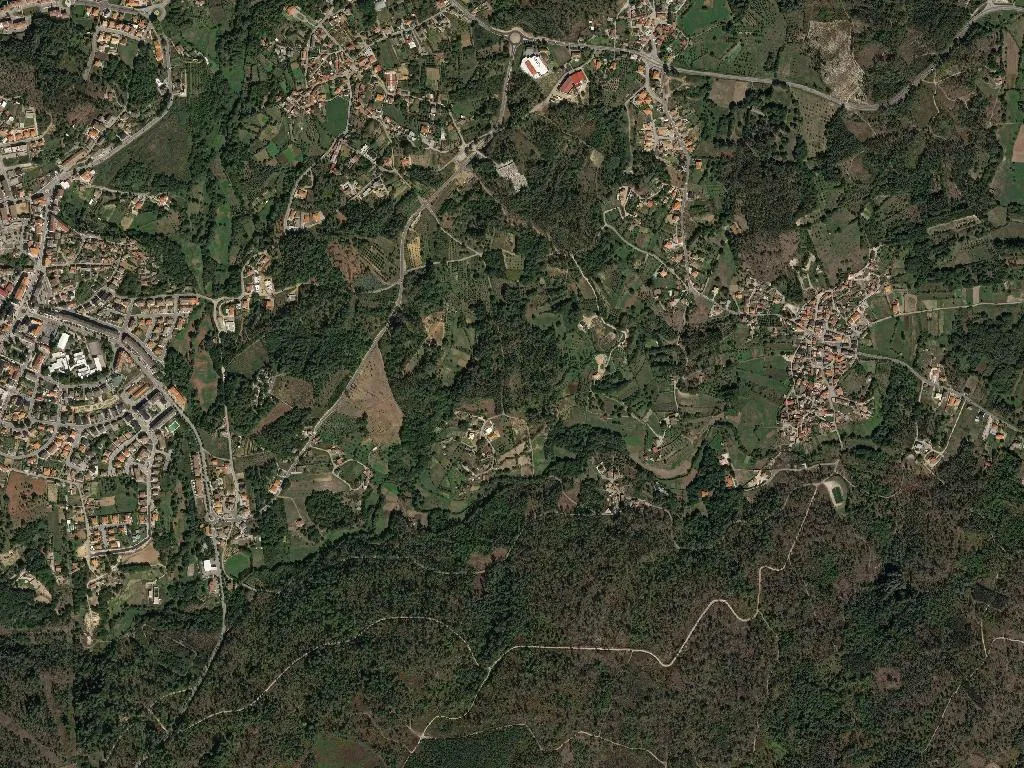
Granite shoulders through the thin tar of the lane, still slick with dawn mist. At 585 m the air is cool enough to carry the scent of bruised fennel and, somewhere below, the river Dão sliding through its gorge. Mioma wakes slowly: a dog barks once, a diesel tractor coughs into life on a narrow terraced plot, and the first shutter clicks back against schist. There is no village square, no postcard vista—just a scatter of low houses, each with its own orchard, its own well, its own geometry of vines.
Stone & Memory
Only one building has official protection: the chapel of São Sebastião, begun in the late 1200s and tweaked a century later. You reach it by following the angle of two walls until the lane narrows to a footpath; there is no brown sign, no audio guide. The granite blocks are rubbed smooth where generations have leaned against them, and the doorway is so low that even a modest hat must be doffed. Inside, the air smells of candle smoke and granite dust; frescoes flake like dried mud on a boot heel.
Round the corner stands the parish church of São Pedro, its bell still rung by a rope that disappears into a dark loft. Time is kept here by the agricultural calendar, not by the clock tower that Viseu installed in 1932 and which no one in Mioma has ever consulted.
The Vineyard Calendar
Forty-two hectares of vines—small, unirrigated, bush-pruned—occupy every south-facing slice of land. Locals work them after the day job in Viseu or Sátão, returning at dusk with secateurs in the glovebox. Come late September the lanes are sticky with juice; purple handprints appear on gate latches and the village smells of wild fermentation. Varieties are the Dão classics—Tinta Roriz, Touriga Nacional, Alfrocheiro—pressed in stone lagares built into the back of houses, then raised for a winter in 500-litre pipas. There are no tasting menus, no vineyard B&Bs; you may be handed a glass in someone’s garage, the wine still cloudy, the conversation about rainfall percentages.
Living Slowly
Population 1 164 and falling: 286 residents are over 65, only 151 under 14. Children attend the primary school until Year 4, then catch the yellow bus down the escarpment to Sátão. Shops amount to café “O Mioma”, a counter selling goat cheese wrapped in dock leaves, and a weekly fish van that toots its arrival. Evenings centre on the bench outside the café, gossip travelling at the speed of the river below. Yet the place is not fossilised—new tractors sit beside 1950s stone sheds, satellite dishes bloom on every roof, and the single rental cottage, Casa da Eira, has fibre broadband fast enough for Zoom, should you wish to spoil the silence.
The Weight of Quiet
Dusk arrives sideways, gilding the west-facing granite until every house looks gilt-edged. A woman draws water by hand, the pulley squeaking exactly as her mother’s did; wood smoke threads from chimneys, braiding with the smell of pine resin cooling in the forest. Walk the Rua da Carvalha and the only moving thing is moss swelling between the setts. What you take away is not a single photograph but a collection of small, precise sensations: the cold shock of stone against your palm, the metallic taste of well water, the moment when the night wind combs the telephone wires and the village, for a beat, holds its breath.