Full article about Rio de Moinhos: Granite Dawn Above the Dão
Dew-slick stone, high-parcel vines and 789 quiet souls above Sátão
Hide article Read full article
Granite still wet at breakfast
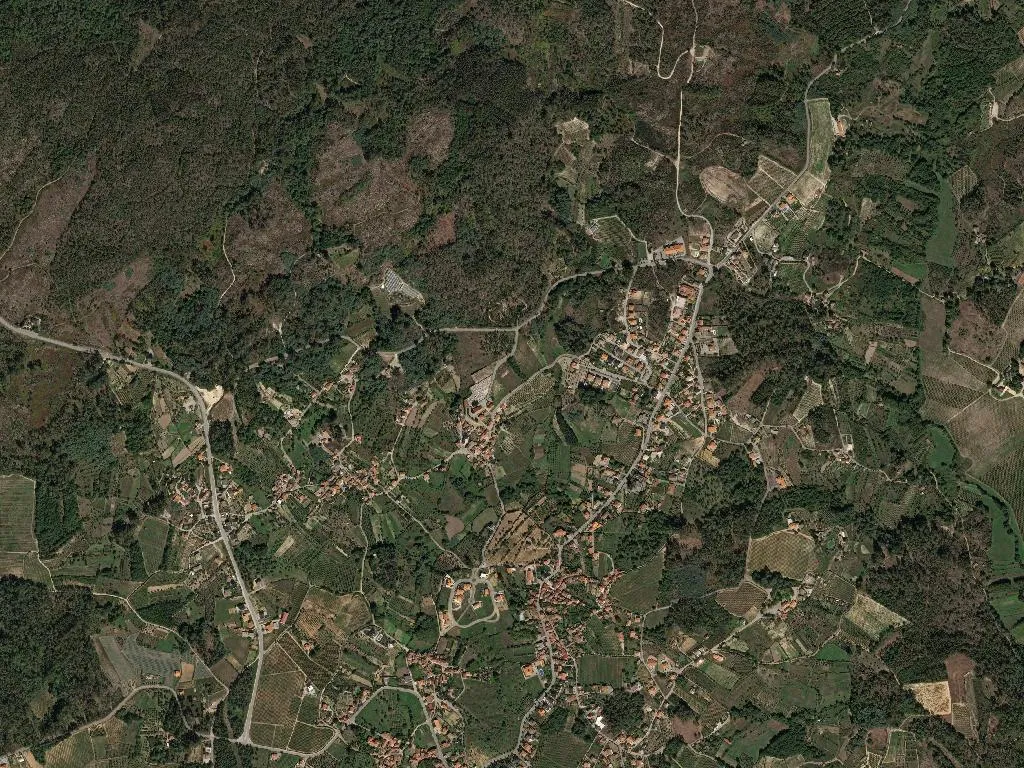
The grey stone is still slick with dew when the kettle boils, even though the sun has already prised itself over the Serra da Estrela. At 505 m Rio de Moinhos sits just high enough for the air to feel rinsed, yet low enough to dodge the furnace heat that scorches the valley roads further south. Eleven square kilometres of stubborn granite: in the walls, in the thresholds, in the circular threshing floors where corn once met flail. Between the hamlets—Outeiro, Cortiçô, Cumeada—silence has body, but it is never mute; it is stirred by a teaspoon of running water and by the wind that hauls the River Dão uphill.
Geography of stone and vine
This is the Dão Demographic Region, shorthand for granite hills stitched with small-parcel vines. Schist and crystal battle for space on the ridges; altitude keeps summers civil and gifts the local reds a nervy acidity that city winemakers buy by the gram. Walking the terraces is a thermal seesaw: one foot in the shade of a Touriga-Nacional cane, the next on sun-blasted rock that could fry an egg, the juice inside the berries changing its mind with every step.
The parish register lists 789 souls. More than half are quietly forgetting their age while 51 still shoulder rucksacks to the secondary school in Sátão. You sense the arithmetic at dusk: shutters close early, tavern lights dim, yet someone can still prune a vine blindfolded and someone else can tell you the exact day to sow fava beans without consulting a calendar.
The only listed witness
A single blue-and-white plaque marks an official “Building of Public Interest”, but no one in the café can recite the full title. Fingers point toward the Romanesque-capital reused in the church portal, or maybe to the eighteenth-century wayside cross where the road drops toward Sátão. Either will do: both hint that outsiders once cared. The rest of the archive is stone itself: the slab where grain dried, the bridge without parapets, the houses swivelled south to slip the Atlantic gales that rifle the plateau in winter.
Daily life at five hundred metres
No queues, no selfie-sticks, no fridge magnets. On an average afternoon the “crowd” is three retired builders, a dog too lazy to bark and you—if you linger too long. There is exactly one dwelling licensed to accept guests who miss the last bus out. Tourism has yet to invent a hashtag for Rio de Moinhos; what exists is a footpath that loses itself in gorse, an irrigation canal where water holds a murmured conversation, and a silence so complete you can power-down your phone without FOMO.
Food is whatever the land released this week: chouriço of mountain pig smoked overnight in a kitchen chimney; corn bread that snaps teeth unless anointed with butter; goat’s cheese that prefers a Dão white served at cellar temperature—because fridges are for softies. None of it surfaces on TripAdvisor; it appears on Dona Alda’s kitchen table if you knock politely.
The sound of water that no longer grinds
Watermills still punctuate the stream, though their wheels rotted away before the euro arrived. Their hollowed chambers make perfect swimming pockets when July turns serious. Even so, the rivulet refuses redundancy: it slips along irrigation ditches, waters weekend vegetable plots, hydrates the village dogs. At dusk, when the sun collapses behind the ridge and the temperature drops like a stone, the water’s gossip is the only soundtrack that never needs charging. It stays in the ear like a promise: I was here before you, and I’ll be here after you leave.