Full article about Silvã de Cima: granite breath above the Dão
Stone-cool air, 425 souls, vines older than nations—walk alone through Sátão’s silent terraces
Hide article Read full article
The granite breath of afternoon
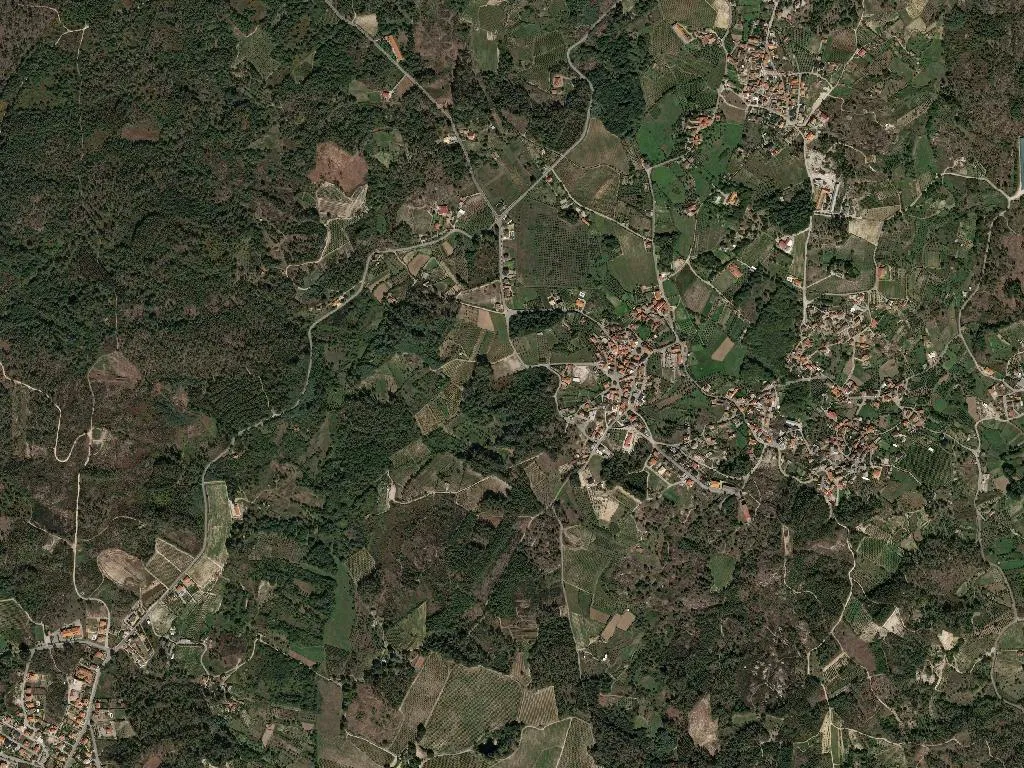
At 553 metres above sea-level the air thins to something you can read through. Late-day sun slips through stone-framed windows and prints exact bars of gold on the compacted earth floor. Silvã de Cima exhales slowly, summer-dry, winter-sharp, always lucid, its feet planted in granite and its gaze sliding down the terraces that spill towards the river Dão.
The parish spreads across 688 hectares scored by time and by hand. Four hundred and twenty-five souls occupy schist-and-lime cottages, vegetable plots still regimented with cabbages and potatoes, stone threshing-floors where September maize yellows in the wind. The arithmetic is familiar to inland Portugal: thirty-nine children, one hundred and thirty-four elders, a ledger perpetually tilting towards departure.
History carved, not displayed
The parish church, eighteenth-century granite stripped to essentials, anchors collective memory. Its Manueline portal—salvaged from a ruined Benedictine monastery after the 1755 earthquake—stands as proof that reuse came long before fashion. No one arranges themselves for Instagram here; authenticity is mortar-deep, readable in the wall-chiselled date 14 August 1926, when Brazilian emigrants wired home the money for repairs.
Vines have legal paperwork older than most nations. Silvã de Cima was stitched into the Região Demarcada do Dão in 1908 after the local mayor, Joaquim Augusto de Sousa, carted a petition to Lisbon. Jaen and Alfrocheiro still cling to schist terraces above the Silvã stream; in the 1958 co-operative cellar fifteen growers continue to ferment the medium-bodied red that parish priest Correia de Carvalho was already praising in 1872 as “worthy of the best from neighbouring Tábua”.
The sound of no one
A population density of 61.8 per km² turns walking into a solitary art. You can cover kilometres accompanied only by the echo of Mr António’s dog Sultão, the brass clang of Dona Amélia’s 120 goats descending from Carrascal, the gate that still squeaks outside the surgery where Dr Ramiro worked for forty-three years. Cork oak leaves scuff like paper; the Levada do Ribeiro—a stone water channel that irrigated smallholdings until mains pipes arrived in 1987—whispers its last trickle.
There is precisely one place to stay: the former teacher’s house where António Lopes Ferreira taught three generations between 1942 and 1976. Booking it means embracing negative choice—no starred restaurant, no cocktail list, not even the village café (Zé Pequeno shut when the owner retired in 2019). The luxury on offer is the increasingly scarce inability to optimise your evening.
Dusk pulls the switch. Windows prick the dark flank of Monte do Colcurinho; oak-wood smoke rises straight as a ruler, carrying the scent of winter fuel cut higher up the range. January averages 3.2 °C; you will feel it through the hand-woven blanket that once kept a grandmother’s loom busy. Silence thickens until a tawny owl cracks it open somewhere in the chestnut grove where, a century ago, colliers produced the charcoal that fired the kitchens of Viseu.