Full article about Chosendo: Where Douro Vineyards Meet Sky Silence
Sernancelhe's mountain hamlet clings to 1756 wine terraces, three pilgrimages and 267 voices
Hide article Read full article
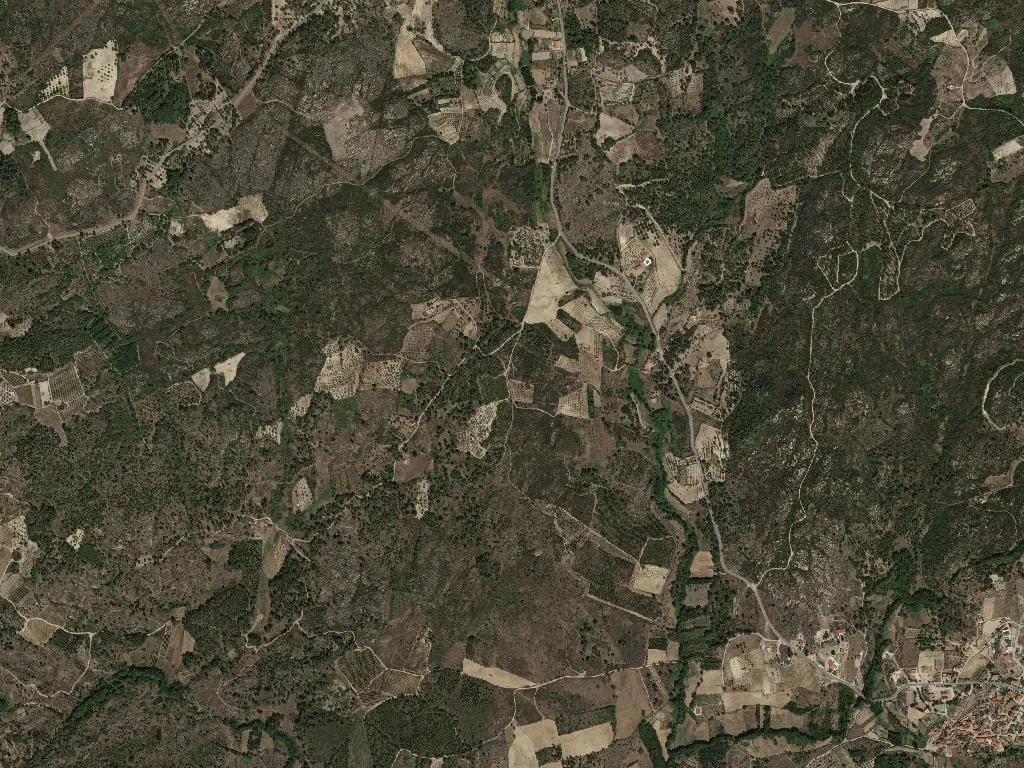
The morning air at 708 m nips like Alpine glass. In Chosendo the mountain hush is broken only by the faint rebound of the parish-church bell and the hushed gossip of the Carvalhal stream sliding between granite boulders. Two-hundred-and-sixty-seven souls are scattered across this ridge in northern Sernancelhe, where schist terraces tip vineyards toward the Távora valley at barely twenty-one people per square kilometre. Distance is measured by the width of sky between houses.
A calendar written in processions
Three pilgrimages map the year. On the last Sunday of August the village honours Nossa Senhora das Necessidades; the first Sunday of September belongs to Nossa Senhora da Lapa; and on 3 May it’s the turn of Nossa Senhora de Ao Pé da Cruz. What look like pious footnotes on the municipal calendar are, in fact, the only traffic jams Chosendo ever sees. Horsemen, walkers and the occasional tractor converge on the 1712 chapel of Nossa Senhora da Lapa, three kilometres uphill, filling the oak scrub with candle-wax and crushed-leaf scent.
High-altitude Douro
Chosendo has sat inside the world’s oldest demarcated wine region since 1756. Its 600–750 m ridge hangs above the heat-haze of the lower Douro, giving Touriga Nacional, Tinta Roriz and Bastardo the cool nights they need to keep acidity while still ripening. The old terraces are less than 1.5 m wide; each row is a hand-built wall of flaky schist. Antonio Cerdeira, 73, still prunes the two hectares he inherited: “Nobody wants to come back for this. The young are in France or Lisbon.” There are no tasting rooms, no glossy maps—just grapes that will reappear two years later in a vintage-port blend.
Arithmetic of erosion
Ninety-three of the 267 residents are over sixty-five; only eighteen are under fifteen. The primary school closed in 2009, the café followed, and the secondary-school bus gave up in 2015. Yet the village refuses to become a diorama. Smoke still curls from the black-pig chorizo in Amélia’s timber shed; her vegetable plot keeps a living seed bank of purple-kernel maize and streaked tomatoes. Evening conversation still gathers by the 1787 stone cross in the miniature square, where slate roofs blush ochre in the lowering sun.
By dusk a single plume rises straight from Joaquim’s chimney—an 82-year-old burning his own oak—and the ridge feels closer to the Cantabrian cordillera than to cosmopolitan Porto. The nearest bakery is a 24-kilometre round trip to Sernancelhe; the GP drops in only on Tuesdays. Chosendo offers no souvenirs, no filters, no apologies. What lingers is the clarity: vines clenched in schist, smoke that smells of winter coming, and the certainty that something essential can still hold on.