Full article about Faia: Where the Mondego Whispers to 160 Souls
Stone chapels, Roman springs and Lenten chants cling to terraced slopes above the river.
Hide article Read full article
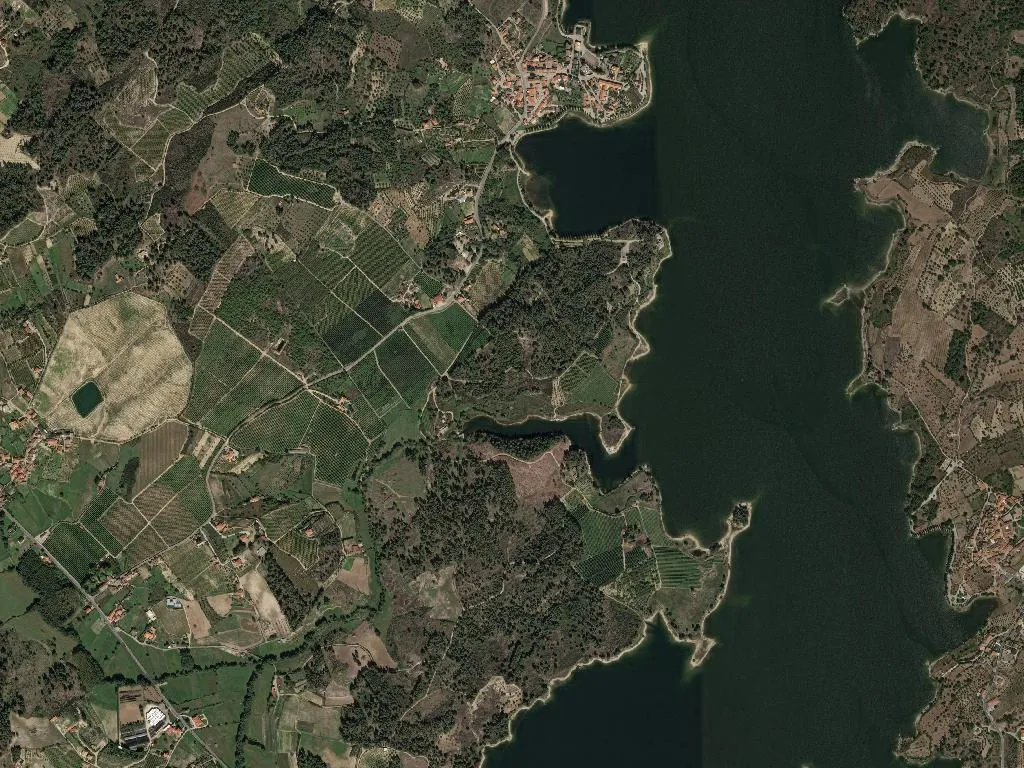
The hush in the Mondego valley is physical. Water mutters over granite slabs far below, wind combs through vines trained on tiny terraces, and the church bell counts the hours as if it had all century to finish. At 565 m, Faia is suspended between sky and river; 160 souls, 362 hectares, and a clock that runs on the colour of the schist, the scent of wet soil after rain, the chill that drifts up-canyon at dawn.
Stone that remembers
The parish church has stood since the thirteenth century, its Manueline windows printing lace-light across flagstones worn convex by 700 years of footfall. Seven chapels dot the slopes like way-markers on a pilgrimage you didn’t know you were making; each sits at the top of a calf-burning lane. On older façades you’ll find a crudely carved cross – the mason’s medieval signature, still tagging the village. The Roman spring still issues ice-cold water from a mossy spout; fill your bottle and you’re tasting every century since Lusitanian drovers paused here. By the tiny traffic circle a stone Madonna keeps watch; beside her, parish councillors are restoring a 1920 steam locomotive that once hauled timber for the grandson of Portugal’s first president. Iron, olive trunks and schist – the local palette.
When the village sings to the dark
During Lent the Soul-Brotherhood walks the streets at night, chanting verses older than the kingdom itself – a minor-key warning that tomorrow is never guaranteed. In January the traditional Cantares singers knock on doors, trading ballads for a glass of aguardiente, proving the village is still breathing. On Palm Sunday olive branches and sweet brioche-like folar are exchanged; at Christmas Eve supper every household produces its own undocumented Sopa de Natal – each swears theirs alone is canonical. São Pedro’s feast turns the riverbank into an open-air kitchen: Mondego shad pickled with saffron, kid roasted over vine prunings, coscoréis pastries that shatter like meringue – dietary rules politely suspended.
Apples and ex-patriots
In the 1930s agronomist Joaquim de Arriaga dismissed the local sneers and planted the first commercial orchard of DOP Bravo de Esmolfe apples on these terraces. His gamble paid off: the cool nights and granite soils give the fruit its signature anise perfume. Today Dutch and British buyers snap up dilapidated quintas, install solar arrays and declare they’ve “come for the silence”. The Emília Paiva Diniz Literary Prize, launched by the parish council, now pulls in entries from four continents, so the name Faia travels while the village itself refuses to leave the table.
The Periqueiros trail zig-zags between vines and century-old olives; at every bend the river reappears, a slow blade of mercury. As the sun detonates against the schist and the air cools, the valley exhales. Between the last bell and the first star you realise Faia doesn’t stop time; it simply lets you feel it slide through your fingers.