Full article about Granjal: Where the Valley Bell Counts Time
Stone cottages, smoke-cured chouriço and May romarias echo in Sernancelhe's high granite parish.
Hide article Read full article
The bell that measures the valley
The bell of Igreja Matriz de Granjal tolls the hour across the valley, its bronze note sliding down granite outcrops before dissolving among the terraced vines. At 751 m the wind behaves differently: it ferries the scent of smouldering oak from roadside smoke-houses and carries the evening chill that rises off the Távora. Stone sets the rules here – in the schist walls that pin back the earth, in cottages that have withstood two centuries of hard winters, in thresholds dished by generations of clogs and boots.
Feast days and small miracles
Three annual romarias – Nossa Senhora das Necessidades (May), Nossa Senhora da Lapa (August) and Nossa Senhora ao Pé da Cruz (September) – turn the parish calendar into a spiritual map. On those weekends the resident 282 swell to many times that number as emigrants drive in from Paris, Geneva and Luxembourg. Women from the same family line lay oilcloth beneath centuries-old oaks, sardine smoke drifts across the packed-dirt track, and for a few hours Granjal recovers the murmur it knew before the 1960s rural exodus.
Faith is tangible: lime-washed wayside chapels the size of pantries, ex-votos shaped like hearts or lungs tucked into stone niches, a rosary still murmured on January nights when the mist freezes. The preparation is as devout as the prayer – hand-kneaded loaves, red wine from vines within the Douro DOC, chouriço hanging in the fumeiro since Christmas, every slice proof that patience can be cured like pork.
Living between slate and sky
Granjal counts only fifteen children under fourteen and seventy-seven residents over sixty-five. Days are paced by the land: vines stitched across schist terraces, winter plots of kale and turnip, chestnut trees that still fill larders in October. Population density hovers around twenty souls per square kilometre; the resulting hush feels almost Alpine.
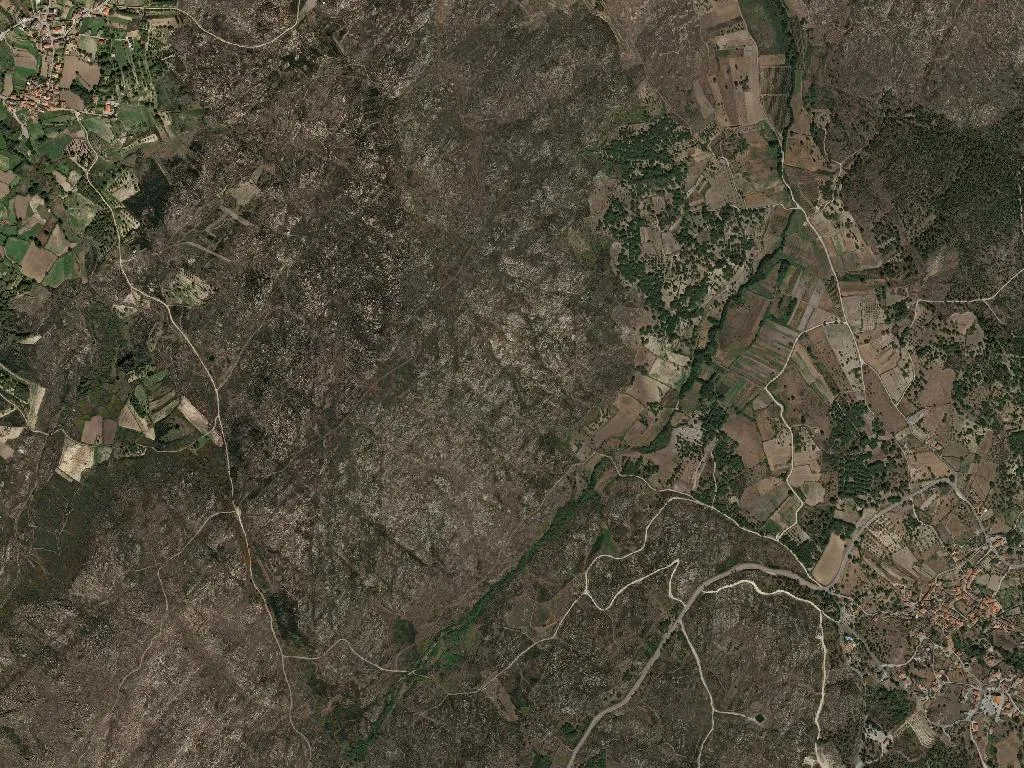
Houses scatter across 1,372 ha of wrinkled granite, positioned where a spring emerged or a slope faced south. Walls a metre thick tame January’s bite, windows the size of hymn books conserve hearth heat. If you arrive by car, engage first gear and keep it there: the EN324 is single-track, potholes are autobiographical, and Google has been known to send hatchbacks over stone ramps built for ox carts.
For supplies, Sr Joaquim’s grocery opens when he wakes – which is usually early – and stocks bread delivered from Sernancelhe, UHT milk, local tinto and conversation. Bring coins; card machines never made it up the hill and the nearest ATM is ten minutes of hair-pin away in the municipal seat.
The weight of quiet
Towards dusk the low sun ignites the vineyards and throws long shadows across the lanes. Granjal’s truth is revealed: this is not a waypoint, still less a destination for coach tours – the single guesthouse, Casa do Romeiro, has two rooms and no website. It is instead a territory of stubborn continuity, inhabited by choice, necessity or, most often, a tangle of both, everyone aware that the land asks more than it gives.
In autumn the mountain wind smells of fermenting must; during romaria weekends accordion chords ricochet between valleys. Yet it is on the other days – when the only sounds are a distant dog and the crackle of oak logs – that Granjal shows its unadorned equation: stone, vine and sky, with nothing to sell and no promise beyond the next bell stroke.