Full article about Lamosa
At 790 m, wax-caked chapels, wood-oven chouriço and fog that creaks pine boards
Hide article Read full article
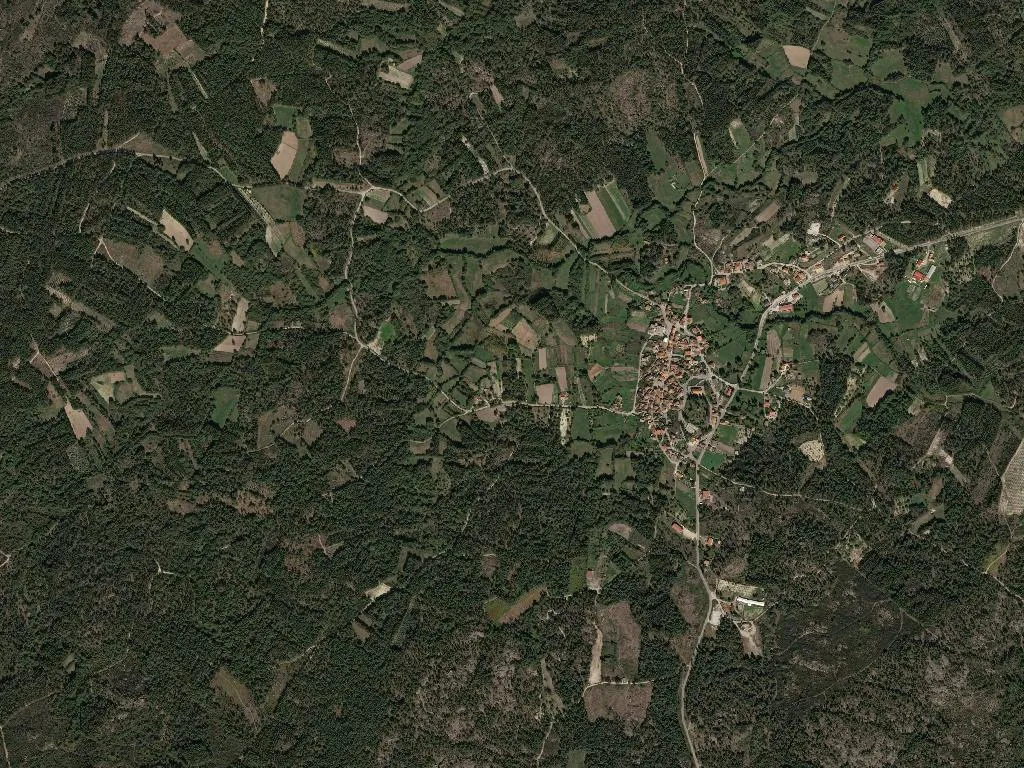
The road climbs past the eighth hair-pin and the air shifts: a resinous whiff of wild laurel that only exists above 700 m. Suddenly Lamosa appears—single-storey cottages banded in rose-grey granite with shale veins, roofs of Delabole slate already finger-loose in the Atlantic wind. Officially 179 souls live here, though the tally in the taberna varies with whoever is pouring the wine; no-one strikes off the names of those who emigrated and still keep a front-door key under the coconut mat.
A calendar written in wax and smoke
Three annual pilgrimages are enough for this parish. In May it is Nossa Senhora das Necessidades: cornmeal cakes and sprigs of bay are carried up the track because bay doesn’t wilt before the summit. August belongs to Nossa Senhora da Lapa: the procession inches from the chapel to the spring where you drink three swift mouthfuls to “unearth” a sluggish liver. September brings Ao Pé da Cruz and rows of butter-yellow candles that no-one snuffs; they gutter to the wick even when the wind bullies the flame. Between feasts the chapels stay locked, but the keys hang behind the kitchen curtain at Dona Guida’s—knock, she wipes her hands on her apron, and unlocks.
On the eve of each festa the communal wood-oven belonging to the Carvalho family never cools. Loaves the length of a forearm are split and packed with smoking chouriço; outsiders arrive clutching plastic flagons of tinto from the next valley over. It isn’t Port, but it performs the same alchemy: conversation uncorks itself.
Life at 790 metres
Fog is the first neighbour awake, every day without exception. At seven the churchyard is a blank page; by ten the ridge of the Serra do Marão re-appears in soft pencil. Cold here is a measurable mass: it slips through warped window frames, settles between blankets, creaks the pine floorboards. Fireplaces are sized accordingly—two oak logs per day, one at lunch, one at supper. Forget to close the grate and you earn the grandmotherly reprimand: “It’s the smoke that guards the house, not you.”
When silence finally arrives it tastes of scorched earth, broken only by irrigation water rattling the stone channel or a hoe scraping the terrace. On clear nights the stars hang low enough to snag on the vineyard poles. The only competing glow comes from the single street-lamp outside the taberna, left on until two—“so the late drivers don’t miss the turning,” says Zé, landlord and self-appointed parish lighthouse.
Lamosa keeps its own tempo. Vines are pruned only after the third frost, never before. Bread demands three hours, wine two years. When the sun drops behind the Carrascal ridge the church bell tolls three times: once for the living, once for the dead, once for whoever is still on the road.